

There is nothing quite as frustrating as stepping into your home during a Wheeling heatwave only to realize it feels more like a sauna than a sanctuary. When your air conditioner is running but the temperature isn’t dropping, your first instinct might be to worry about a total system failure and a massive repair bill. However, many of the reasons an AC stops cooling are rooted in simple maintenance neglect.
At Mechanical Management & Design Solutions (MMDS), we see it every day: a perfectly good system struggling to perform because of a few common, preventable issues. By understanding what’s happening behind the scenes, you can often solve the problem quickly or catch a minor issue before it turns into a major AC installation or replacement project.
Why is a dirty air filter the most common cause of cooling issues?
A dirty air filter restricts the volume of air flowing through your HVAC system, preventing it from pulling enough heat out of your home. When the filter is clogged with dust and pet dander, your AC has to work twice as hard to move half the air, leading to poor cooling and higher energy bills.
The air filter is your system's first line of defense. Its job is to trap particulates so they don’t settle on sensitive internal components. When you neglect to change it, that layer of grime acts like a wall. This restriction doesn't just make the house feel warmer; it can actually cause your indoor evaporator coils to freeze over because there isn't enough warm air passing over them to keep the refrigerant from getting too cold. Take a moment to check your filter every 30 to 90 days to ensure your system stays efficient.

Can dirty condenser coils stop my AC from cooling?
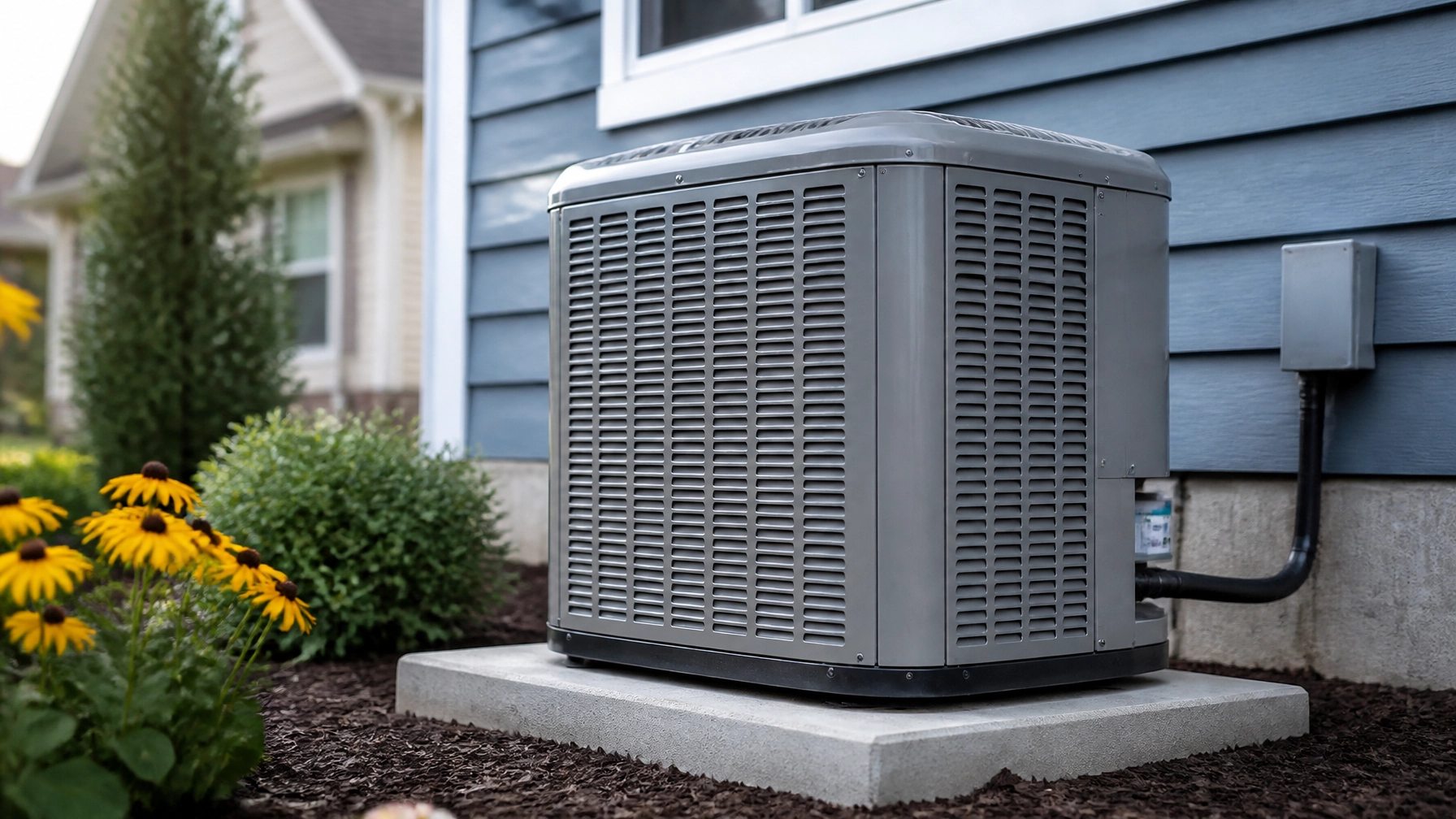
Yes, dirty outdoor condenser coils prevent your AC from releasing the heat it gathered from inside your home to the outside air. If these coils are covered in dirt, grass clippings, or cottonwood seeds, the heat stays trapped in the system, and your home stays warm.
Think of the outdoor unit as the "exhaust" for the heat in your house. The condenser coils are responsible for dissipating that heat into the atmosphere. In the Wheeling and the Chicagoland area, cottonwood seeds and summer dust are notorious for "carpeting" these coils. When this happens, your compressor has to run at much higher pressures and temperatures, which drastically shortens its lifespan and increases your monthly utility costs. Scheduling a professional cleaning is a simple way to protect your equipment longevity.
Is my thermostat set correctly or malfunctioning?
A thermostat that is set to "On" instead of "Auto," or one that has a dead battery, can cause your system to blow warm air even when it isn't cooling. If the thermostat is old or calibrated incorrectly, it may never tell the AC to turn on in the first place.
Before you call for service, ensure your thermostat is set to "Cool" and the fan is set to "Auto." If it's set to "On," the fan will blow air 24/7, even when the cooling cycle is off, which can make the air feel humid and warm. If you have an older manual thermostat, it might be time to upgrade to a smart model to ensure more accurate temperature sensing and better energy management.

What happens when the evaporator coil freezes?
A frozen evaporator coil occurs when the refrigerant inside the indoor unit gets too cold, causing moisture in the air to turn into a layer of ice on the coils. Once ice forms, it acts as an insulator, preventing the AC from absorbing any more heat from your indoor air.
This is a "domino effect" problem. It usually starts with a dirty filter or low refrigerant levels. If you notice ice on the copper lines leading to your indoor unit, or if the air coming out of the vents is barely a whisper, turn the system off immediately. Running an AC with frozen coils can lead to liquid refrigerant reaching the compressor, which can cause total system failure. Let the ice melt completely before attempting to restart the system or calling a professional.
Could a refrigerant leak be the reason for poor cooling?
Refrigerant is the substance that actually carries heat out of your home; if there is a leak, the system loses its capacity to cool. A low refrigerant charge makes the system run constantly without ever reaching your desired temperature.
Refrigerant does not get "used up" like gasoline in a car. It circulates in a closed loop. If your system is low, it means there is a hole or a crack in the lines or the coils. Simply "topping off" the refrigerant without fixing the leak is a temporary and expensive band-aid. Our team at Mechanical Management & Design Solutions (MMDS) uses specialized tools to find and seal these leaks, ensuring your system operates at peak efficiency.
How does a clogged condensate drain affect cooling?
A clogged drain line can trigger a safety float switch that automatically shuts down your AC to prevent water damage to your home. If your AC suddenly stops running altogether, a backed-up drain is a very likely culprit.
As your AC cools the air, it also removes humidity. That moisture collects in a pan and flows out through a PVC pipe. Over time, algae and mold can grow inside that pipe, causing a blockage. If you see water pooling around your indoor furnace or air handler, it’s a sign that your maintenance has been neglected. Clearing the line is a standard part of our annual maintenance service.
Are blocked or closed vents making my house feel hot?
Closing vents in unused rooms can actually disrupt the static pressure of your HVAC system, leading to restricted airflow and potential coil freezing. All supply and return vents should remain open and unobstructed by furniture or curtains to maintain proper air balance.
Many homeowners think they are saving money by closing vents in guest rooms, but residential HVAC systems are designed to move a specific volume of air. Closing vents forces the blower motor to work harder against increased resistance. Ensure your return air grilles: the large vents that suck air back into the system: are clear of dust and furniture to allow the system to "breathe" properly.
Can leaky air ducts prevent cold air from reaching rooms?
Leaky ductwork can lose up to 30% of your conditioned air into your attic, basement, or crawlspace before it ever reaches your living areas. If some rooms are cold while others are hot, your ducts are likely the problem.
In many Chicagoland homes, ductwork is located in unconditioned spaces. If there are gaps or disconnected joints, you are essentially paying to cool your attic. This forces the AC to run longer to satisfy the thermostat, leading to unnecessary wear and tear. Having your ducts inspected and sealed can provide immediate relief and noticeable cost savings.
Is an old or undersized system the problem?
As an AC unit ages, its components become less efficient, and it may no longer be able to keep up with the cooling demands of a modern, busy household. Most residential systems have a lifespan of 12 to 15 years before performance significantly declines.
If your system is over a decade old and you are facing frequent repairs, it might be more cost-effective to consider a replacement. New high-efficiency units use much less electricity and provide more consistent comfort. We can perform a load calculation to ensure your next unit is perfectly sized for your home's square footage and insulation levels.

Could an electrical issue be stopping the compressor?
Faulty capacitors, contactors, or wiring can prevent the outdoor compressor or fan from starting, leaving you with a system that hums but doesn't cool. These electrical components are the "muscles" that start and run the heavy-duty parts of your AC.
Capacitors are like large batteries that give the motor a "kick-start." In the summer heat, these are the most common parts to fail. If you hear a clicking sound or a loud hum coming from your outdoor unit, but the fan isn't spinning, you likely have an electrical issue. For safety, these repairs should only be handled by a professional. You can learn more about our related electrical services to see how we handle these high-voltage components.
Take Action for a Cooler Home
Don't let a simple fix like a dirty filter lead to a complete system breakdown. Regular maintenance is the key to safety, equipment longevity, and lower utility bills. Whether you need a quick tune-up or a full system replacement, our experts at Mechanical Management & Design Solutions (MMDS) are here to help.
If you're upgrading your HVAC system, help yourself and make sure the equipment you are purchasing qualifies for one of these discounts:
- Up to $900 on < 2.5 tons, ≥ 15.2 SEER2, ≥ 9.4 EER2, ≥ 8.1 HSPF2
- Up to $1,400 on ≥ 2.5 tons, ≥ 15.2 SEER2, ≥ 9.4 EER2, ≥ 8.1 HSPF2
- Up to $1,500 on < 2.5 tons, ≥ 17 SEER2, ≥ 9.4 EER2, ≥ 8.5 HSPF2
- Up to $2,000 on ≥ 2.5 tons, ≥ 17 SEER2, ≥ 9.4 EER2, ≥ 8.5 HSPF2
Discount with ENERGY STAR® certified smart thermostat:
- Up to $975 on < 2.5 tons, ≥ 15.2 SEER2, ≥ 9.4 EER2, ≥ 8.1 HSPF2
- Up to $1,475 on ≥ 2.5 tons, ≥ 15.2 SEER2, ≥ 9.4 EER2, ≥ 8.1 HSPF2
- Up to $1,575 on < 2.5 tons, ≥ 17 SEER2, ≥ 9.4 EER2, ≥ 8.5 HSPF2
- Up to $2,075 on ≥ 2.5 tons, ≥ 17 SEER2, ≥ 9.4 EER2, ≥ 8.5 HSPF2
To apply for these discounts, Call or Text MMDS at (847) 221-6280. Our team will help you select the eligible equipment and handle the necessary documentation to ensure you receive your savings. We proudly serve Wheeling and the Chicagoland area.