

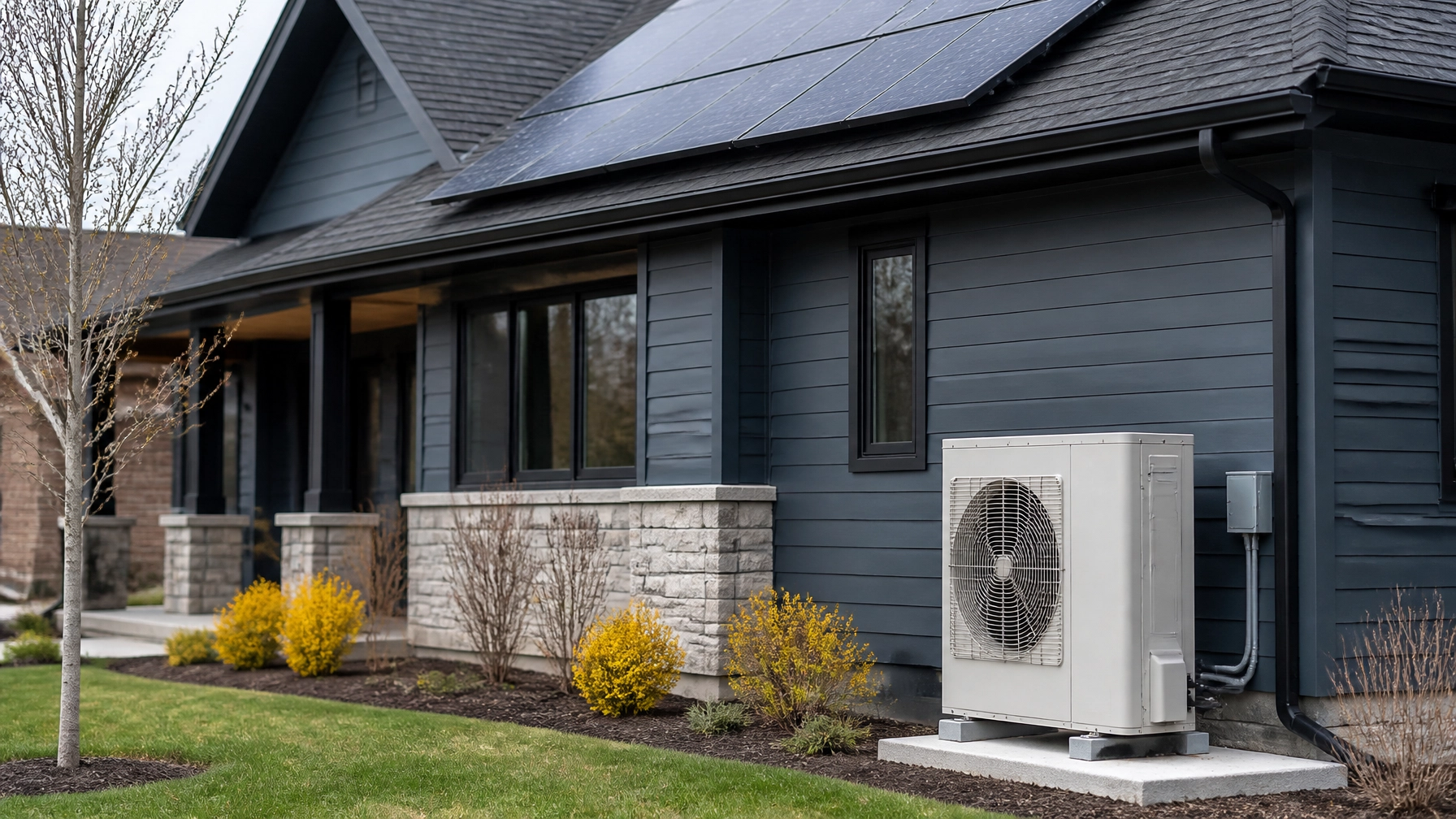
Switching to a solar-ready heat pump is one of the smartest ways for homeowners in Wheeling and the Chicagoland area to slash energy bills and increase home comfort. However, a "solar-ready" system is only as good as its installation. Without proper planning, you might find yourself with a system that underperforms or fails to integrate with your future solar panels.
At Mechanical Management & Design Solutions (MMDS), we see many DIY attempts and cut-corner installations that lead to expensive repairs. Whether you are looking for heater installation and replacement or a full AC installation and replacement, avoiding these seven common mistakes will ensure your home remains comfortable and efficient year-round.
Why Is Correct Sizing Critical for Heat Pumps?
Incorrect sizing occurs when a unit is chosen based on "gut feeling" rather than a precise Manual J load calculation, leading to short-cycling or insufficient heating. To fix this, always insist on a professional room-by-room analysis that accounts for your home’s specific insulation, window types, and square footage.
Many contractors in the Chicagoland area still use outdated "rules of thumb" based purely on square footage. An oversized heat pump will cycle on and off too frequently (short-cycling), which wears out the compressor and fails to dehumidify your home properly in the summer. Conversely, an undersized unit will struggle during our brutal Illinois winters, relying too heavily on expensive backup heat.
A professional Manual J calculation ensures that your new heater installation is perfectly matched to your home's thermal envelope. This is especially vital when prepping for solar, as an oversized unit will draw more power than necessary, requiring a larger and more expensive solar array to keep up.

Does Outdoor Unit Placement Affect Performance?
Poor placement, such as putting the unit under a low roof eave or directly on the ground, can lead to restricted airflow and ice damage during winter. The fix is to install the unit in an open area on a dedicated snow stand to keep it clear of drifts and falling debris.
In Wheeling, we deal with significant snowfall and freezing rain. If your heat pump is installed directly on a concrete pad without elevation, snow can block the coil, forcing the unit into a constant "defrost mode" that kills efficiency. Furthermore, placing the unit where roof runoff can drip directly onto it will cause it to become encased in ice.
Ensure your installer places the outdoor unit on the side of the house least prone to drifting snow and uses a high-quality stand. Proper clearance of at least 12 to 24 inches on all sides is mandatory to allow for the massive volume of air these systems need to move to extract heat effectively.

Is Your Electrical Panel Prepared for Solar Integration?
Many homeowners forget that adding a heat pump and solar panels significantly increases the load on their electrical panel, often requiring a service upgrade. Ensure your electrical services include a capacity check to reserve breaker space for both the heat pump and the future solar inverter.
A "solar-ready" installation isn't just about the HVAC equipment; it's about the infrastructure supporting it. Many older homes in the Chicagoland area have 100-amp or 150-amp panels that are already near capacity. Adding a high-efficiency heat pump may push the panel to its limit, leaving no room for a solar PV system later.
Before starting your installation, have an electrician from MMDS evaluate your current panel. Planning for a 200-amp upgrade now is much more cost-effective than trying to retrofit the system once the solar installers arrive. This foresight ensures your home can handle the simultaneous load of heating, cooling, and power generation.

Why Should You Address the Building Envelope First?
Installing a high-efficiency heat pump in a leaky, uninsulated house is like putting a world-class engine in a car with flat tires. Fix this by performing air sealing and upgrading insulation before or during your HVAC installation to reduce the required unit size and energy demand.
We often see property managers and homeowners focus entirely on the SEER2 ratings of the equipment while ignoring the drafts around their windows and the lack of insulation in their attics. If heat is escaping through your roof, your heat pump will work overtime, regardless of how "efficient" it is.
When you prepare for a solar-ready system, the goal is to lower your total energy footprint. By sealing leaks and adding insulation, you may find that you can drop down to a smaller, more affordable heat pump unit. This reduction in energy demand also means you’ll need fewer solar panels to achieve "net-zero" status.
Are Your Thermostat Settings Killing Your Savings?
Treating a heat pump like a traditional gas furnace by using deep temperature "setbacks" at night actually forces the system into an inefficient high-power mode to catch up. To fix this, use a "set it and forget it" strategy or install an ENERGY STAR® certified smart thermostat designed for heat pump logic.
Traditional furnaces provide a blast of hot air to quickly raise the temperature. Heat pumps are different; they are designed to maintain a steady temperature efficiently over long periods. If you drop the temperature by 10 degrees while you sleep, the heat pump may trigger "auxiliary heat" (electric resistance strips) to recover quickly when you wake up. This is significantly more expensive and negates the benefits of your solar setup.
Instructional Tip: Schedule a consultation to ensure your thermostat is configured correctly for your specific model. Use a smart thermostat that understands "heat pump recovery" to gradually bring the home to temperature without engaging the backup coils.
Is Your Existing Ductwork Ready for Higher Airflow?
Older ductwork designed for gas furnaces is often undersized for the higher airflow requirements of modern heat pumps, leading to noise and reduced efficiency. Ensure your contractor tests the "static pressure" of your ducts and makes necessary modifications during the AC installation.
Heat pumps move a larger volume of air at a lower temperature compared to gas furnaces. If your ducts are too small, they will whistle, rattle, and create back-pressure that can damage the fan motor. Many "bad" heat pump experiences are actually just "bad ductwork" experiences.
During your installation in Wheeling and the Chicagoland area, our team will measure the static pressure to ensure your home can handle the volume. Sometimes, simply enlarging a return air intake or sealing leaky duct joints can make a world of difference in your comfort and your energy bill.
Have You Verified the Final System Commissioning?
Skipping professional commissioning: the process of verifying refrigerant charge and airflow: is the most common reason for premature equipment failure. Ensure your installer provides a startup report that documents the system’s performance metrics against the manufacturer's specifications.
Many installers simply "charge it and go," but solar-ready heat pumps are precision instruments. If the refrigerant charge is off by just a few ounces, the unit's efficiency can drop by 10-20%. Proper commissioning involves testing the line sets, checking for leaks with nitrogen, and verifying that the airflow matches the specific tonnage of the unit.
At Mechanical Management & Design Solutions (MMDS), we take pride in our "Local Hero" approach. We don't just install; we optimize. We ensure that every system we put into the Chicagoland market is tuned for our specific climate extremes.
Optimize Your Home with MMDS
Don't let a poor installation derail your journey to energy independence. Mechanical Management & Design Solutions (MMDS) provides expert service throughout Wheeling and the Chicagoland area. Whether you are upgrading your current system or planning a new construction project, our team is here to help.
Call or Text MMDS today at (847) 221-6280 to schedule your consultation.
If you're upgrading your HVAC system, help yourself and make sure the equipment you are purchasing qualifies for one of these discounts:
- Up to $900 on < 2.5 tons, ≥ 15.2 SEER2, ≥ 9.4 EER2, ≥ 8.1 HSPF2
- Up to $1,400 on ≥ 2.5 tons, ≥ 15.2 SEER2, ≥ 9.4 EER2, ≥ 8.1 HSPF2
- Up to $1,500 on < 2.5 tons, ≥ 17 SEER2, ≥ 9.4 EER2, ≥ 8.5 HSPF2
- Up to $2,000 on ≥ 2.5 tons, ≥ 17 SEER2, ≥ 9.4 EER2, ≥ 8.5 HSPF2
Discount with ENERGY STAR® certified smart thermostat:
- Up to $975 on < 2.5 tons, ≥ 15.2 SEER2, ≥ 9.4 EER2, ≥ 8.1 HSPF2
- Up to $1,475 on ≥ 2.5 tons, ≥ 15.2 SEER2, ≥ 9.4 EER2, ≥ 8.1 HSPF2
- Up to $1,575 on < 2.5 tons, ≥ 17 SEER2, ≥ 9.4 EER2, ≥ 8.5 HSPF2
- Up to $2,075 on ≥ 2.5 tons, ≥ 17 SEER2, ≥ 9.4 EER2, ≥ 8.5 HSPF2
To apply for these discounts, Call or Text MMDS at (847) 221-6280. Our team will help you select the eligible equipment and handle the necessary documentation to ensure you receive your savings.