

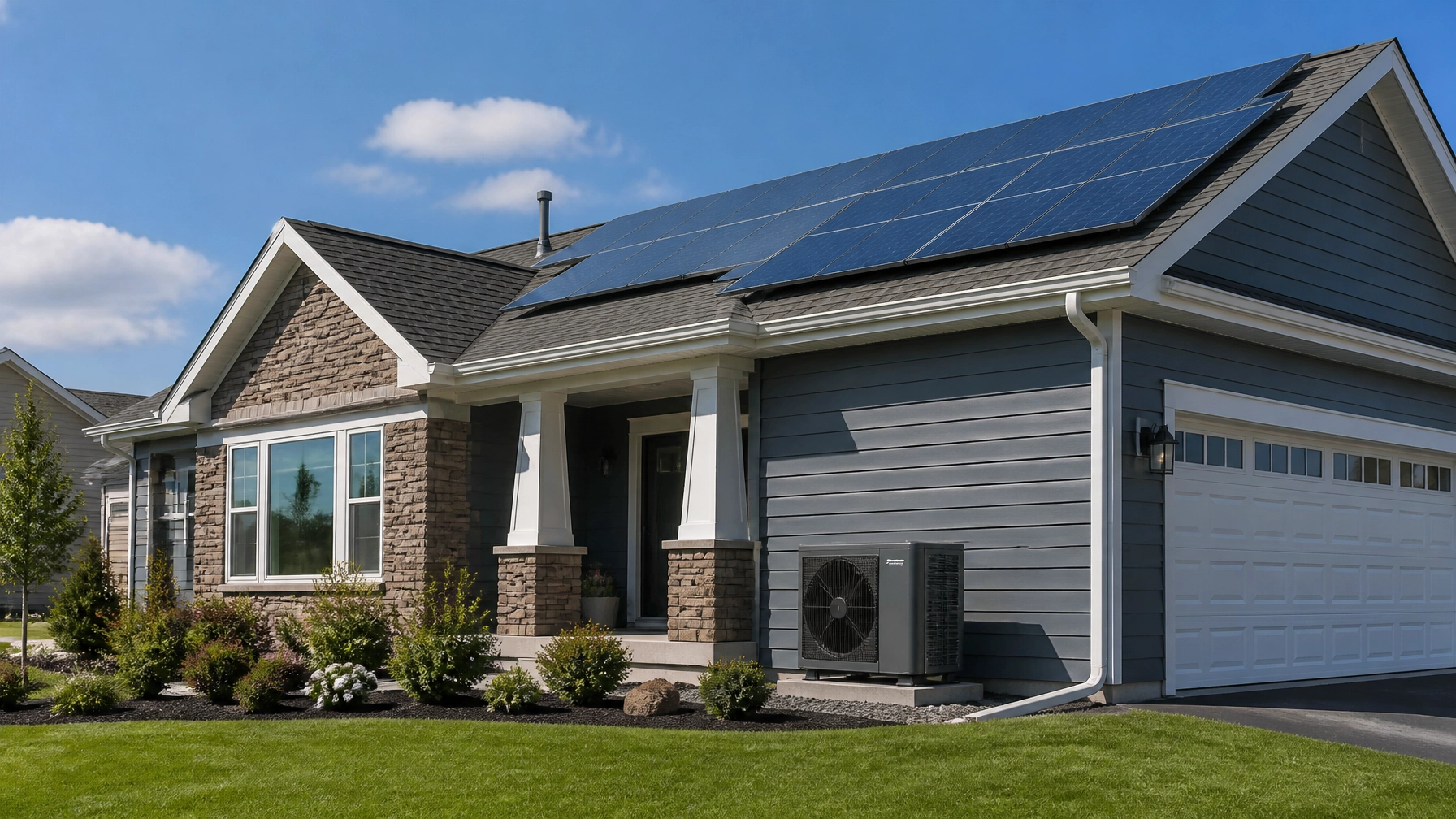
If you have already invested in solar energy for your home in Wheeling or the Chicagoland area, you are halfway to achieving total energy independence. Pairing those panels with a high-efficiency heat pump is a strategic move that can significantly lower your carbon footprint and monthly utility bills. However, simply installing the equipment isn't enough to guarantee peak performance.
At Mechanical Management & Design Solutions (MMDS), we frequently see homeowners making common errors that undermine their system's efficiency and longevity. To help you maximize your investment, we have identified the seven most frequent mistakes made with solar-powered heat pumps and how you can correct them.
Are you skipping the home energy audit before installation?
Skipping a home energy audit leads to installing an HVAC system that must work harder than necessary due to air leaks and poor insulation. Before upgrading your equipment, you must ensure your home’s "envelope": the walls, windows, and attic: is properly sealed and insulated to retain the conditioned air your heat pump produces.
When your home has significant air leaks or thin insulation, your solar-powered heat pump has to run longer cycles to maintain your desired temperature. This drains your solar battery storage faster and may even force the system to draw expensive power from the grid. In the Chicagoland climate, where winter winds are biting, a well-insulated attic and sealed rim joists are essential. Before you consider a new heater installation or replacement, schedule a professional energy audit to identify where your home is losing energy. Fixing these issues first allows you to potentially install a smaller, more affordable heat pump.
Is your heat pump sized incorrectly for your home?
An improperly sized heat pump will either short-cycle or run constantly, leading to premature equipment failure and uncomfortable temperature swings. Using a professional Manual J load calculation is the only way to accurately determine the specific heating and cooling needs of your unique residential space.
Many contractors rely on "rules of thumb" based solely on square footage, but this often leads to mistakes. An oversized unit will reach the thermostat setpoint too quickly (short-cycling), which doesn't allow the system to properly dehumidify the air during our humid Illinois summers. Conversely, an undersized unit will struggle to keep up during a January cold snap. To ensure your AC installation and replacement is sized perfectly for your home’s solar capacity, ensure your technician performs a comprehensive room-by-room analysis.

Are you using the wrong type of heat pump for the Chicagoland climate?
Installing a standard heat pump not rated for cold climates will result in a significant loss of efficiency and comfort when temperatures drop below freezing. Homeowners in northern regions must choose "cold-climate" air-source heat pumps or geothermal systems specifically engineered to extract heat from the air even in sub-zero temperatures.
In Wheeling and the surrounding suburbs, standard heat pumps often rely on inefficient electric resistance "backup" heat once the thermometer hits 30°F. This "emergency heat" consumes massive amounts of electricity, often exceeding what your solar panels can provide. By selecting a high-performance cold-climate model, your system can remain efficient down to -13°F or lower. If you aren't sure if your current unit is rated for our winters, Call or Text MMDS at (847) 221-6280 for a professional assessment.
Did you miscalculate your solar array’s capacity for HVAC loads?
Miscalculating solar capacity results in unexpected high utility bills because the HVAC system draws more power than the solar panels can generate. It is vital to coordinate with your solar provider and your HVAC contractor to ensure your solar array is large enough to handle the significant electrical load of a heat pump.
A heat pump is often the largest electrical consumer in a home. If you added solar panels based on your previous gas-furnace energy usage, your current array likely won't cover the new demand of an electric heat pump. To fix this, you may need to add additional panels or implement a smart energy management system that prioritizes the heat pump's power needs during peak solar production hours. Proper electrical services are required to integrate these systems safely and efficiently.
Are you constantly "fiddling" with your thermostat settings?
Frequent thermostat adjustments force a heat pump to work at maximum capacity to "catch up," which is far less efficient than maintaining a steady temperature. Heat pumps are designed to run in long, low-speed cycles rather than short bursts of high-intensity heating or cooling.
Many homeowners treat their heat pump like a traditional furnace, turning it down significantly at night and cranking it up in the morning. This "setback" strategy actually wastes energy with heat pumps because the system may engage expensive backup heating elements to reach the new temperature quickly. The "set it and forget it" rule is best for these systems. Use a smart thermostat to make very gradual adjustments: no more than 1 or 2 degrees at a time: to keep your solar energy consumption steady and predictable.

Is seasonal maintenance being neglected?
Neglecting maintenance tasks like cleaning solar panels and changing HVAC filters can reduce your total system efficiency by 15% to 25%. Regular maintenance ensures that both your energy source (solar) and your energy consumer (heat pump) are operating at their laboratory-rated specifications.
In Chicagoland, dust, pollen, and even light snow can coat solar panels, reducing their output. Similarly, a dirty air filter in your heat pump restricts airflow, forcing the motor to work harder and use more electricity. We recommend scheduling a professional tune-up twice a year: once in the spring for cooling and once in the fall for heating. During these visits, a technician can also check refrigerant levels and electrical connections to prevent unexpected breakdowns during extreme weather.
Have you forgotten to plan for a backup heat source?
Relying solely on a solar-powered heat pump without a backup heat source can leave your home vulnerable during multi-day cloudy stretches or extreme Arctic blasts. While modern heat pumps are incredible, Chicagoland winters occasionally produce temperatures that exceed the design limits of air-source equipment.
Whether it is a dual-fuel setup (using your existing gas furnace as a backup) or integrated electric resistance strips, having a secondary heat source is a matter of safety. During a "Polar Vortex," solar production is often low due to heavy cloud cover or snow-covered panels. Having a plan for these rare but dangerous events ensures your pipes won't freeze and your family stays warm.

Take Action for Better Efficiency
Efficiency is not just about having the latest technology; it’s about how that technology is installed, maintained, and operated within your specific home environment. By avoiding these seven common mistakes, you can ensure your home in Wheeling or the Chicagoland area remains comfortable year-round while keeping your energy costs at a minimum.
If you're upgrading your HVAC system, help yourself and make sure the equipment you are purchasing qualifies for one of these discounts:
- Up to $900 on < 2.5 tons, ≥ 15.2 SEER2, ≥ 9.4 EER2, ≥ 8.1 HSPF2
- Up to $1,400 on ≥ 2.5 tons, ≥ 15.2 SEER2, ≥ 9.4 EER2, ≥ 8.1 HSPF2
- Up to $1,500 on < 2.5 tons, ≥ 17 SEER2, ≥ 9.4 EER2, ≥ 8.5 HSPF2
- Up to $2,000 on ≥ 2.5 tons, ≥ 17 SEER2, ≥ 9.4 EER2, ≥ 8.5 HSPF2
Discount with ENERGY STAR® certified smart thermostat:
- Up to $975 on < 2.5 tons, ≥ 15.2 SEER2, ≥ 9.4 EER2, ≥ 8.1 HSPF2
- Up to $1,475 on ≥ 2.5 tons, ≥ 15.2 SEER2, ≥ 9.4 EER2, ≥ 8.1 HSPF2
- Up to $1,575 on < 2.5 tons, ≥ 17 SEER2, ≥ 9.4 EER2, ≥ 8.5 HSPF2
- Up to $2,075 on ≥ 2.5 tons, ≥ 17 SEER2, ≥ 9.4 EER2, ≥ 8.5 HSPF2
To apply for these discounts, Call or Text MMDS at (847) 221-6280. Our team will help you select the eligible equipment and handle the necessary documentation to ensure you receive your savings. Mechanical Management & Design Solutions (MMDS) is proud to serve homeowners throughout the Chicagoland area with professional, reliable HVAC expertise.