

Category: HVAC Tips
Choosing between a boiler and a modern heat pump is not simply a choice between gas and electricity. Your home’s existing distribution system, comfort preferences, cooling needs, electrical capacity, insulation, and long-term energy goals all matter.
For many Chicagoland homeowners, the right answer may be a high-efficiency boiler replacement. For others, a cold-climate heat pump can provide efficient heating and cooling in one system. A hybrid approach can also preserve radiator comfort while adding heat pump performance.
Mechanical Management & Design Solutions (MMDS) serves homeowners, property managers, and businesses in Wheeling and the Chicagoland area. Our team has nearly 25 years of local service experience, more than 100 years of combined industry experience, and hundreds of completed projects.
Which system provides better comfort: a boiler or a heat pump?
A boiler provides radiant comfort through radiators or baseboards, while a heat pump warms the air inside your home. Neither system is automatically more comfortable; the better choice depends on how your home is designed and how you prefer heat to feel.
A boiler heats water and circulates it through radiators, baseboard heaters, or radiant-floor tubing. This creates quiet, even warmth without blowing air through the rooms. Many homeowners appreciate the steady, gentle comfort of hydronic heating.
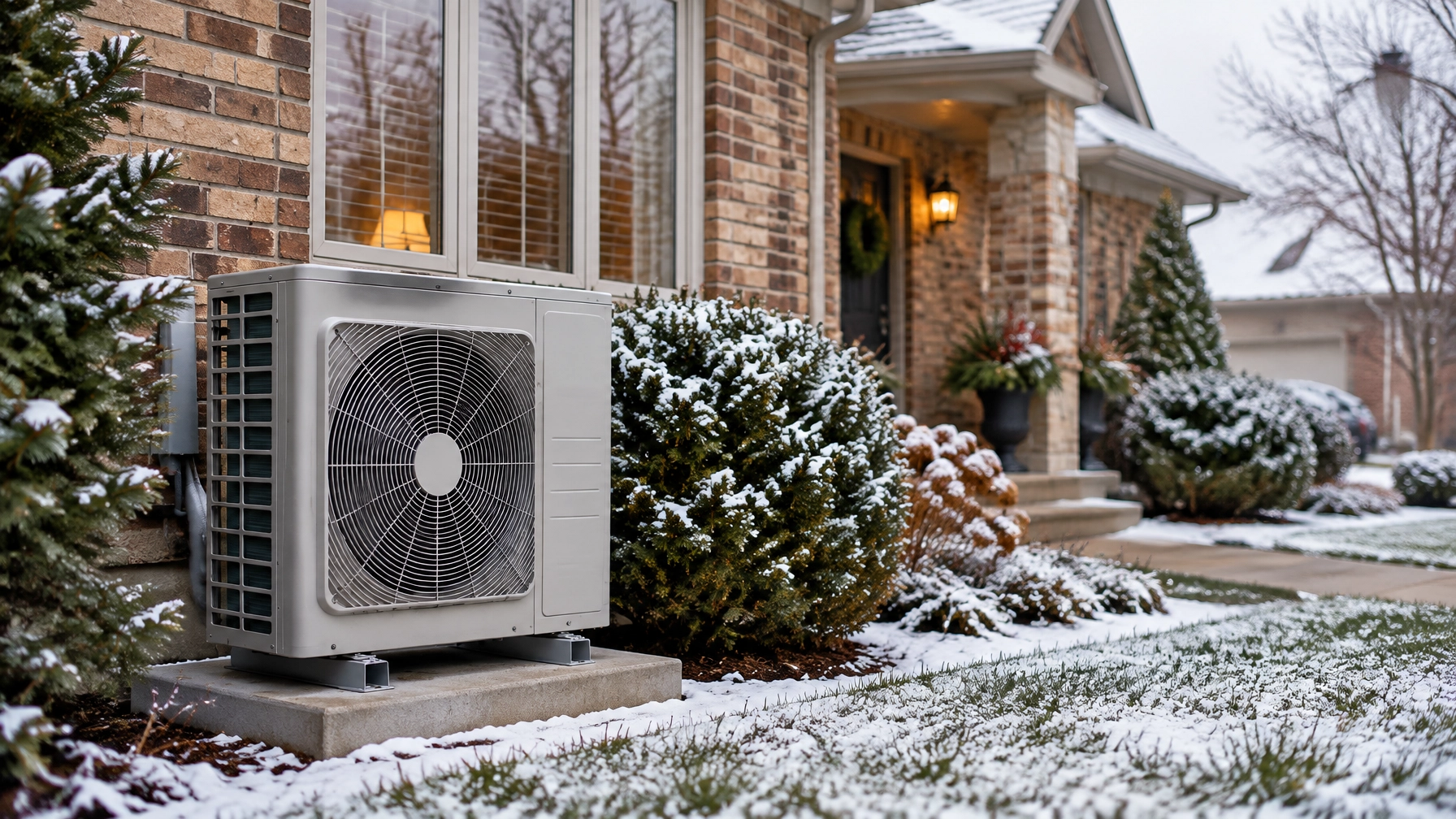
A heat pump transfers heat rather than creating it through combustion. In heating mode, the outdoor unit absorbs available heat from outdoor air and transfers it indoors. A ducted system distributes warm air through existing ductwork, while a ductless system uses indoor wall-mounted units.
Consider a heat pump if you want:
- Heating and cooling from one system
- More precise temperature control
- Zoning for different rooms or floors
- Efficient operation during mild and moderate winter weather
- A solution for homes without existing hydronic piping
Consider a boiler if you value:
- Quiet radiant heat
- Existing radiators or baseboards that already provide good comfort
- A familiar heating method
- Minimal changes to the home’s interior distribution system

How do boiler and heat pump efficiency ratings compare?
Boilers are rated by AFUE, while heat pumps use HSPF2 for heating and SEER2 for cooling. These ratings describe different equipment types, so they should not be compared as if they were identical measurements.
AFUE, or Annual Fuel Utilization Efficiency, measures how much of a boiler’s fuel becomes useful heat over a typical heating season. A high-efficiency condensing boiler may achieve approximately 90% to 98% AFUE, depending on the model and installation.
HSPF2, or Heating Seasonal Performance Factor 2, measures a heat pump’s seasonal heating output compared with the electricity it consumes. A higher HSPF2 rating generally indicates more efficient seasonal heating.
SEER2, or Seasonal Energy Efficiency Ratio 2, measures cooling efficiency. Because a heat pump can reverse operation, SEER2 helps you evaluate how efficiently the same equipment can cool your home during summer.
When evaluating a heat pump for Chicagoland, ask about:
- Cold-climate operation and capacity at low outdoor temperatures
- HSPF2 performance
- SEER2 cooling efficiency
- Capacity at approximately 5°F and colder
- Variable-speed or inverter-driven operation
- Whether the system qualifies as an ENERGY STAR® cold-climate heat pump
ENERGY STAR’s cold-climate heat pump criteria include both seasonal efficiency and low-temperature performance. A rating alone does not guarantee low operating costs. Proper sizing, ductwork, airflow, controls, and installation quality have a major effect on actual performance.
Can a heat pump work with existing radiators?
A standard ducted or ductless heat pump does not directly heat water in existing radiators. To use radiators with a heat pump, the project typically requires an air-to-water heat pump or a carefully designed hybrid system.
Traditional boilers often send water to radiators at temperatures around 160°F to 180°F. Air-to-water heat pumps generally operate most efficiently at lower water temperatures. If your radiators cannot deliver enough heat with lower-temperature water, the system may require larger radiators, additional emitters, improved insulation, or boiler backup.
There are three practical retrofit paths:
-
Replace the boiler with another high-efficiency boiler.
This preserves your radiators and familiar comfort. You would continue using a separate system for cooling. -
Add a heat pump while keeping the boiler.
A ductless or ducted heat pump can provide heating and cooling, while the boiler remains available for very cold conditions or rooms that need additional support. -
Convert the hydronic system to an air-to-water heat pump.
This can connect to radiators or baseboards, but it requires a detailed load calculation, emitter evaluation, water-temperature assessment, controls design, and possibly electrical upgrades.
Before choosing a full conversion, schedule a professional evaluation of your home’s heating load and radiator output. Do not assume that an existing boiler’s size tells you what size heat pump your home needs.
What installation considerations matter in a Chicagoland home?
The best installation depends on your current heating distribution, available electrical capacity, outdoor space, and the condition of the home’s envelope. A professional design should account for winter design temperatures, room-by-room loads, and the system’s performance at low outdoor temperatures.
For a boiler replacement, the contractor should evaluate:
- Boiler age and condition
- Radiator or baseboard performance
- Piping, circulators, valves, and expansion equipment
- Venting and combustion air
- Zone controls and thermostats
- Whether the boiler is properly sized for the current home
For a heat pump installation, the contractor should evaluate:
- Ductwork or appropriate locations for indoor units
- Outdoor unit placement and snow clearance
- Condensate management
- Electrical panel capacity and dedicated circuits
- Low-temperature heating capacity
- Defrost operation and backup heat strategy
- Cooling requirements for summer
If your home has no ductwork, a ductless heat pump may avoid the disruption and expense of installing new ducts. If you already have usable ductwork, a central heat pump may provide more consistent whole-home distribution.

Which system usually costs less to operate over time?
A cold-climate heat pump can reduce combined heating and cooling costs, but the result depends on utility rates, weather, equipment efficiency, home insulation, and how the system is operated. A high-efficiency boiler may remain economical for heating-only homes, particularly when natural gas costs are favorable.
Heat pumps can be especially valuable when replacing both an aging boiler and an aging air conditioner. One properly selected system can provide efficient heating and cooling while reducing the number of major appliances in the home.
A boiler may remain the practical choice when:
- The existing radiator system is in good condition
- The home has limited electrical capacity
- The homeowner prefers radiant heat
- The home’s layout makes heat pump distribution difficult
- The project budget favors a direct replacement
A heat pump may be the better long-term choice when:
- You need both heating and air conditioning
- Your existing heating and cooling systems are near replacement age
- You want zoning or room-by-room control
- Your home can support a cold-climate system
- You are willing to address insulation or electrical improvements
Avoid relying on a generic annual savings estimate. Ask your contractor to compare expected performance using your home’s heating load, equipment ratings, local utility prices, and anticipated system usage.
Should you choose a boiler, heat pump, or hybrid system?
The right choice is the system that matches your home’s structure, comfort expectations, and long-term operating goals. A professional evaluation should compare the condition of your boiler, the availability of cooling, your radiator system, and the performance of cold-climate heat pump options.
As a practical starting point:
- Choose a boiler replacement when your radiator system performs well and radiant comfort is your priority.
- Choose a heat pump when you want efficient heating and cooling from one modern system.
- Choose a hybrid design when you want heat pump efficiency while retaining boiler backup.
- Consider an air-to-water heat pump only after confirming that your radiators can operate effectively at lower water temperatures.
Mechanical Management & Design Solutions (MMDS) provides boiler service and replacement as a core area of expertise, along with residential heat pump installation and replacement. Review our heating system installation and replacement services before scheduling your evaluation.
If your cooling system also needs attention, review our AC installation and replacement services. If a heat pump project requires electrical service evaluation, our team can also help coordinate electrical services.
What should you ask before upgrading your heating system?
Ask for a written comparison that explains equipment performance, installation requirements, projected operating considerations, and backup heating plans. The goal is to select equipment that works correctly in your home: not simply the system with the highest advertised rating.
Use these questions during your consultation:
- Has the home received a room-by-room heating and cooling load calculation?
- What is the heat pump’s capacity at 5°F and other low outdoor temperatures?
- Can the existing radiators provide sufficient heat at lower water temperatures?
- Will the project require electrical panel, piping, ductwork, or venting changes?
- How will the system handle very cold weather?
- What maintenance and expected service life should you plan for?
- How will the proposed equipment affect both winter heating and summer cooling?
A note about local experience
MMDS has served the Greater Chicago area since 2003 and reports more than 893 satisfied customers. That local experience matters because Chicagoland homes vary widely: from older radiator-heated houses to newer homes with ductwork and modern controls.
How can you get help selecting the right system?
Schedule an in-home evaluation before deciding between a boiler and a heat pump. MMDS can assess your existing heating equipment, radiators, cooling needs, electrical requirements, and comfort priorities.
If you're upgrading your HVAC system, help yourself and make sure the equipment you are purchasing qualifies for one of these discounts:
- Up to $900 on < 2.5 tons, ≥ 15.2 SEER2, ≥ 9.4 EER2, ≥ 8.1 HSPF2
- Up to $1,400 on ≥ 2.5 tons, ≥ 15.2 SEER2, ≥ 9.4 EER2, ≥ 8.1 HSPF2
- Up to $1,500 on < 2.5 tons, ≥ 17 SEER2, ≥ 9.4 EER2, ≥ 8.5 HSPF2
- Up to $2,000 on ≥ 2.5 tons, ≥ 17 SEER2, ≥ 9.4 EER2, ≥ 8.5 HSPF2
Discount with ENERGY STAR® certified smart thermostat:
- Up to $975 on < 2.5 tons, ≥ 15.2 SEER2, ≥ 9.4 EER2, ≥ 8.1 HSPF2
- Up to $1,475 on ≥ 2.5 tons, ≥ 15.2 SEER2, ≥ 9.4 EER2, ≥ 8.1 HSPF2
- Up to $1,575 on < 2.5 tons, ≥ 17 SEER2, ≥ 9.4 EER2, ≥ 8.5 HSPF2
- Up to $2,075 on ≥ 2.5 tons, ≥ 17 SEER2, ≥ 9.4 EER2, ≥ 8.5 HSPF2
To apply for these discounts, Call or Text MMDS at (847) 221-6280. Our team will help you select the eligible equipment and handle the necessary documentation to ensure you receive your savings.

For boiler service, boiler replacement, or a cold-climate heat pump consultation in Wheeling and the Chicagoland area, Call or Text (847) 221-6280 to speak with Mechanical Management & Design Solutions (MMDS).