

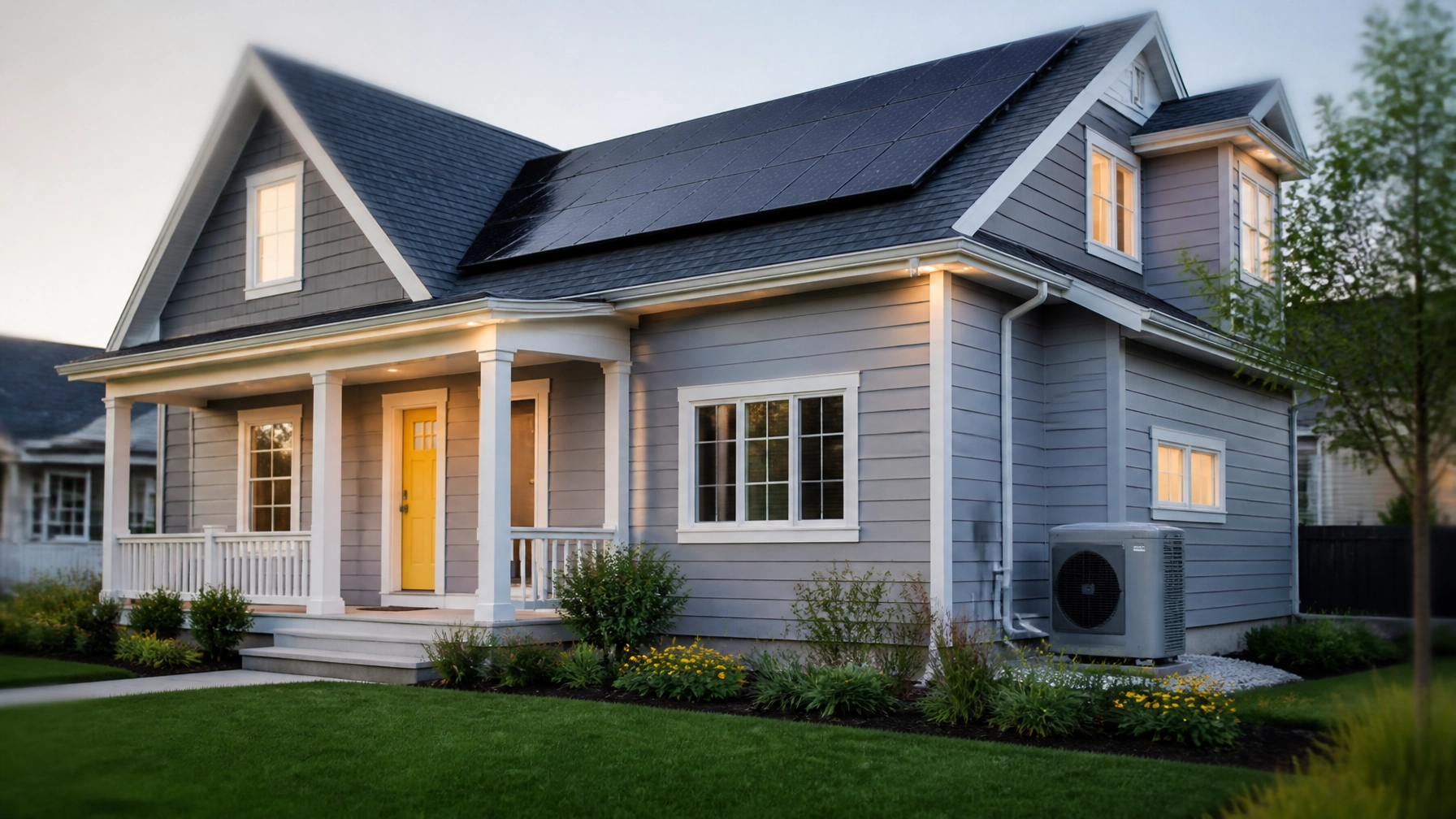
As energy costs fluctuate and environmental awareness grows, homeowners in Wheeling and the Chicagoland area are increasingly looking toward sustainable home comfort solutions. The combination of rooftop solar panels and high-efficiency heat pumps offers a path toward energy independence and lower utility bills. However, transitioning to a solar ready heat pump isn't as simple as swapping out an old unit. It requires a strategic assessment of your home’s current infrastructure.
At Mechanical Management & Design Solutions (MMDS), we believe that preparation is the key to performance. Before you schedule your residential heat pump installation, use this checklist to determine if your home is ready for the future of HVAC.
Is your electrical panel ready for a heat pump?
Most residential heat pumps require a dedicated 240-volt circuit and may necessitate an upgrade to a 200-amp service panel if your home currently runs on an older 100-amp system. Ensuring your electrical panel can handle the additional load of both the solar inverter and the heat pump is essential for safety and reliability.
Modern heat pumps are powerful electrical appliances. Unlike a traditional gas furnace that uses electricity primarily for the blower motor, a heat pump relies on electricity for both the compressor and the indoor fan. If you are also adding a solar array, your electrical panel becomes the hub where energy production meets energy consumption.
Take a moment to inspect your electrical panel. If you see a "100" on the main breaker or if your panel is full of breakers with no room for a new double-pole circuit, you likely need an upgrade. At MMDS, we provide comprehensive services/electrical-services/ to ensure your home’s "heart" is strong enough to support your new equipment.
Upgrading to a 200-amp service not only prepares you for a heat pump but also sets the stage for future additions like electric vehicle chargers.

Can your current ductwork handle a high-efficiency SEER2 system?
High-efficiency SEER2 heat pumps require specific airflow levels that older, smaller, or leaking ducts often cannot provide without modification. A professional evaluation ensures your ductwork is sealed and sized correctly to prevent efficiency loss and equipment strain.
The SEER2 heat pump efficiency standards, introduced in 2023, require systems to perform under higher static pressure. This means your ductwork must be in top-tier condition to deliver the comfort you expect. If your ducts are undersized, the heat pump’s variable-speed motor will have to work much harder to push air through the narrow passages, leading to premature wear and higher energy bills.
Before moving forward with heat pump installation Chicagoland residents should:
- Schedule a static pressure test: This measures how much resistance the air encounters as it moves through your system.
- Ensure proper sealing: Leaky ducts can lose up to 30% of conditioned air before it even reaches your living space.
- Check for insulation: Ducts running through unconditioned attics or crawlspaces must be properly insulated to maintain the temperature of the air.
If your home currently uses a furnace, our team can evaluate your existing setup during a heater installation and replacement consultation to see if your ducts are "heat pump ready."

How much solar do you really need for a heat pump?
To power a heat pump entirely with solar, your array must produce enough kilowatt-hours (kWh) to cover both your baseline home usage and the significant winter heating load. Sizing depends on your home’s square footage, your heat pump’s efficiency rating, and local sunlight hours.
When planning heat pumps for solar homes, the goal is often "net-zero" energy consumption. To achieve this, your solar installer needs to know the estimated annual kWh usage of your new heat pump. In the Chicagoland climate, heat pumps work harder in the winter, so your solar production in the summer needs to "over-produce" to build up credits (if your utility offers net metering) for the colder months.
Calculate your load by reviewing the last 12 months of electricity bills and adding the projected load of the heat pump. A high-efficiency unit will require less solar real estate than a budget model, which is why we often recommend systems with higher SEER2 and HSPF2 ratings for solar-integrated homes.
Where is the best place to install your outdoor unit?
The outdoor unit should be placed on a level pad with at least two feet of clearance on all sides to allow for proper airflow and maintenance access. In the Chicagoland area, it is also vital to elevate the unit slightly to prevent snow accumulation from blocking the intake.
The placement of your outdoor unit affects its longevity and efficiency. For Chicagoland HVAC services, we always consider our local winters. A heat pump must be able to "breathe" to extract heat from the outside air. If the unit is tucked into a tight corner or buried under a snowdrift, it will struggle to function.
Ensure your site meets these criteria:
- Level Ground: Use a sturdy, level concrete or composite pad to prevent vibration and mechanical stress.
- Clearance: Maintain a minimum of 24 inches of space around the unit and avoid placing it under low-hanging roof lines where ice or heavy snow can fall on it.
- Drainage: During the defrost cycle, heat pumps produce water. Ensure the area around the unit has proper drainage so ice doesn't build up around the base.

Is your insulation working as hard as your heat pump?
A heat pump works most efficiently when your home has a tight building envelope, meaning your attic and wall insulation should meet current R-value standards. Without proper insulation, your new system will run longer and consume more energy, negating some of the solar benefits.
Think of your heat pump as the engine and your home’s insulation as the body of the car. No matter how efficient the engine is, if the doors are left open, you won't get very far. In our region, "Local Hero" energy efficiency starts with the attic. We recommend ensuring your attic insulation is at least R-49 to R-60.
Addressing air leaks around windows and doors is another practical step. When your home retains heat effectively, your heat pump doesn't have to cycle as often, which significantly reduces the demand on your solar panels. This synergy is what makes a solar ready heat pump so effective in the long run.

Ready to Upgrade Your Home?
Transitioning to a solar-powered heat pump is a smart investment for your comfort and your wallet. At Mechanical Management & Design Solutions (MMDS), we specialize in the replacement and installation of residential HVAC systems across Wheeling and the Chicagoland area. Whether you are looking for AC installation and replacement or a complete system overhaul, our experts are here to guide you through every step of the checklist.
If you're upgrading your HVAC system, help yourself and make sure the equipment you are purchasing qualifies for one of these discounts:
- Up to $900 on < 2.5 tons, ≥ 15.2 SEER2, ≥ 9.4 EER2, ≥ 8.1 HSPF2
- Up to $1,400 on ≥ 2.5 tons, ≥ 15.2 SEER2, ≥ 9.4 EER2, ≥ 8.1 HSPF2
- Up to $1,500 on < 2.5 tons, ≥ 17 SEER2, ≥ 9.4 EER2, ≥ 8.5 HSPF2
- Up to $2,000 on ≥ 2.5 tons, ≥ 17 SEER2, ≥ 9.4 EER2, ≥ 8.5 HSPF2
Discount with ENERGY STAR® certified smart thermostat:
- Up to $975 on < 2.5 tons, ≥ 15.2 SEER2, ≥ 9.4 EER2, ≥ 8.1 HSPF2
- Up to $1,475 on ≥ 2.5 tons, ≥ 15.2 SEER2, ≥ 9.4 EER2, ≥ 8.1 HSPF2
- Up to $1,575 on < 2.5 tons, ≥ 17 SEER2, ≥ 9.4 EER2, ≥ 8.5 HSPF2
- Up to $2,075 on ≥ 2.5 tons, ≥ 17 SEER2, ≥ 9.4 EER2, ≥ 8.5 HSPF2
To apply for these discounts, Call or Text MMDS at (847) 221-6280. Our team will help you select the eligible equipment and handle the necessary documentation to ensure you receive your savings.