

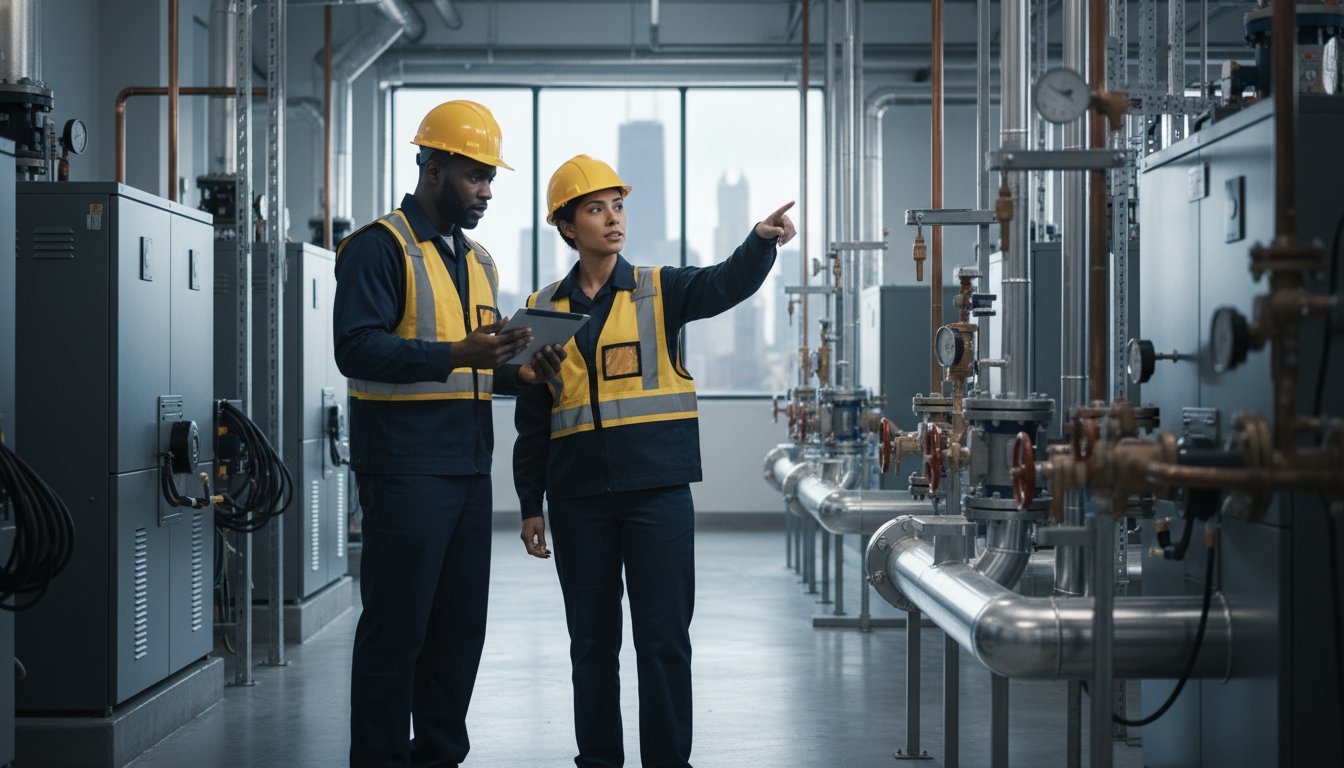
Is your facility’s plumbing system a reliable asset or a ticking clock? In a city where winter temperatures regularly compromise even the sturdiest infrastructure, the difference between a routine inspection and a catastrophic pipe burst often comes down to timing. You already know that Chicago’s aging systems and complex building codes create a unique set of hurdles for any property manager. This guide provides the technical roadmap you need to master the commercial plumbing services Chicago facilities require to stay operational and fully compliant.
We understand that your priority is minimizing expensive downtime and protecting your bottom line from the disruption of major mechanical failures. You’ll gain a clear understanding of Title 18-29 requirements, proactive grease management, and the preventative maintenance steps that keep high-occupancy buildings running smoothly. This overview moves from immediate code compliance to long-term asset management. It offers the seasoned perspective you need to extend the lifespan of your most critical systems while ensuring a safe, efficient environment for your tenants and employees.
Key Takeaways
- Navigate the specific scale and pressure requirements of high-capacity urban environments while maintaining strict compliance with local building codes.
- Reduce long-term capital expenditures by implementing the preventative commercial plumbing services Chicago facility managers use to avoid the high costs of reactive emergency repairs.
- Protect the mechanical heart of your building with specialized boiler maintenance and repair strategies designed for high-occupancy facilities.
- Utilize our facility manager’s audit framework to spot early warning signs of sewer line failure and pressure issues before they disrupt your operations.
- Streamline complex infrastructure projects through integrated Design-Build construction and modern Building Automation Systems for maximum operational efficiency.
Understanding Commercial Plumbing Services in Chicago
Commercial plumbing in a dense urban environment like Chicago involves far more than fixing a leaky faucet. It encompasses the design, installation, and maintenance of complex water supply and waste removal networks for high-occupancy buildings. When we discuss commercial plumbing services Chicago facilities rely on, we’re looking at systems designed for continuous, high-volume use. These mechanical assets must withstand rigorous daily demands while adhering to some of the strictest municipal standards in the country. Our role as seasoned professionals is to ensure these systems function invisibly, allowing your business to operate without the threat of sudden utility failure.
The primary difference between residential and commercial work lies in the sheer scale and complexity of the infrastructure. While a residential system might serve four or five people, a commercial system often serves hundreds or thousands simultaneously. This requires higher water pressure, larger pipe diameters, and sophisticated venting systems to ensure consistent performance. Additionally, commercial properties often house specialized equipment, such as high-efficiency boilers and grease interceptors, which demand a higher level of technical expertise than standard domestic fixtures. The plumbing systems in these large facilities are the lifeblood of the building, and their failure can lead to immediate safety risks and massive financial losses.
The Impact of Chicago’s Climate on Plumbing
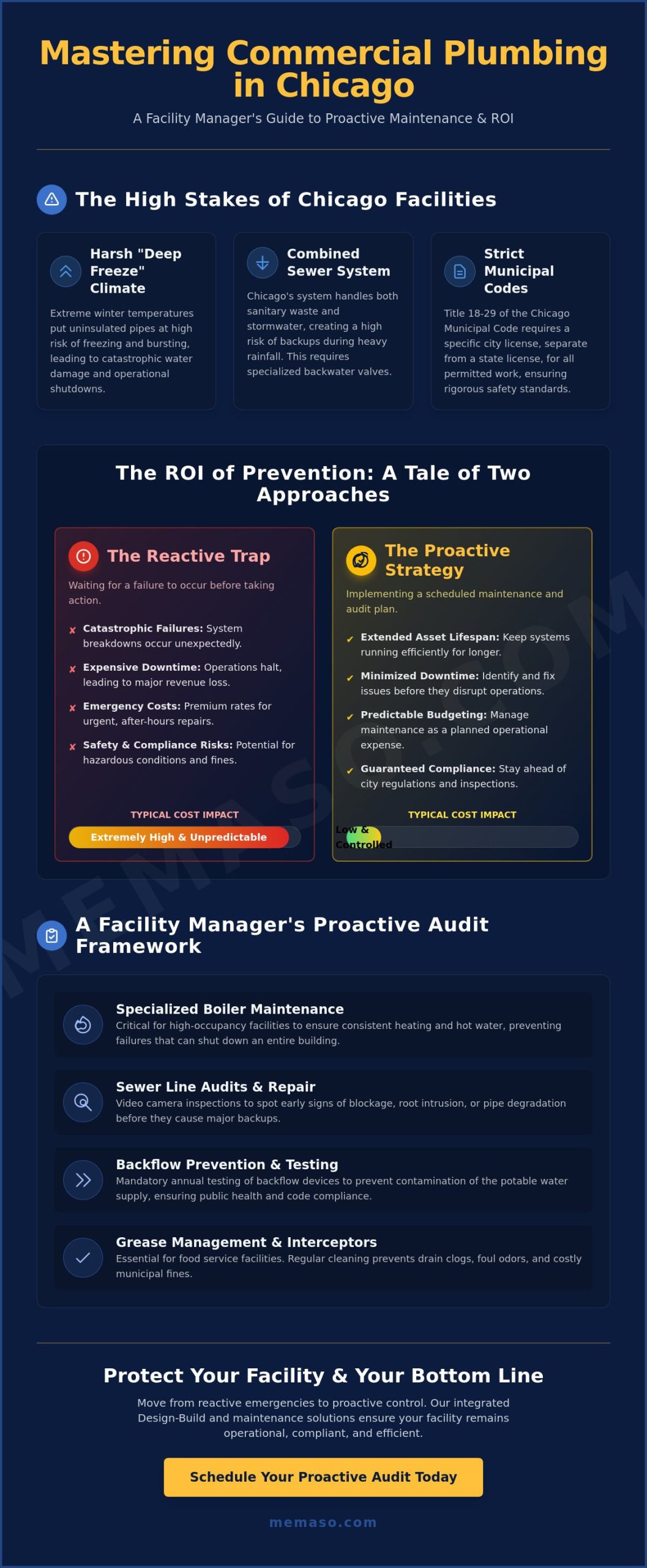
The Chicago “Deep Freeze” presents a recurring threat to industrial and commercial facilities. When temperatures drop well below zero, external pipes and those located in unheated areas are at high risk of freezing and bursting. A single burst pipe can lead to thousands of dollars in property damage and force a complete halt to business operations. We’ve seen how quickly a small oversight in winterization can escalate into a major facility crisis.
Effective winterization strategies are essential for large-scale facilities. This process goes beyond simple insulation. It often involves the installation of heat tracing, an electrical system that maintains the temperature of the pipes to prevent ice formation. By prioritizing these preventative measures, facility managers can safeguard their infrastructure against the city’s harsh environmental conditions and avoid the high costs of emergency pipe repairs.
Compliance with Chicago Building Codes
Navigating the regulatory landscape is one of the most challenging aspects of property management in the city. Chicago operates under its own specific set of regulations, detailed in Title 18-29 of the Chicago Municipal Code. It’s vital to understand that an Illinois state plumbing license is not sufficient to perform permitted work within city limits. A separate City of Chicago license is required for all major installations and repairs. This distinction is critical for maintaining your building’s insurance and legal standing.
Ensuring your contractor is both licensed and bonded is non-negotiable for commercial permit work. This protection guarantees that the work meets safety standards and protects the property owner from liability. From new construction to major system replacements, every project must pass rigorous city inspections to maintain legal compliance and ensure the safety of all building occupants. We act as your consultants throughout this process, ensuring every repair or installation meets the city’s high standards the first time.
Core Components: From Sewer Line Repair to Boiler Maintenance
The mechanical heart of a Chicago commercial building is a sophisticated network that requires constant vigilance. Unlike residential setups, these systems must manage massive fluctuations in demand while navigating the city’s unique infrastructure. Reliable commercial plumbing services Chicago businesses depend on must address both the visible fixtures and the subterranean networks that keep a property viable. One of the most significant local challenges is Chicago’s combined sewer system. Because it handles both sanitary waste and stormwater in a single pipe, the risk of backups during heavy rainfall is high. This makes the installation and maintenance of backwater valves and overhead sewer systems a standard requirement for protecting your facility’s lower levels.
Backflow prevention is another critical component that demands professional attention. The city mandates annual testing of these devices to ensure that non-potable water never siphons back into the municipal supply. This is a primary compliance point for health inspectors, particularly in facilities with specialized equipment or large-scale kitchens. Failing to maintain these records can lead to significant fines and potential water shut-offs. We treat these requirements as a core part of a building’s health, ensuring that safety and compliance are never left to chance.
Commercial Sewer Line Repair and Maintenance
Sewer failures in a commercial setting are often the result of three main factors: grease buildup, root intrusion, and structural aging. In Chicago, where many buildings sit on century-old foundations, pipe degradation is a common reality. We utilize high-definition video inspections to provide a clear view of the pipe’s interior. This diagnostic tool allows us to locate blockages or structural cracks without the need for immediate, invasive digging. If a repair is necessary, we evaluate the feasibility of trenchless sewer repair. This method allows for the restoration of the line with minimal disruption to your parking lot or landscaping, which is essential for maintaining business continuity in our dense urban environment.
Boiler and Water Heating Systems
Chicago’s architectural history means that many older commercial buildings still rely on steam boiler systems. These require a different set of maintenance protocols compared to the high-efficiency hot water boilers found in newer developments. Routine checks on pressure levels, low-water cutoffs, and heat exchangers are vital for both safety and energy efficiency. When a system begins to age, the decision to repair or replace it depends on its overall performance and the frequency of breakdowns. Scheduling regular Boiler Maintenance and Repair is the most effective way to extend the lifespan of these expensive mechanical assets and avoid the high costs of emergency winter failures. Keeping these systems optimized ensures your tenants remain comfortable even during the most brutal cold snaps.
Reactive vs. Preventative Maintenance: The ROI Comparison
Many facility managers view plumbing as a background utility that only requires attention when something goes wrong. In a high-stakes market like ours, this “run-to-fail” mentality is a dangerous gamble that often leads to budget-breaking surprises. Investing in the commercial plumbing services Chicago businesses actually need means shifting from a reactive mindset to a predictive one. By identifying minor wear before it escalates into a system-wide shutdown, you protect both your property and your operational continuity. We approach every facility as a long-term partnership, using our seasoned expertise to turn your plumbing system into a predictable asset rather than a source of financial anxiety.
High-traffic environments, particularly in the restaurant and retail sectors, face unique stressors that standard maintenance often overlooks. For these facilities, regular hydro-jetting and professional drain cleaning are non-negotiable. These services clear out the heavy grease and mineral deposits that accumulate in Chicago’s aging pipes, preventing the sudden backups that can force a business to close its doors during peak hours. This proactive care ensures that your infrastructure remains reliable, efficient, and capable of handling the demands of a modern urban enterprise.
Cost Analysis of Emergency Failures
The true cost of an emergency repair extends far beyond the initial invoice. When a pipe bursts or a sewer line fails, you’re looking at emergency labor rates that can reach $300 per hour, coupled with the immediate expenses of water damage restoration and potential inventory loss. Industry data suggests that a single burst pipe repair in Chicago can cost up to $2,100, not including the secondary damage to floors and electrical systems. Beyond the immediate cash outlay, the disruption to your tenants or customers can cause long-term reputational damage. Consistent professional care can increase the operational lifespan of major mechanical assets like commercial boilers and main waste lines by as much as 25% to 30%, significantly deferring large-scale capital expenditures.
Designing a Custom Maintenance Plan
Every facility has a different mechanical profile, meaning a one-size-fits-all approach to maintenance rarely works. A healthcare facility with 24/7 sterilization needs requires a vastly different inspection schedule than a seasonal hospitality venue. We specialize in tailoring plumbing audits to your specific industry requirements, ensuring that your maintenance windows align with your business cycles. Integrating these checks into your annual building performance reviews allows for better data tracking and more accurate long-term budgeting. MEMASO provides the comprehensive mechanical oversight necessary to manage these complexities, acting as a stable partner in your facility’s long-term success. This structured approach ensures that no component is neglected, from backflow preventers to high-efficiency boilers.
Actionable Guidance: A Facility Manager’s Plumbing Audit
While professional inspections are the backbone of a healthy building, facility managers serve as the first line of defense. Conducting a structured internal audit allows you to catch minor issues before they require large-scale intervention. This proactive approach is a hallmark of the most efficient commercial plumbing services Chicago professionals recommend. Your audit should prioritize safety and compliance, focusing on high-risk areas like mechanical rooms and main waste lines. By documenting your findings, you create a paper trail that is invaluable for insurance claims and municipal inspections, ensuring your property remains in good standing with the Department of Buildings.
Effective record-keeping is just as critical as the physical inspection. You should maintain a log of all grease interceptor cleanings, backflow tests, and boiler pressure readings. If you notice a trend, such as a steady increase in water usage or recurring slow drains in a specific wing, you have the data needed to justify a targeted repair. This level of oversight helps you prioritize your maintenance budget based on actual operational impact rather than guesswork. It transforms your role from a fire-fighter responding to crises into a consultant managing a high-performing mechanical asset.
The 5-Point Monthly Visual Inspection
A quick monthly walkthrough can reveal “silent leaks” that often go unnoticed in high-occupancy restrooms. Start by checking for constant running water in toilets and urinals, as these small leaks can waste thousands of gallons and inflate your utility bills. Next, monitor your water meter during off-hours; any movement when the building is empty indicates a hidden leak within the system. Inspect exposed piping in mechanical rooms for signs of corrosion, such as green oxidation on copper or white mineral crusting on valves. Finally, listen for unusual vibrations or “water hammer” sounds, which suggest temperature-related stress or pressure imbalances that could lead to pipe fatigue.
Working with Professional Contractors
Vetting a contractor in the Chicago market requires looking beyond a basic quote. You must verify that the company holds a specific City of Chicago plumbing license, as a general Illinois state license isn’t valid for permitted work within city limits. Ask about their bonding limits and their experience with high-capacity urban infrastructure. Choosing a single-source mechanical partner who handles both plumbing and HVAC provides a significant advantage; it ensures that your boiler, water heating, and cooling systems are managed with a unified strategy. This synergy reduces the risk of conflicting repairs and simplifies your facility management workflow. Schedule your next Commercial Plumbing Maintenance visit to turn these audit findings into a concrete action plan that protects your building’s long-term value.
Advanced Solutions: Integrated Design-Build and Automation
Modern facility management has moved beyond simple wrench-turning. Today, the most effective commercial plumbing services Chicago offers involve high-level integration between mechanical systems and digital oversight. This shift allows property owners to move from a defensive posture to a proactive, data-driven strategy. By treating plumbing as a component of a larger mechanical ecosystem, you gain better control over utility costs and system reliability. We focus on these advanced solutions to ensure your infrastructure isn’t just functional, but optimized for the future of urban property management.
Our approach centers on the idea that a building’s mechanical parts shouldn’t work in isolation. When your plumbing, heating, and electrical systems communicate, you reduce the risk of conflicting repairs and wasted energy. This seasoned perspective is what distinguishes a long-term partner from a simple service provider. We prioritize precision and efficiency, ensuring that every technical remedy is backed by a logical, data-supported framework.
The Design-Build Advantage
Traditional construction often suffers from a disconnect between the engineering firm and the field technicians. Our Design-Build Construction Services eliminate this gap by housing both phases under one roof. This integrated approach reduces project timelines and costs by overlapping the design and construction phases. This is especially critical when modernizing a Chicago landmark’s aging infrastructure, where unforeseen structural issues often arise. You get a single point of accountability and more accurate cost estimates. Because the designers and technicians work together from day one, the final installation is built exactly as it was engineered, with no communication gaps or field errors.
Smart Technology in Commercial Plumbing
Integrating your plumbing into modern Building Automation Systems (BAS) provides real-time visibility into your water usage. Smart leak detection sensors can now identify anomalies in flow patterns and trigger remote shut-off valves before a small drip becomes a major flood. These tools are especially valuable in high-occupancy environments where a leak on the 20th floor can cause catastrophic damage to every unit below it. Beyond safety, these automation tools help you meet environmental goals through the precise monitoring of high-efficiency fixtures and smart irrigation systems.
MEMASO combines our expertise in electrical, HVAC, and plumbing to provide total facility optimization. This holistic view ensures that your boiler maintenance, electrical panel upgrades, and plumbing repairs work in concert to lower your overall operational costs. We help you transition from traditional maintenance to a smart, automated facility that practically manages itself. Schedule your commercial plumbing audit with MEMASO today.
Securing Your Facility’s Mechanical Future
Mastering the infrastructure of a high-occupancy building requires more than just technical skill; it demands a strategic partnership rooted in local expertise. We’ve explored how transitioning from reactive repairs to a data-driven, preventative model protects your capital assets and ensures business continuity. By combining regular audits with advanced building automation, you can transform your plumbing system into a predictable and efficient component of your facility’s success. Staying ahead of Chicago’s rigorous codes and harsh winters isn’t just about compliance; it’s about peace of mind for you and your tenants.
Reliable commercial plumbing services Chicago managers trust are built on decades of hands-on experience. With over 20 years of collective tenure in the local market, we specialize in everything from integrated design-build construction to 24/7 emergency mechanical support. Our team understands the unique pressures of the city’s aging municipal grid and provides the precision needed for complex urban environments. Partner with Chicago’s seasoned mechanical experts for your commercial plumbing needs. Let’s work together to ensure your property remains safe, efficient, and fully operational for years to come.
Frequently Asked Questions
What are the most common commercial plumbing issues in Chicago?
Chicago facilities frequently deal with frozen pipes during the winter and sewer backups caused by the city’s combined sewer system. Low water pressure in older buildings and grease trap overflows in restaurants are also prevalent. High-occupancy buildings often face fixture fatigue and silent leaks that can inflate utility costs. Addressing these requires commercial plumbing services Chicago owners rely on to maintain large-scale infrastructure without disrupting daily operations.
How often should a commercial building have a sewer line inspection?
Commercial buildings should typically have a professional sewer line inspection performed at least once per year. High-traffic facilities like restaurants or industrial plants may require more frequent checks to prevent grease and debris buildup. Using high-definition video diagnostics allows facility managers to identify structural cracks or root intrusions early. This proactive approach prevents sudden backups that could force a complete halt to business activities and lead to expensive property damage.
Is backflow testing mandatory for Chicago businesses?
Yes, annual backflow preventer testing is a mandatory requirement enforced by the City of Chicago and state health departments. These devices protect the municipal potable water supply from contamination caused by siphoning or backpressure. Licensed professionals must perform the test and submit the necessary documentation to the city. Neglecting this annual requirement can result in significant fines, legal liabilities, or even the disconnection of your building’s water service.
What is the difference between residential and commercial sewer line repair?
The primary differences are the scale of the piping and the regulatory environment. Commercial sewer lines are much larger and must handle higher volumes of waste and stormwater simultaneously. Repairs often involve complex trenchless technologies to avoid disrupting parking lots or city sidewalks. Additionally, commercial work requires specific city permits and adherence to Title 18-29 codes, which are more stringent than the regulations governing single-family residential properties.
How do Chicago winters affect commercial plumbing systems?
The city’s extreme cold can lead to ice blockages and catastrophic pipe bursts in unheated areas of a building. External lines and those near loading docks are particularly vulnerable when temperatures drop below zero. Effective winterization involves more than just insulation; it often requires heat tracing and pressure monitoring. These steps prevent the high costs of emergency repairs and restoration that follow a major winter mechanical failure in a commercial setting.
Can building automation help reduce commercial water bills?
Integrating your plumbing with building automation systems allows for real-time monitoring of water consumption. Sensors can detect minute flow changes that indicate a silent leak or a fixture left running in a high-occupancy restroom. By identifying these anomalies immediately, facility managers can significantly reduce water waste and lower monthly utility bills. This technology turns a static plumbing system into a dynamic, manageable asset that contributes to the building’s overall efficiency.
What should I do during a commercial plumbing emergency in Chicago?
During a plumbing emergency, the first step is to locate and close the main water shut-off valve to prevent further damage. You should then notify your building’s maintenance team and contact a licensed mechanical partner who offers emergency support. Avoid attempting complex repairs on high-pressure systems without professional oversight. Prompt action helps minimize property damage and allows your business to return to normal operations as quickly as possible.
Why is a licensed commercial plumber required for Chicago facility work?
The City of Chicago requires a specific municipal license for commercial work to ensure all repairs meet Title 18-29 safety standards. An Illinois state license alone isn’t sufficient for permitted work within city limits. Using a licensed professional protects your building’s insurance coverage and ensures that all installations pass rigorous city inspections. This oversight is vital for maintaining the structural integrity of the facility and the safety of all building tenants.