

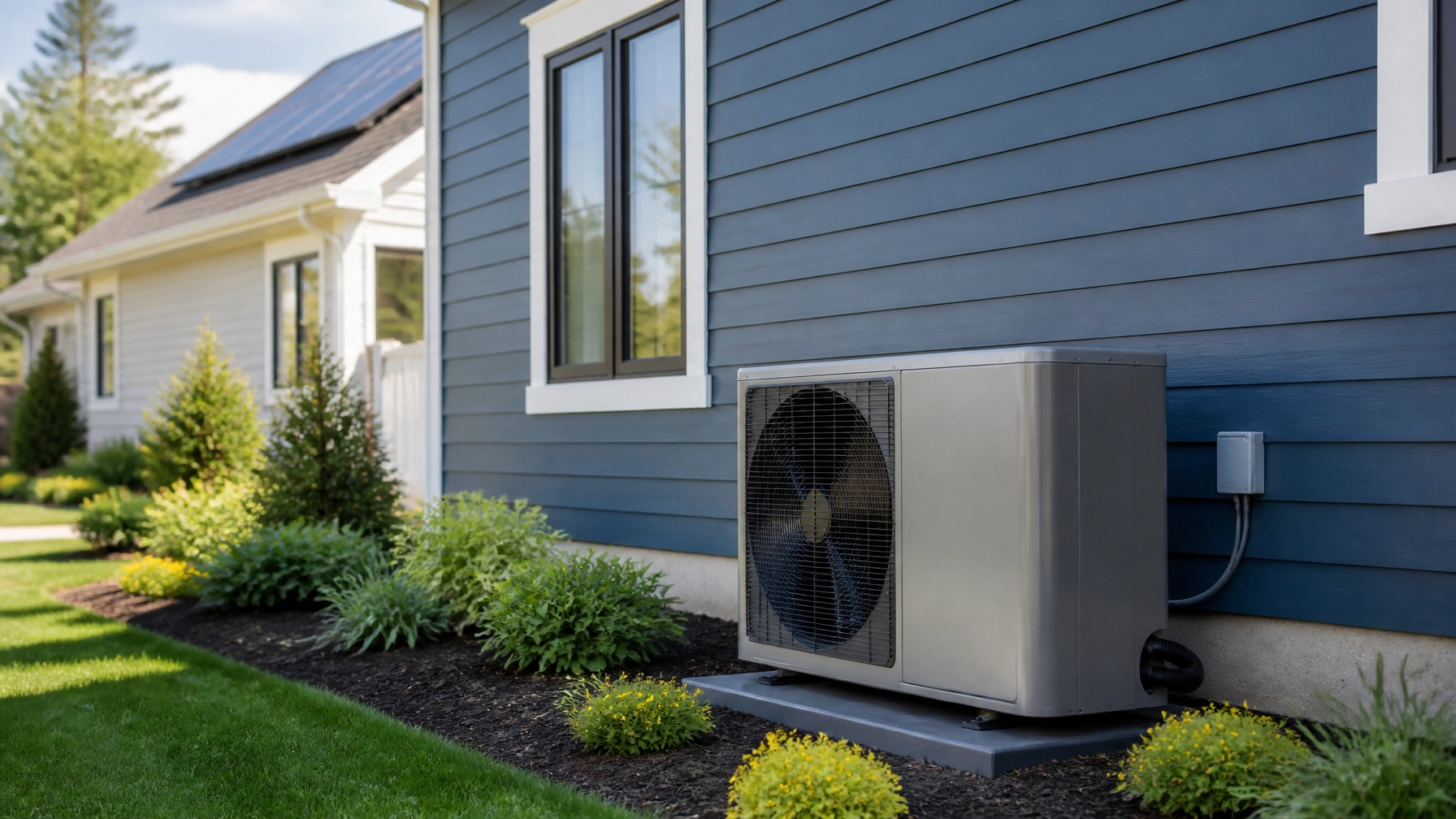
For homeowners in Wheeling and the Chicagoland area who have already invested in solar energy, choosing the right HVAC system is the next logical step in maximizing home efficiency. While the traditional gas furnace has been the regional standard for decades, the rise of high-efficiency heat pumps offers a compelling way to power your climate control directly from the sun. At Mechanical Management & Design Solutions (MMDS), we help neighbors navigate these technical choices to ensure year-round comfort and long-term savings.
What is the difference between a heat pump and a furnace?
A furnace creates heat by burning fuel (usually natural gas), while a heat pump uses electricity to move existing heat from the outside air into your home. Essentially, a heat pump acts as a two-way air conditioner, providing both heating in the winter and cooling in the summer using a single piece of equipment.
When you opt for a new furnace installation, you are installing a system that relies on combustion. Modern high-efficiency furnaces are incredibly effective at keeping Chicagoland homes warm during a polar vortex, but they cannot utilize the electricity generated by your solar panels. In contrast, a heat pump is entirely electric. It extracts ambient heat from the outdoor air, even in cold temperatures, and compresses it to warm your living space. Because it moves heat rather than creating it, a heat pump can be significantly more efficient than a traditional heating system, often delivering three times more heat energy than the electrical energy it consumes.
Why are heat pumps better for solar-powered homes?
Heat pumps are ideal for solar-enabled homes because they allow you to run your entire heating and cooling system on the "free" electricity produced by your roof. By switching from gas-based heating to an electric heat pump, you transition your home's largest energy draw to a renewable source you already control.
If you have solar panels in the Chicagoland area, your system is likely producing a surplus of energy during the sunnier months. With a heat pump, you can use that stored energy (or net-metering credits) to power your heating throughout the fall and spring. This synergy reduces your reliance on natural gas providers and protects you from fluctuating fuel prices. Furthermore, since a heat pump also provides cooling, it replaces your AC installation, streamlining your home’s mechanical systems into one highly efficient, solar-compatible package.

Can a heat pump handle a Chicago winter?
Yes, modern cold-climate heat pumps are designed to operate efficiently even when temperatures drop well below freezing, though many Chicagoland homeowners prefer a "dual-fuel" setup. A dual-fuel system uses a heat pump for the majority of the year and switches to a high-efficiency gas furnace only during the most extreme sub-zero days to ensure consistent comfort.
In our local climate, temperatures can swing wildly. Older heat pumps often struggled once the thermometer hit 32°F, but today’s "cold-climate" models maintain high performance down to 5°F or even lower. However, because Chicago can experience extreme deep-freeze events, we often recommend pairing a heat pump with a backup furnace installation. This hybrid approach gives you the best of both worlds: you use solar-powered electric heat for 80-90% of the heating season and rely on the robust power of gas only when the outdoor air is too cold for the heat pump to extract heat efficiently.
When should you choose a new furnace installation instead?
A dedicated gas furnace installation is often the preferred choice for homeowners who do not have solar panels, live in older homes with limited electrical service capacity, or prioritize the lowest possible upfront equipment cost. If your home's electrical panel cannot handle the additional load of a high-capacity heat pump, a furnace remains a reliable and powerful heating solution.
While heat pumps offer incredible efficiency, they do require a more significant upfront investment and may necessitate electrical upgrades to your home’s wiring or breaker panel. If you are not planning to install solar or if your primary goal is a simple, cost-effective replacement of an aging system, a high-efficiency gas furnace is a "tried and true" technology for the Midwest. At MMDS, we evaluate your home’s ductwork, insulation, and electrical capacity to determine which path provides the most pragmatic benefit for your specific situation in Wheeling.

How does a heat pump impact your home’s energy efficiency?
A heat pump drastically improves home energy efficiency by achieving a Coefficient of Performance (COP) of 2.0 to 4.0, meaning it produces multiple units of heat for every unit of electricity it uses. This is far superior to even the most efficient gas furnaces, which are limited to a maximum efficiency of about 98% (or 0.98 units of heat per unit of fuel).
For a solar home, this efficiency is a game-changer. Every kilowatt-hour your solar panels produce goes much further when feeding a heat pump. Instead of using that electricity just for lights and appliances, you are using it to move heat into your home at a fraction of the cost of burning gas. Additionally, during the summer, these units act as high-efficiency air conditioners, often outperforming older standard AC units in terms of Seasonal Energy Efficiency Ratio (SEER2) ratings. This year-round efficiency ensures that your solar investment pays for itself much faster.
Frequently Asked Questions About HVAC Upgrades
1. Is it hard to switch from a furnace to a heat pump?
Not necessarily. If your home already has ductwork for a central furnace and AC, a heat pump can typically use that same distribution system. Our team will ensure your electrical services are sufficient to support the new equipment.
2. Does a heat pump require more maintenance than a furnace?
Because a heat pump runs year-round (heating and cooling), it should be serviced twice a year: once before the cooling season and once before the heating season. This ensures the reversing valve and refrigerant levels are optimal for the changing weather in Chicagoland.
3. Will my electric bill go up with a heat pump?
Your electric usage will increase because you are shifting your heating load from gas to electricity. However, for solar-powered homes, this increase is often offset by your own energy production, resulting in a significantly lower overall monthly utility spend across both gas and electric.
4. What is "Dual-Fuel"?
Dual-fuel refers to a system that combines an electric heat pump with a gas furnace. It is the most popular "Local Hero" strategy in the Chicagoland market because it provides the efficiency of solar-powered heat with the reliability of gas backup for extreme winters.
Maximize Your Savings with MMDS
If you're upgrading your HVAC system, help yourself and make sure the equipment you are purchasing qualifies for one of these discounts:
- Up to $900 on < 2.5 tons, ≥ 15.2 SEER2, ≥ 9.4 EER2, ≥ 8.1 HSPF2
- Up to $1,400 on ≥ 2.5 tons, ≥ 15.2 SEER2, ≥ 9.4 EER2, ≥ 8.1 HSPF2
- Up to $1,500 on < 2.5 tons, ≥ 17 SEER2, ≥ 9.4 EER2, ≥ 8.5 HSPF2
- Up to $2,000 on ≥ 2.5 tons, ≥ 17 SEER2, ≥ 9.4 EER2, ≥ 8.5 HSPF2
Discount with ENERGY STAR® certified smart thermostat:
- Up to $975 on < 2.5 tons, ≥ 15.2 SEER2, ≥ 9.4 EER2, ≥ 8.1 HSPF2
- Up to $1,475 on ≥ 2.5 tons, ≥ 15.2 SEER2, ≥ 9.4 EER2, ≥ 8.1 HSPF2
- Up to $1,575 on < 2.5 tons, ≥ 17 SEER2, ≥ 9.4 EER2, ≥ 8.5 HSPF2
- Up to $2,075 on ≥ 2.5 tons, ≥ 17 SEER2, ≥ 9.4 EER2, ≥ 8.5 HSPF2
To apply for these discounts, Call or Text MMDS at (847) 221-6280. Our team will help you select the eligible equipment and handle the necessary documentation to ensure you receive your savings.

Whether you are ready to fully electrify your home or want to install a high-efficiency new furnace to complement your solar array, Mechanical Management & Design Solutions (MMDS) is here to help. We are proud to serve homeowners and businesses throughout Wheeling and the Chicagoland area with professional, honest, and expert HVAC services.
Take the next step toward a more efficient home. Call or Text us today at (847) 221-6280 to schedule a consultation.