

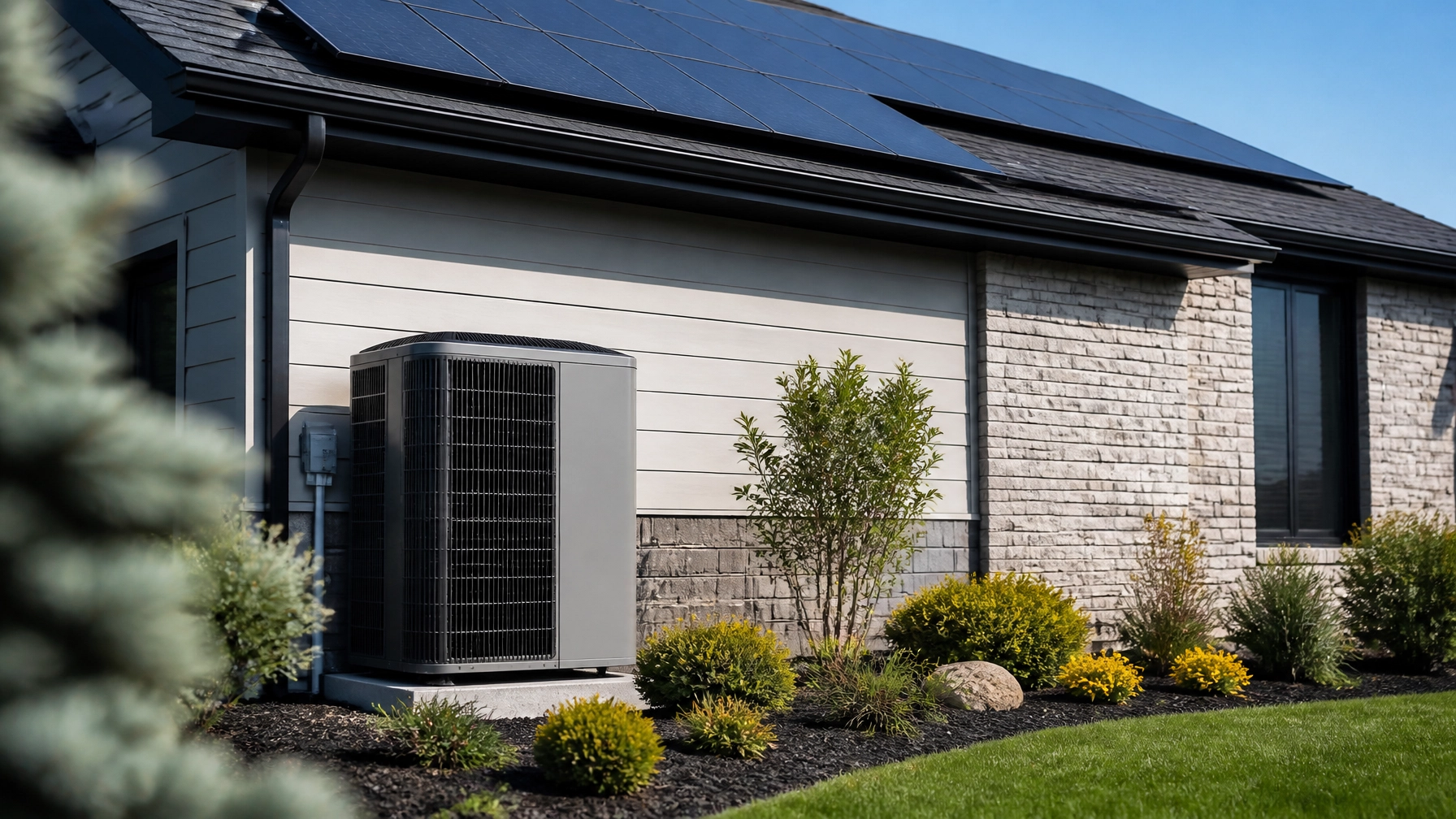
If you have already made the smart investment in solar panels for your home in Wheeling or the surrounding Chicagoland area, you are already ahead of the curve in energy independence. However, the next logical step in maximizing that investment often involves a critical look at your HVAC system. Many homeowners find themselves at a crossroads: should they stick with a traditional central air conditioning and gas furnace combo, or transition to a high-efficiency heat pump?
In the Chicagoland climate, where temperatures swing from humid 90-degree summer days to sub-zero winter nights, the choice you make impacts not just your comfort, but also your monthly overhead. Mechanical Management & Design Solutions (MMDS) is here to help you navigate these technical waters to ensure your home remains a sanctuary of efficiency and reliability.
What is the main difference between a heat pump and a traditional AC unit?
A traditional air conditioner is designed strictly for cooling by removing heat from inside your home and venting it outside, whereas a heat pump is a versatile system that can both cool your home in the summer and provide heat during the winter. Essentially, a heat pump is a reversible air conditioner that uses a specialized component called a reversing valve to change the direction of refrigerant flow, allowing it to move heat into your home when the temperature drops.
To understand this better, consider the "split system" setup most Wheeling homeowners are familiar with. A traditional AC works in tandem with a natural gas furnace; the AC handles the heat of July, and the furnace burns fuel to handle the chill of January. A heat pump, however, handles both duties. During the cooling season, it operates exactly like a high-efficiency /ac-installation-and-replacement/, pulling heat out of your living space. When winter arrives, it "finds" ambient heat in the outdoor air, even in cold temperatures, and moves it indoors. This process of moving heat is significantly more energy-efficient than generating heat through combustion or electrical resistance.
Why are heat pumps the preferred choice for solar-powered homes?
Heat pumps are the ideal partner for solar-powered homes because they run entirely on electricity, allowing you to use the energy generated by your solar panels to power both your heating and cooling systems. By switching from a gas-powered furnace to an electric heat pump, you transition your home's largest energy consumer away from fossil fuels and onto your own self-generated "free" power.
When you install solar panels, your goal is typically to offset as much of your utility bill as possible. A traditional AC only uses your solar power during the summer months. For the rest of the year, your furnace is burning natural gas, which your solar panels cannot offset. By installing a heat pump, you increase your "self-consumption" of solar energy. This means your panels are working for you year-round, offsetting the costs of staying warm in the winter just as effectively as they keep you cool in the summer. This synergy often leads to a much faster return on investment for your solar array.

Can a heat pump handle the extreme Chicago winters?
Yes, modern cold-climate heat pumps (CCHPs) are specifically engineered to provide reliable heat even when outdoor temperatures drop as low as -13°F or further. While older heat pump technology struggled in the Midwest, today's advanced variable-speed compressors allow these systems to maintain high efficiency and heating capacity during the vast majority of a typical Chicagoland winter.
Many homeowners in the Wheeling area opt for what is known as a "dual-fuel" or hybrid system. In this configuration, the heat pump handles the heating duties for about 85-90% of the year. During those rare, extreme "Polar Vortex" events where temperatures plummet well below the heat pump’s optimal range, the system can automatically switch over to a backup gas furnace or electric heat strip. This ensures you never sacrifice comfort for efficiency. At Mechanical Management & Design Solutions (MMDS), we specialize in sizing these systems correctly to ensure they meet the specific thermal demands of Chicago's unique climate.
Which system offers better long-term cost savings?
While the initial installation of a high-efficiency heat pump may involve a higher upfront cost compared to a standard AC unit, the long-term savings are substantial due to the elimination or drastic reduction of natural gas consumption. When paired with solar panels, many homeowners see their total annual energy expenditures drop by 50% or more, depending on their previous system's efficiency and their solar capacity.
Efficiency in HVAC is measured by SEER2 (Seasonal Energy Efficiency Ratio) for cooling and HSPF2 (Heating Seasonal Performance Factor) for heating. A high-efficiency heat pump often boasts a SEER2 rating of 17 or higher, putting it in the top tier of cooling performance. Because a heat pump moves 3 to 5 times more energy than it consumes, it is mathematically the most efficient way to regulate your home's temperature. Over the 15-to-20-year lifespan of the equipment, the cumulative savings on utility bills and the reduced wear and tear on a single integrated system provide a clear financial advantage.

How does a heat pump improve indoor comfort and air quality?
Heat pumps utilize variable-speed technology to provide more consistent temperatures and superior dehumidification compared to the "all-or-nothing" on/off cycles of traditional AC units. This results in a home that lacks the cold spots or humid pockets often found in older systems, while also providing a quieter environment due to the unit’s ability to run at lower, more sustained speeds.
Traditional furnaces and air conditioners often blast air at 100% capacity until the thermostat is satisfied, then shut off completely. This creates a "rollercoaster" of temperature and humidity. Heat pumps, particularly inverter-driven models, "sip" electricity and adjust their output to match the exact needs of your home in real-time. Furthermore, because heat pumps do not rely on the combustion of natural gas inside the home, there is a reduced risk of carbon monoxide issues and an overall improvement in indoor air quality.
Professional Installation in Wheeling and the Chicagoland Area
Choosing between a heat pump and a traditional AC isn't just about the equipment; it's about the design and installation. At Mechanical Management & Design Solutions (MMDS), we take a data-driven approach to every project. We serve Wheeling and the Chicagoland area with a focus on precision engineering and customer education. Whether you are looking for a /heater-installation-and-replacement/ or a full system overhaul to complement your new solar panels, our team is ready to assist.
Our technicians ensure that your ductwork is sized correctly for the higher airflow requirements of modern heat pumps and that your electrical system is prepared for the transition. We believe in providing our neighbors with honest advice that prioritizes long-term equipment longevity and home safety.

Frequently Asked Questions
- Will I still need my gas line if I switch to a heat pump?
Not necessarily. Many homeowners choose to go "all-electric" and cap their gas lines. However, some prefer to keep a gas line for a backup furnace in a hybrid configuration. - How long does a heat pump installation take?
Most residential installations in the Chicagoland area can be completed within one to two business days, depending on whether modifications to the ductwork or electrical panel are required. - Do heat pumps require more maintenance than traditional AC?
The maintenance requirements are similar, but because the heat pump runs year-round (both heating and cooling), it is vital to schedule bi-annual inspections, once in the spring and once in the fall, to ensure peak performance. - Is it loud?
No. In fact, high-efficiency heat pumps are typically much quieter than traditional AC units because they use insulated compressor blankets and variable-speed fans that don't need to spin at maximum RPM most of the time.
Take Action Today for a More Efficient Home
If you're upgrading your HVAC system, help yourself and make sure the equipment you are purchasing qualifies for one of these discounts:
- Up to $900 on < 2.5 tons, ≥ 15.2 SEER2, ≥ 9.4 EER2, ≥ 8.1 HSPF2
- Up to $1,400 on ≥ 2.5 tons, ≥ 15.2 SEER2, ≥ 9.4 EER2, ≥ 8.1 HSPF2
- Up to $1,500 on < 2.5 tons, ≥ 17 SEER2, ≥ 9.4 EER2, ≥ 8.5 HSPF2
- Up to $2,000 on ≥ 2.5 tons, ≥ 17 SEER2, ≥ 9.4 EER2, ≥ 8.5 HSPF2
Discount with ENERGY STAR® certified smart thermostat:
- Up to $975 on < 2.5 tons, ≥ 15.2 SEER2, ≥ 9.4 EER2, ≥ 8.1 HSPF2
- Up to $1,475 on ≥ 2.5 tons, ≥ 15.2 SEER2, ≥ 9.4 EER2, ≥ 8.1 HSPF2
- Up to $1,575 on < 2.5 tons, ≥ 17 SEER2, ≥ 9.4 EER2, ≥ 8.5 HSPF2
- Up to $2,075 on ≥ 2.5 tons, ≥ 17 SEER2, ≥ 9.4 EER2, ≥ 8.5 HSPF2
To apply for these discounts, Call or Text MMDS at (847) 221-6280. Our team will help you select the eligible equipment and handle the necessary documentation to ensure you receive your savings. Take a moment to secure your home’s comfort for the years to come.