

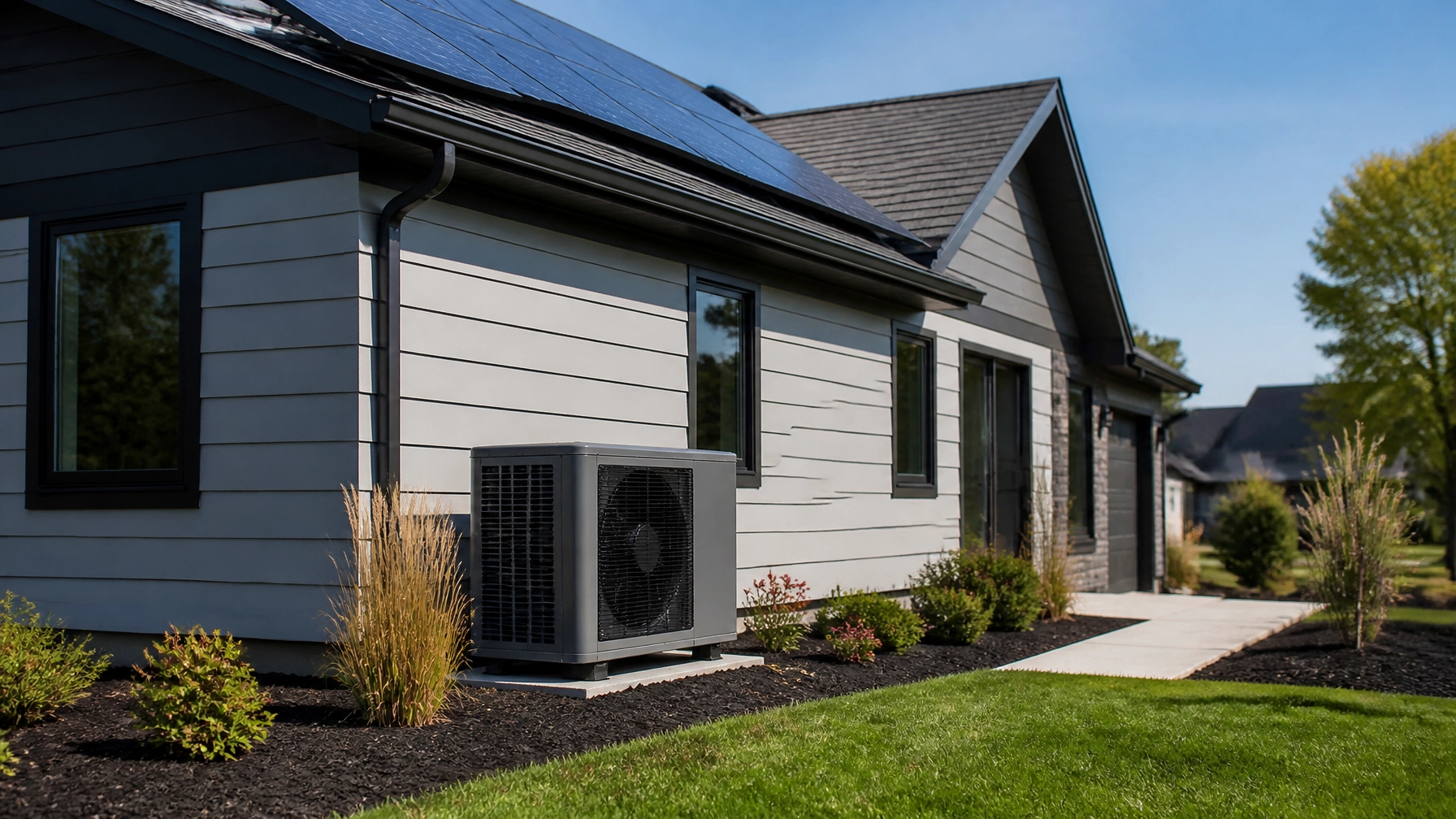
For homeowners in Wheeling and the Chicagoland area, the shift toward renewable energy is more than just a trend, it is a practical strategy for long-term savings. If you have already invested in solar panels, or are considering them, your next major decision involves how you heat and cool your home. The choice between a modern heat pump and a traditional natural gas furnace is the most critical factor in determining how much of that "free" solar energy you actually get to use.
Mechanical Management & Design Solutions (MMDS) specializes in helping residents navigate these technical choices to ensure your home remains comfortable through every Lake Michigan winter blast. In this guide, we will break down why the equipment you choose to pair with your solar array can either maximize your investment or leave you tied to fluctuating fossil fuel prices.
What is the main difference between a heat pump and a traditional furnace?
A traditional furnace generates heat by burning a fuel source like natural gas or propane, while a heat pump uses electricity to move existing heat from the outside air into your home. Essentially, a furnace creates heat from scratch, whereas a heat pump acts as a heat transporter, making it significantly more energy-efficient.
Understanding this technical distinction is vital for solar homeowners. A gas furnace requires an external fuel line and a monthly bill from a gas utility. A heat pump, however, is a fully electric system. In the summer, it works exactly like an air conditioner, pulling heat out of your house. In the winter, it reverses the process, extracting thermal energy from the outdoor air, even when it's cold, and bringing it inside. Because it runs entirely on electricity, it can be powered directly by your rooftop solar panels, potentially bringing your heating and cooling costs down to near zero.
Are heat pumps effective for Chicago's freezing winters?
Yes, modern "cold-climate" heat pumps are specifically engineered to provide reliable, efficient heating even when temperatures in the Chicagoland area drop as low as -15°F. Unlike older models from decades ago, today’s high-performance units utilize advanced compressors and refrigerants to maintain high capacity during extreme Midwest winters.

While many people worry that an electric system won't keep up when the wind starts howling across the prairie, technology has bridged that gap. When we perform a heater installation and replacement, we prioritize units with high HSPF2 (Heating Seasonal Performance Factor) ratings. These systems don't just "work" in the cold; they remain significantly more efficient than electric baseboard heaters or older furnaces. For the few days a year when temperatures plunge into record-breaking arctic territory, most systems are equipped with auxiliary electric heat strips to ensure your family stays warm no matter what.
How does having solar panels change the furnace vs. heat pump debate?
Having solar panels fundamentally tilts the scales in favor of a heat pump because it allows you to transition your largest energy expense, heating, from a paid utility (gas) to a self-generated resource (solar electricity). By choosing a heat pump, you effectively "electrify" your HVAC system, allowing your solar array to cover both your summer cooling and your winter heating needs.
When you stick with a traditional gas furnace, your solar panels can only help lower your lighting and appliance bills. You remain vulnerable to the rising costs of natural gas. By switching to a heat pump, you use the excess electricity your panels produce during the day to run your HVAC system. In many cases, Wheeling homeowners find that their solar production during the spring and fall provides enough "credits" through net metering to offset the increased electrical usage of a heat pump during the winter months. To ensure your home's electrical panel can handle this transition, you may want to consult our experts on electrical services.
What are the primary benefits of choosing a heat pump for a solar-powered home?
The primary benefits include drastic reductions in monthly utility bills, a smaller carbon footprint, and the convenience of having one single system for both heating and cooling. Furthermore, heat pumps provide a more consistent, steady flow of warm air compared to the "blast and fade" cycle of many older furnaces.
- Energy Independence: You rely less on the grid and fossil fuel providers and more on the energy falling on your own roof.
- Cost Stability: Natural gas prices are volatile; solar-generated electricity is essentially a fixed, "pre-paid" cost once the panels are installed.
- Dehumidification: In our humid Chicagoland summers, heat pumps are exceptionally good at removing moisture from the air during the AC installation and replacement process.
- Safety: By removing a gas-burning appliance from your home, you eliminate the risk of carbon monoxide leaks associated with furnace combustion.
- Longevity: Modern heat pumps are built to high standards and, with proper annual maintenance, provide reliable comfort for many years.

Is a "dual-fuel" system a better choice for some Chicagoland homes?
A "dual-fuel" or hybrid system, which combines an electric heat pump with a natural gas furnace backup, is often the best choice for older, larger, or poorly insulated homes in the Chicagoland area. This setup uses the efficient heat pump for the majority of the year and only switches to the gas furnace during the most extreme cold snaps when gas may be more cost-effective or necessary for rapid heating.
For many residents in Wheeling, this offers the "best of both worlds." You get to use your solar energy to power the heat pump for about 85-90% of the heating season. Only when the temperature drops below a certain "crossover point" (usually around 20°F to 30°F, depending on your home's insulation) does the gas furnace kick in. This ensures maximum comfort during a polar vortex while still significantly slashing your annual gas consumption.
Take the Next Step for Your Home Comfort
Deciding between a heat pump and a furnace requires a professional load calculation and an assessment of your current solar capacity. At Mechanical Management & Design Solutions (MMDS), we take the guesswork out of the process. We evaluate your home’s ductwork, insulation, and electrical capacity to recommend the system that provides the fastest return on your solar investment.
Whether you are looking for a complete system overhaul or just need to prepare your current unit for the upcoming season, our team is here to help. Take a moment to ensure your home is as efficient as it can be.

If you're upgrading your HVAC system, help yourself and make sure the equipment you are purchasing qualifies for one of these discounts:
- Up to $900 on < 2.5 tons, ≥ 15.2 SEER2, ≥ 9.4 EER2, ≥ 8.1 HSPF2
- Up to $1,400 on ≥ 2.5 tons, ≥ 15.2 SEER2, ≥ 9.4 EER2, ≥ 8.1 HSPF2
- Up to $1,500 on < 2.5 tons, ≥ 17 SEER2, ≥ 9.4 EER2, ≥ 8.5 HSPF2
- Up to $2,000 on ≥ 2.5 tons, ≥ 17 SEER2, ≥ 9.4 EER2, ≥ 8.5 HSPF2
Discount with ENERGY STAR® certified smart thermostat:
- Up to $975 on < 2.5 tons, ≥ 15.2 SEER2, ≥ 9.4 EER2, ≥ 8.1 HSPF2
- Up to $1,475 on ≥ 2.5 tons, ≥ 15.2 SEER2, ≥ 9.4 EER2, ≥ 8.1 HSPF2
- Up to $1,575 on < 2.5 tons, ≥ 17 SEER2, ≥ 9.4 EER2, ≥ 8.5 HSPF2
- Up to $2,075 on ≥ 2.5 tons, ≥ 17 SEER2, ≥ 9.4 EER2, ≥ 8.5 HSPF2
To apply for these discounts, Call or Text MMDS at (847) 221-6280. Our team will help you select the eligible equipment and handle the necessary documentation to ensure you receive your savings. We are proud to serve Wheeling and the Chicagoland area with expert HVAC solutions tailored to your unique needs.
Frequently Asked Questions
1. Can I use a heat pump if I don't have ductwork?
Yes, we can install ductless mini-split heat pumps. These are perfect for older homes in Chicagoland that currently use radiators or baseboard heat. They allow you to add high-efficiency heating and cooling to specific rooms without the need for major renovations.
2. How long do heat pumps last compared to furnaces?
Generally, a well-maintained furnace can last 15–20 years, while a heat pump typically lasts 12–15 years. However, because a heat pump replaces both your furnace and your air conditioner, you are maintaining one system instead of two, which can simplify your long-term maintenance costs.
3. Does a heat pump make more noise than an AC unit?
Modern heat pumps are incredibly quiet. In fact, many high-efficiency models are significantly quieter than older, traditional air conditioning units. You likely won't notice a difference in sound level while enjoying the improved comfort inside your home.
4. Will I need to upgrade my electrical panel?
It depends on your current capacity. Since heat pumps run on electricity, a home switching from gas may require a higher-amperage circuit. Our team can evaluate your current setup and provide electrical services to ensure your home is ready for the upgrade.
5. How often should I schedule maintenance for my heat pump?
Because heat pumps work year-round for both heating and cooling, we recommend scheduling professional maintenance twice a year: once in the spring before the cooling season and once in the fall before the heating season. This ensures peak efficiency and helps prevent unexpected breakdowns during extreme weather.
Category: HVAC Tips