

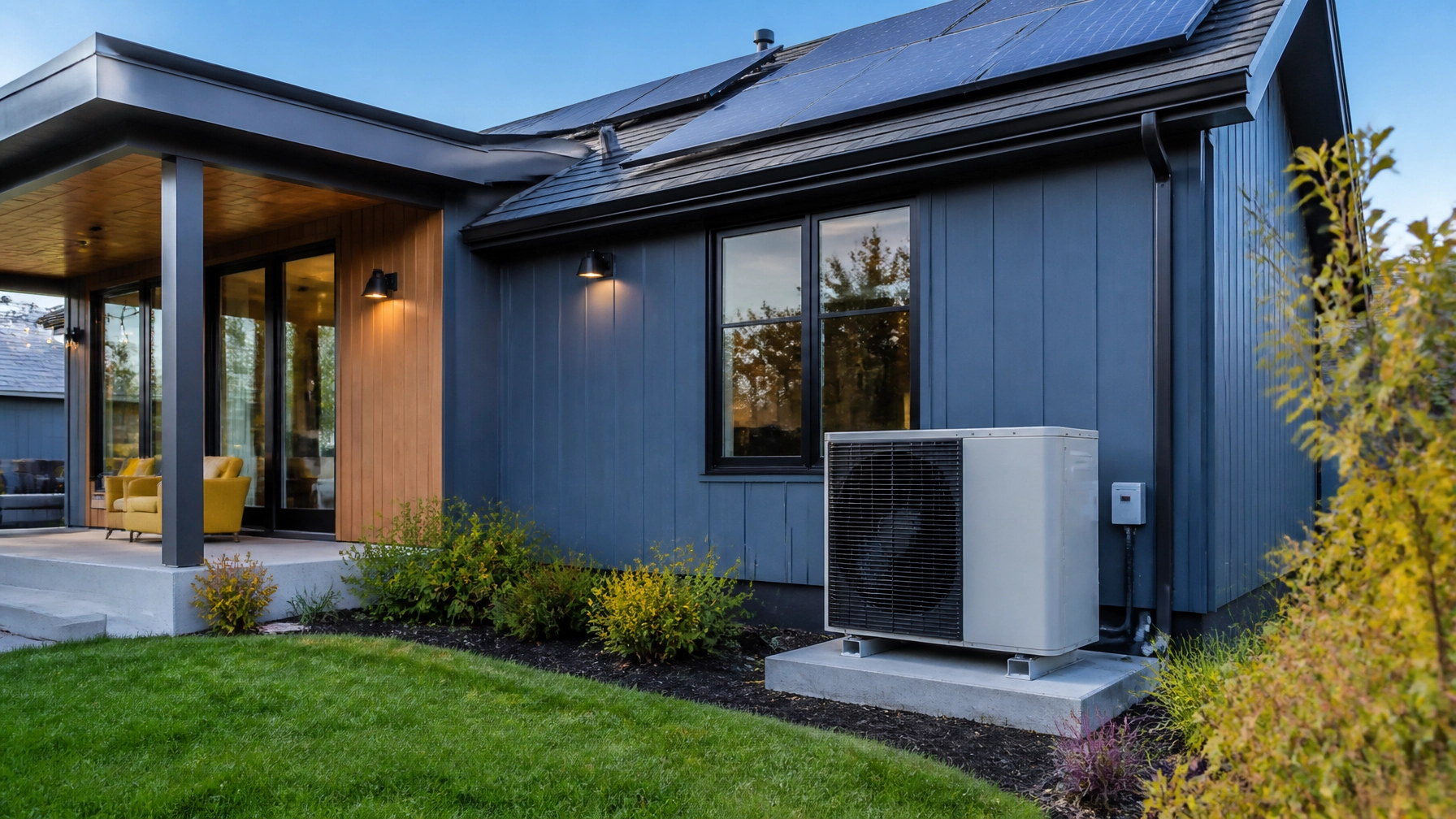
If you have already invested in solar panels for your home in Wheeling and the Chicagoland area, you are already ahead of the curve in energy independence. However, the biggest question remains: how do you heat and cool that home most efficiently? While traditional gas furnaces and central air conditioners have been the standard for decades, modern heat pump technology is changing the landscape, especially for solar-enabled properties.
At Mechanical Management & Design Solutions (MMDS), we help homeowners navigate these complex decisions to ensure their comfort aligns with their energy goals. Whether you are looking to fully electrify your home or simply reduce your reliance on fluctuating gas prices, understanding the synergy between solar power and your HVAC system is the first step toward significant long-term savings.
What is the primary difference between a heat pump and traditional HVAC?
A heat pump is an all-in-one system that provides both heating and cooling by moving heat energy rather than generating it through combustion. In contrast, traditional HVAC systems typically rely on a gas furnace for heating and a separate central air conditioner for cooling.
While a traditional furnace burns natural gas to create heat, a heat pump uses electricity to extract heat from the outside air (even in cold temperatures) and transfer it indoors. During the summer, the process reverses, and the unit acts exactly like a high-efficiency AC installation, removing heat from your home to keep you cool. For solar-enabled homes, this shift from gas combustion to electric-powered heat transfer is a game changer because it allows you to power your climate control using the energy you generate on your own roof.
How do heat pumps maximize the benefits of solar panels?
Heat pumps run entirely on electricity, which means they can be powered directly by the surplus energy generated by your solar panels. This synergy allows you to offset or even eliminate the "fuel" cost for heating your home, a feat that is impossible with a traditional gas furnace.
In the Chicagoland area, solar production is highest during the sunniest months, which perfectly aligns with the high demand for cooling. However, even during the shoulder seasons, a solar-enabled home can produce enough energy to run a heat pump for heating during the day. By shifting your home’s primary heating load from gas to electricity, you are effectively using your solar investment to "pre-pay" for years of climate control.

Is a traditional HVAC system still a viable option for solar homes?
A traditional HVAC system is still viable, but it does not take full advantage of a solar array because the furnace, the most energy-intensive component in winter, requires natural gas. While your solar panels will power the blower motor and your central AC, you will still remain tethered to gas utility rates for your primary heating needs.
For homeowners who prefer a "safety net," we often recommend a dual-fuel system. This combines a high-efficiency heat pump with a gas furnace backup. In this setup, the heat pump handles the majority of the heating using your solar power, and the gas furnace only kicks in during the most extreme "Polar Vortex" days when temperatures drop below the heat pump's optimal operating range. You can learn more about these options on our heater installation and replacement page.
Why is a heat pump better for Chicagoland's specific climate?
Modern cold-climate heat pumps are designed to operate efficiently at temperatures as low as -15°F, making them more than capable of handling typical Chicago winters. They provide a more consistent, steady flow of air compared to the "blast" of heat from a gas furnace, leading to improved indoor comfort and better humidity control.
In the humid summer months common in Wheeling and the surrounding suburbs, heat pumps excel at dehumidification. Because many models feature variable-speed compressors, they can run at lower speeds for longer periods, pulling more moisture out of the air than a traditional single-stage AC unit. This results in a home that feels cooler at higher temperatures, allowing you to save even more energy.
What are the long-term savings of heat pumps vs. traditional systems?
Homeowners switching to heat pumps often see a significant reduction in their total energy expenditure, particularly when gas prices are volatile. When paired with solar, the "fuel" for your heat pump is essentially free once the solar equipment is paid off, whereas gas costs will continue indefinitely.
Beyond the monthly utility bills, heat pumps offer savings through simplified maintenance. Instead of maintaining two separate systems, a furnace and an AC, you are focusing your professional care on a single unit. This reduces the likelihood of emergency repairs and extends the lifespan of your investment. To ensure your system remains at peak efficiency, we recommend scheduling annual maintenance with our expert team.

How does the installation process differ for a solar-ready heat pump?
The installation of a heat pump is similar to a traditional AC unit, but it may require specialized electrical services to handle the increased electric load if you are moving away from gas. Our technicians ensure that your electrical panel is capable of supporting the new equipment and that your solar inverter is integrated into the home's energy management strategy.
At Mechanical Management & Design Solutions (MMDS), we take a "whole-home" approach. We don't just swap out a box; we evaluate your ductwork, your solar capacity, and your home’s insulation to ensure the heat pump is perfectly sized for your specific needs in Wheeling and the Chicagoland area.
Frequently Asked Questions
1. Will a heat pump work when it’s 20 below zero in Chicago?
While many modern cold-climate heat pumps can operate at extremely low temperatures, most Chicagoland installations include a backup heat source, either electric heat strips or a gas furnace, to ensure your home stays warm during record-breaking cold snaps.
2. Do I need to replace my ductwork to switch to a heat pump?
In most cases, no. Heat pumps are designed to work with existing standard ductwork. However, we will perform an air balancing check to ensure your home receives even heating and cooling in every room.
3. Can I use a heat pump if I don’t have solar panels yet?
Absolutely. Heat pumps are highly efficient even when running on grid power. Installing one now "future-proofs" your home, making it ready for a solar installation whenever you decide to make that move.
4. How long does a heat pump typically last?
With proper maintenance, a heat pump typically lasts 15 to 20 years. Because they work year-round (heating and cooling), regular professional inspections are vital to maximizing their lifespan.

Take the Next Step Toward Energy Independence
Choosing the right HVAC system for your solar-enabled home is a decision that impacts your comfort and your wallet for decades. At Mechanical Management & Design Solutions (MMDS), we specialize in helping homeowners in Wheeling and the Chicagoland area make informed, pragmatic choices that maximize their energy efficiency.
If you're upgrading your HVAC system, help yourself and make sure the equipment you are purchasing qualifies for one of these discounts:
- Up to $900 on < 2.5 tons, ≥ 15.2 SEER2, ≥ 9.4 EER2, ≥ 8.1 HSPF2
- Up to $1,400 on ≥ 2.5 tons, ≥ 15.2 SEER2, ≥ 9.4 EER2, ≥ 8.1 HSPF2
- Up to $1,500 on < 2.5 tons, ≥ 17 SEER2, ≥ 9.4 EER2, ≥ 8.5 HSPF2
- Up to $2,000 on ≥ 2.5 tons, ≥ 17 SEER2, ≥ 9.4 EER2, ≥ 8.5 HSPF2
Discount with ENERGY STAR® certified smart thermostat:
- Up to $975 on < 2.5 tons, ≥ 15.2 SEER2, ≥ 9.4 EER2, ≥ 8.1 HSPF2
- Up to $1,475 on ≥ 2.5 tons, ≥ 15.2 SEER2, ≥ 9.4 EER2, ≥ 8.1 HSPF2
- Up to $1,575 on < 2.5 tons, ≥ 17 SEER2, ≥ 9.4 EER2, ≥ 8.5 HSPF2
- Up to $2,075 on ≥ 2.5 tons, ≥ 17 SEER2, ≥ 9.4 EER2, ≥ 8.5 HSPF2
To apply for these discounts, Call or Text MMDS at (847) 221-6280. Our team will help you select the eligible equipment and handle the necessary documentation to ensure you receive your savings.