

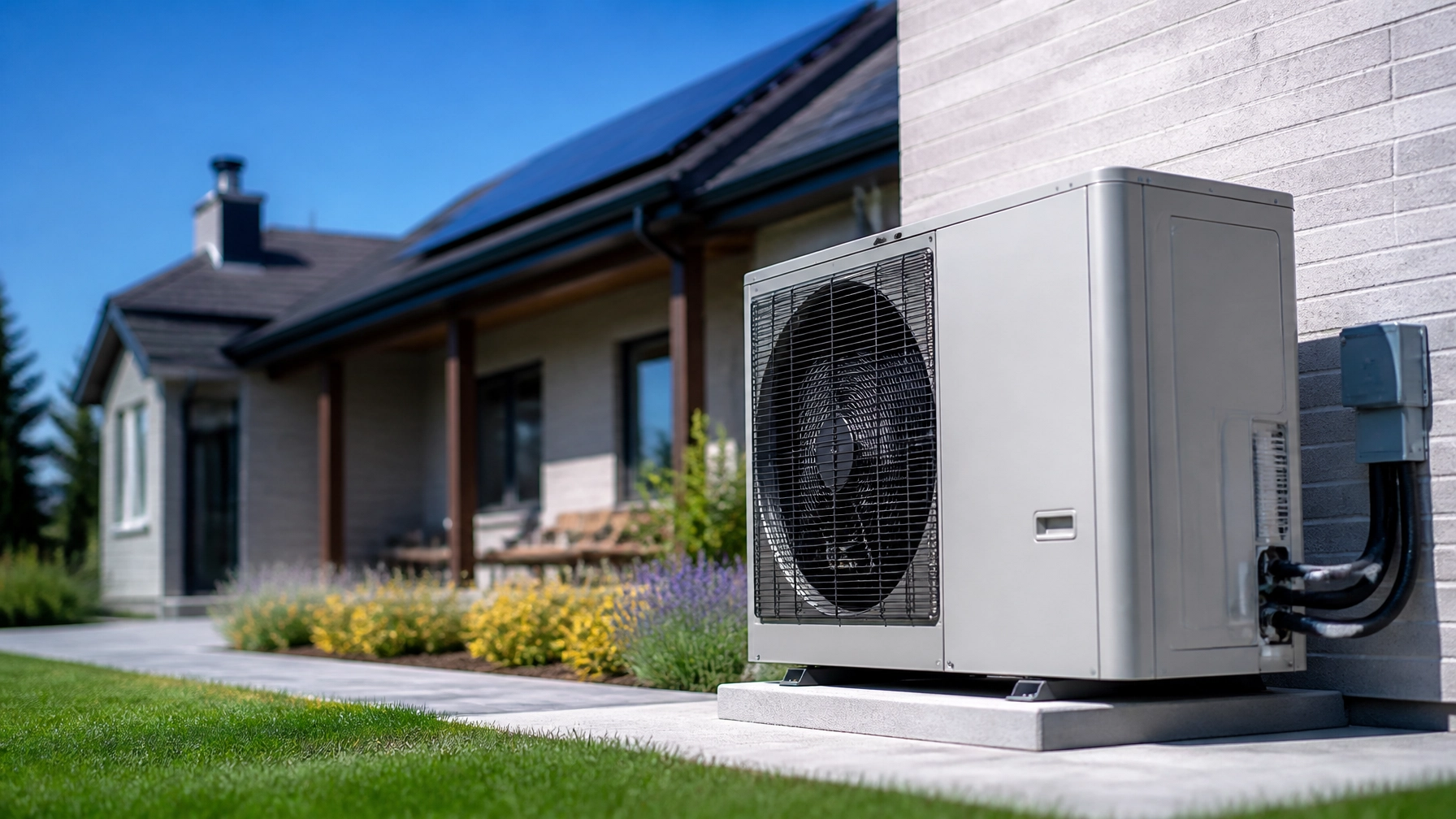
For homeowners in Wheeling and across the Chicagoland area, the shift toward sustainable living is no longer just a trend, it is a practical response to rising energy costs and unpredictable weather. Many residents have already taken the first step by installing solar panels to capture the sun’s energy. However, once those panels are on the roof, a new question arises: what is the most efficient way to use that power?
Increasingly, the answer is a high-efficiency heat pump. While traditional HVAC systems have been the standard for decades, the synergy between solar energy and heat pump technology is changing the landscape of home comfort. At Mechanical Management & Design Solutions (MMDS), we are seeing a significant surge in homeowners making the switch to fully electric, solar-compatible climate control.
What is a heat pump and how does it differ from a traditional HVAC system?
A heat pump is an all-in-one heating and cooling system that transfers heat between the indoors and outdoors rather than generating it through combustion. Unlike a furnace that burns natural gas or a traditional air conditioner that only cools, a heat pump uses electricity and refrigerant to move heat in either direction depending on the season.
In a traditional setup, you typically have two separate units: a furnace for heating and an air conditioner for cooling. The furnace creates heat by burning fossil fuels, a process that is inherently limited by the energy content of the fuel. Even the most efficient furnaces top out at around 98% efficiency. A heat pump, however, can achieve efficiencies of 300% to 400% because it is simply moving existing heat from the air. In the summer, it functions exactly like an AC, pulling heat out of your home. In the winter, it reverses the process, extracting ambient heat from the outside air, even in cold temperatures, and bringing it inside.
Why are solar-powered homes in Chicagoland switching to heat pumps?
Solar-powered homes are switching to heat pumps to achieve "energy independence" by using the electricity generated on their roofs to power their entire heating and cooling needs. By eliminating natural gas or propane, these homeowners can run their HVAC systems almost entirely on the "free" energy produced by their solar arrays.
When you have solar panels, your goal is to maximize the "self-consumption" of the energy you produce. Traditional gas furnaces require a monthly bill from the utility company that solar panels cannot offset. By replacing a gas furnace with an electric heat pump, you shift your largest home energy load, heating, onto your electrical system. This allows your solar investment to pay for itself much faster. In the Chicagoland market, where utility rates can fluctuate wildly, "running your home on sunshine" provides a level of financial predictability that traditional fossil fuel systems simply cannot match.

Can heat pumps really handle the extreme Chicago winters?
Yes, modern cold-climate heat pumps are specifically engineered to remain highly efficient and provide reliable warmth even when outdoor temperatures drop as low as -15°F to -25°F. These advanced systems use variable-speed compressors and specialized refrigerants that maintain their heat-transfer capabilities in the frigid Great Lakes climate.
There is a common misconception that heat pumps are only for southern climates. While that was true twenty years ago, today’s technology is a different story. Units rated for cold climates are now standard in places like Maine, Minnesota, and right here in Wheeling. For homeowners who want absolute peace of mind during a "Polar Vortex," these systems can be installed as part of a hybrid setup (dual-fuel), where a high-efficiency furnace acts as a backup. However, for most well-insulated solar homes, a standalone heater installation utilizing a cold-climate heat pump is more than sufficient to maintain a cozy 72 degrees all winter long.

How does a heat pump impact your monthly energy bills?
Switching to a heat pump significantly lowers monthly energy bills by reducing reliance on expensive fossil fuels and taking advantage of the system's superior efficiency ratings. Because a heat pump moves 3 to 4 units of heat for every 1 unit of electricity it consumes, it is the most cost-effective way to condition a home, especially when paired with solar.
To understand the savings, you have to look at the seasonal energy efficiency ratio (SEER2) and the heating seasonal performance factor (HSPF2). Traditional systems often have lower ratings that lead to higher operational costs. By upgrading to a high-efficiency system, you reduce the "peak load" on your electrical panel. For a solar-enabled home, this means you are less likely to pull expensive power from the grid during the night or on cloudy days. Furthermore, because a heat pump handles both heating and cooling, you only have one system to maintain, which reduces long-term service and annual maintenance costs.
What are the main benefits of pairing solar energy with a high-efficiency heat pump?
The primary benefits include drastic reductions in carbon emissions, improved indoor air quality by eliminating on-site combustion, and a significant increase in home value through modern, sustainable infrastructure. This pairing creates a "closed-loop" energy system where the home produces, manages, and consumes its own clean energy.
- Sustainability: You are no longer burning gas inside your home, which means no risk of carbon monoxide leaks from your HVAC system.
- Precision Comfort: Heat pumps provide a more consistent flow of air, avoiding the "blast of heat" followed by a "cold chill" common with older furnaces.
- Zoning Capabilities: Many heat pump systems allow for ductless or multi-zone configurations, meaning you can heat or cool only the rooms you are using, further stretching your solar power.
- Health: Advanced filtration systems in modern heat pumps can help remove allergens and pollutants, which is vital for families in the Chicagoland area during allergy seasons.

Local Expertise Matters
Choosing the right system requires a deep understanding of local building codes and the specific thermal demands of homes in Wheeling and the surrounding suburbs. At Mechanical Management & Design Solutions (MMDS), we specialize in tailoring AC installation and replacement and heating solutions to the unique needs of solar-powered properties. We ensure that your electrical panel can handle the load through our electrical services, making the transition seamless.
Customer Testimonial:
"We installed solar panels last year but were still paying a huge gas bill every winter. MMDS helped us switch to a cold-climate heat pump, and the difference is incredible. Our home is more comfortable, and our energy bills have practically disappeared. It’s the best investment we’ve made in our house." , Sarah T., Wheeling Resident
Take Action Today
If you are looking to maximize your solar investment and upgrade your home comfort, now is the time to act. Ensure your home is ready for the next Chicago winter by scheduling a consultation with the experts.
Call or Text MMDS at (847) 221-6280 to discuss your upgrade.
If you're upgrading your HVAC system, help yourself and make sure the equipment you are purchasing qualifies for one of these discounts:
- Up to $900 on < 2.5 tons, ≥ 15.2 SEER2, ≥ 9.4 EER2, ≥ 8.1 HSPF2
- Up to $1,400 on ≥ 2.5 tons, ≥ 15.2 SEER2, ≥ 9.4 EER2, ≥ 8.1 HSPF2
- Up to $1,500 on < 2.5 tons, ≥ 17 SEER2, ≥ 9.4 EER2, ≥ 8.5 HSPF2
- Up to $2,000 on ≥ 2.5 tons, ≥ 17 SEER2, ≥ 9.4 EER2, ≥ 8.5 HSPF2
Discount with ENERGY STAR® certified smart thermostat:
- Up to $975 on < 2.5 tons, ≥ 15.2 SEER2, ≥ 9.4 EER2, ≥ 8.1 HSPF2
- Up to $1,475 on ≥ 2.5 tons, ≥ 15.2 SEER2, ≥ 9.4 EER2, ≥ 8.1 HSPF2
- Up to $1,575 on < 2.5 tons, ≥ 17 SEER2, ≥ 9.4 EER2, ≥ 8.5 HSPF2
- Up to $2,075 on ≥ 2.5 tons, ≥ 17 SEER2, ≥ 9.4 EER2, ≥ 8.5 HSPF2
How to Apply:
To apply for these discounts, Call or Text MMDS at (847) 221-6280. Our team will help you select the eligible equipment and handle the necessary documentation to ensure you receive your savings. We proudly serve Wheeling and the Chicagoland area.
Frequently Asked Questions
-
How long does a heat pump installation take?
Most residential heat pump installations can be completed in a single day. Our team at MMDS works efficiently to ensure your home remains comfortable throughout the process. -
Do I need to keep my old furnace as a backup?
While not always necessary with modern cold-climate units, some homeowners prefer a "dual-fuel" system where the furnace provides backup during the few days of the year when temperatures drop below -15°F. -
Is my electrical panel ready for a heat pump?
Heat pumps run on electricity, so an assessment of your current panel is required. If an upgrade is needed, our team can handle the electrical services as part of the installation. -
What is the difference between SEER2 and HSPF2?
SEER2 (Seasonal Energy Efficiency Ratio 2) measures cooling efficiency, while HSPF2 (Heating Seasonal Performance Factor 2) measures heating efficiency. Higher numbers indicate better performance and lower energy costs. -
Will a heat pump work with my existing ductwork?
In most cases, yes. Heat pumps can be integrated into existing forced-air duct systems. If your home doesn't have ducts, we also offer ductless mini-split options.