

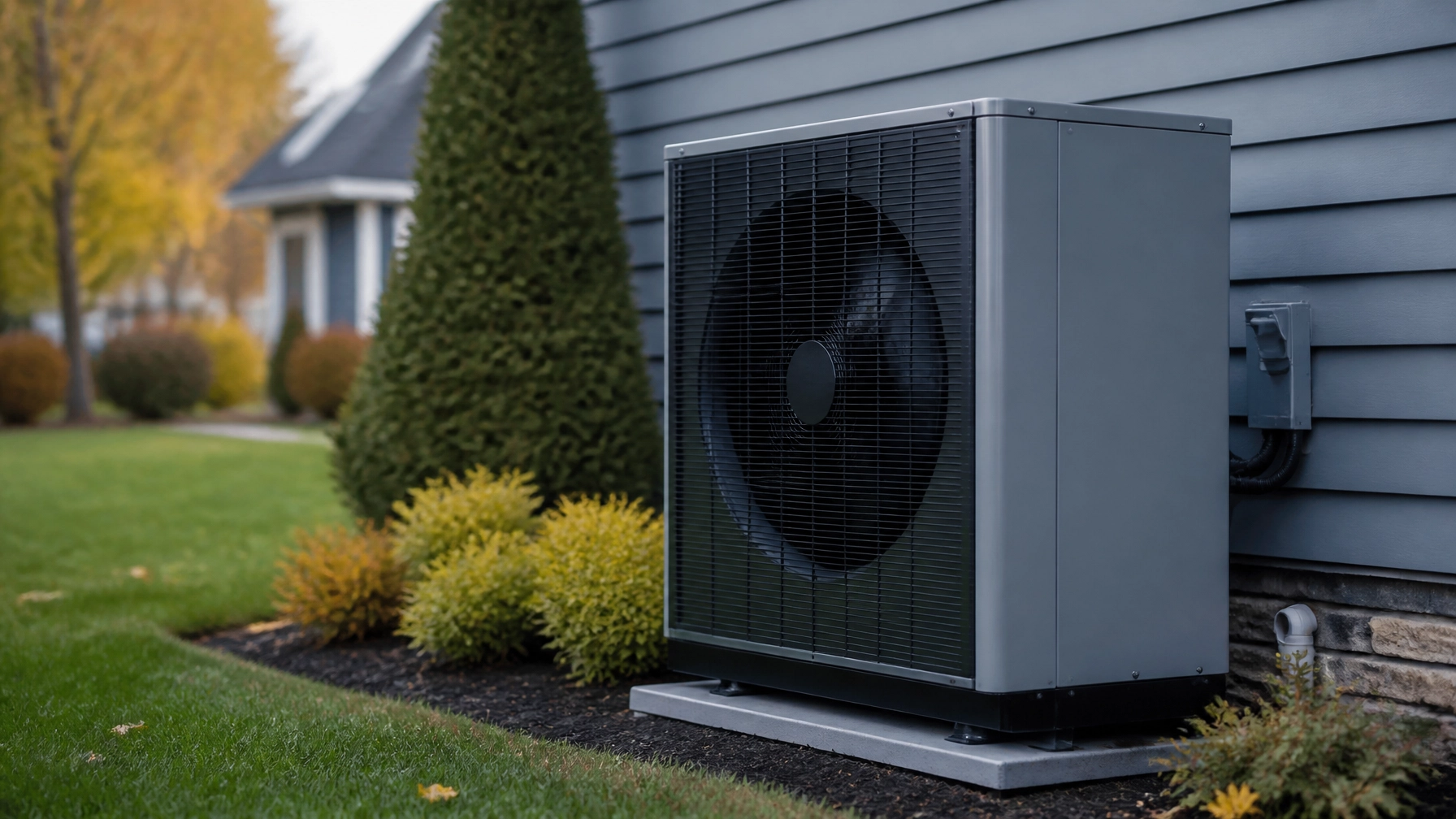
As homeowners in Wheeling and the Chicagoland area increasingly look for sustainable ways to keep their homes comfortable, the combination of solar energy and heat pump technology has become a top priority. A solar ready heat pump offers the perfect middle ground between high-performance climate control and environmental responsibility. However, the most common question we hear at Mechanical Management & Design Solutions (MMDS) is: "How many panels do I actually need to offset the energy of my heat pump?"
Transitioning to an all-electric home requires careful planning and a deep understanding of local energy demands. In a climate like ours, where winters are harsh and summers are humid, your HVAC system is undoubtedly your home's largest energy consumer. By pairing a high-efficiency residential heat pump installation with a properly sized solar array, you can significantly reduce or even eliminate your monthly utility costs.
How does a heat pump work with solar energy?
A heat pump works with solar energy by using the electricity generated from your roof's solar panels to power the compressor and fans that move heat into or out of your home. Instead of burning natural gas, the system leverages the "free" energy from the sun to provide both heating and cooling.
While many people think of solar and heat pumps as separate upgrades, they are designed to work in tandem. A solar ready heat pump is essentially a standard high-efficiency unit that is optimized for an all-electric home. When your solar panels produce electricity during the day, that power is sent to your home’s electrical panel. Your heat pump draws from that power first. In a grid-tied system, common in the Chicagoland area, any excess solar power produced during the day is sent back to the grid, often earning you credits that you can use to run your heat pump at night.

How much electricity does a residential heat pump use in Chicago?
On average, a 3-ton residential heat pump in Chicagoland uses between 6,000 and 9,500 kWh of electricity per year to provide both heating and cooling. The exact usage depends heavily on the insulation of your home and the specific SEER2 and HSPF2 efficiency ratings of the equipment.
To understand the math behind solar sizing, you must first understand the "load" of your HVAC system. In our region, heating is a much larger energy draw than AC installation and replacement cooling. A modern cold-climate heat pump is incredibly efficient, but it still has to work harder when temperatures drop below freezing.
For a typical 2,000-square-foot home in Wheeling, a 3-ton unit might use roughly 2,500 kWh for cooling during the summer and 6,000 kWh or more for heating during the winter. This total annual consumption of ~8,500 kWh is the target that your solar panel system needs to meet if you want to achieve "net-zero" HVAC operation.
How many solar panels are needed to power a heat pump?
For a typical Chicagoland home, it generally takes between 12 and 22 solar panels to fully power a residential heat pump. This estimate assumes the use of standard 400-watt panels and accounts for Chicago’s average of four peak sun hours per day.
The calculation involves three main variables: your annual kWh usage, the local solar production ratio, and the wattage of your panels. In Illinois, we use a production factor that accounts for our seasonal cloud cover and shorter winter days.
Here is a simplified look at the math for a residential heat pump installation using 8,500 kWh per year:
- System Size Needed: 8,500 kWh / 1.2 (typical production factor) = ~7.1 kW solar array.
- Panel Count: 7,100 Watts / 400 Watts (per panel) = 17.75.
- Final Recommendation: You would need 18 panels dedicated specifically to the heat pump.
If your home is larger or less insulated, or if you choose a lower-efficiency unit, that number could easily climb to 25 panels. Conversely, a highly insulated home with a premium, high-efficiency unit might only require 12 to 14 panels.

Does SEER2 efficiency affect solar panel requirements?
Yes, a higher SEER2 (Seasonal Energy Efficiency Ratio) and HSPF2 (Heating Seasonal Performance Factor) rating directly reduce the number of solar panels required by lowering the unit's electricity consumption. Moving from a base-model 14.3 SEER2 unit to a high-efficiency 20 SEER2 unit can reduce your solar panel needs by as much as 20% to 30%.
Efficiency is the "secret weapon" in solar planning. When you invest in SEER2 heat pump efficiency, you are effectively buying a smaller solar system. Because high-efficiency units use less power to move the same amount of heat, the "load" on your electrical system is lower.
At Mechanical Management & Design Solutions (MMDS), we always recommend looking at the total system performance. While a high-efficiency unit has a higher upfront cost for the heating installation, it saves you thousands of dollars on the solar side because you need to purchase and install fewer panels. It also leaves more space on your roof for panels to cover other electrical services like your lights, appliances, and EV charging.
Can a solar-ready heat pump handle the Chicago winter?
Modern cold-climate heat pumps are specifically engineered to provide efficient heat at temperatures as low as -13°F, making them perfectly suitable for Chicagoland winters. While they do use more electricity during extreme cold snaps, they remain the most efficient way to heat a home without fossil fuels.
A common misconception is that heat pumps only work in the South. In reality, "Cold Climate" certified units feature variable-speed compressors and enhanced vapor injection technology that allows them to extract heat from the outside air even when it feels freezing to us.
During a typical January in Wheeling, your solar panels will likely produce their lowest output of the year due to shorter days and potential snow cover. However, because Illinois utilizes net metering, the excess energy your panels produced during the sunny months of May through September is credited to your account. You "spend" those credits in the winter to run your heat pump, ensuring your home stays warm even when the sun isn't shining.

Practical Sizing Considerations for Your Home
When planning your heat pump installation Chicagoland project, there are several practical factors that the math alone won't tell you.
- Roof Orientation: If your roof faces South, your panels will be at peak efficiency. If they face East or West, you may need to add 15–20% more panels to achieve the same output.
- Shading: Nearby trees or neighboring buildings in dense Chicagoland suburbs can significantly impact production. A professional solar site assessment is critical.
- Future-Proofing: Are you planning to add an Electric Vehicle (EV) or a home addition? It is often more cost-effective to install a slightly larger solar array now than to add to it later.
- Maintenance: Ensure you schedule annual maintenance for both your solar array and your heat pump. Keeping your heat pump's coils clean and its filters fresh ensures it doesn't draw more power than necessary.
Expert Residential Heat Pump Installation in Wheeling
Choosing the right team for your Chicagoland HVAC services is the most important step in going solar. At Mechanical Management & Design Solutions (MMDS), we specialize in high-efficiency residential systems that integrate seamlessly with your home's electrical infrastructure.
We serve Wheeling and the Chicagoland area with a focus on equipment longevity and energy savings. Whether you are looking for a solar ready heat pump or need to upgrade your existing AC installation and replacement to something more efficient, we are here to provide clear, expert guidance.
Upgrade Your HVAC and Save
If you're upgrading your HVAC system, help yourself and make sure the equipment you are purchasing qualifies for one of these discounts:
- Up to $900 on < 2.5 tons, ≥ 15.2 SEER2, ≥ 9.4 EER2, ≥ 8.1 HSPF2
- Up to $1,400 on ≥ 2.5 tons, ≥ 15.2 SEER2, ≥ 9.4 EER2, ≥ 8.1 HSPF2
- Up to $1,500 on < 2.5 tons, ≥ 17 SEER2, ≥ 9.4 EER2, ≥ 8.5 HSPF2
- Up to $2,000 on ≥ 2.5 tons, ≥ 17 SEER2, ≥ 9.4 EER2, ≥ 8.5 HSPF2
Discount with ENERGY STAR® certified smart thermostat:
- Up to $975 on < 2.5 tons, ≥ 15.2 SEER2, ≥ 9.4 EER2, ≥ 8.1 HSPF2
- Up to $1,475 on ≥ 2.5 tons, ≥ 15.2 SEER2, ≥ 9.4 EER2, ≥ 8.1 HSPF2
- Up to $1,575 on < 2.5 tons, ≥ 17 SEER2, ≥ 9.4 EER2, ≥ 8.5 HSPF2
- Up to $2,075 on ≥ 2.5 tons, ≥ 17 SEER2, ≥ 9.4 EER2, ≥ 8.5 HSPF2
To apply for these discounts, Call or Text MMDS at (847) 221-6280. Our team will help you select the eligible equipment and handle the necessary documentation to ensure you receive your savings.
Frequently Asked Questions
1. Do I need a special heat pump to work with solar?
No, any electric heat pump can be powered by solar energy. However, a "solar ready" or high-efficiency unit is preferred because it requires fewer panels to operate, making the overall investment more affordable.
2. What happens to my heat pump if the power goes out?
If your solar system is grid-tied without a battery backup, your heat pump will shut off during a power outage for safety reasons. To keep your heat pump running during an outage, you would need a solar battery storage system.
3. Will snow on my solar panels stop my heat pump from working?
Snow on your panels will temporarily stop electricity production, but your heat pump will simply draw power from the local utility grid. Thanks to net metering in Illinois, you can use credits earned during the summer to cover this usage.
4. How long does a residential heat pump installation take?
Most residential heat pump installations in the Chicagoland area can be completed in one to two days. If your project involves significant electrical services or ductwork modifications, it may take slightly longer.
5. Is it better to install solar or the heat pump first?
We generally recommend installing the high-efficiency heat pump first. This allows you to see exactly how much electricity your new system uses, ensuring your solar array is sized perfectly rather than based on estimates.
Call or Text Mechanical Management & Design Solutions (MMDS) today at (847) 221-6280 to discuss your home's transition to efficient, solar-ready comfort.