

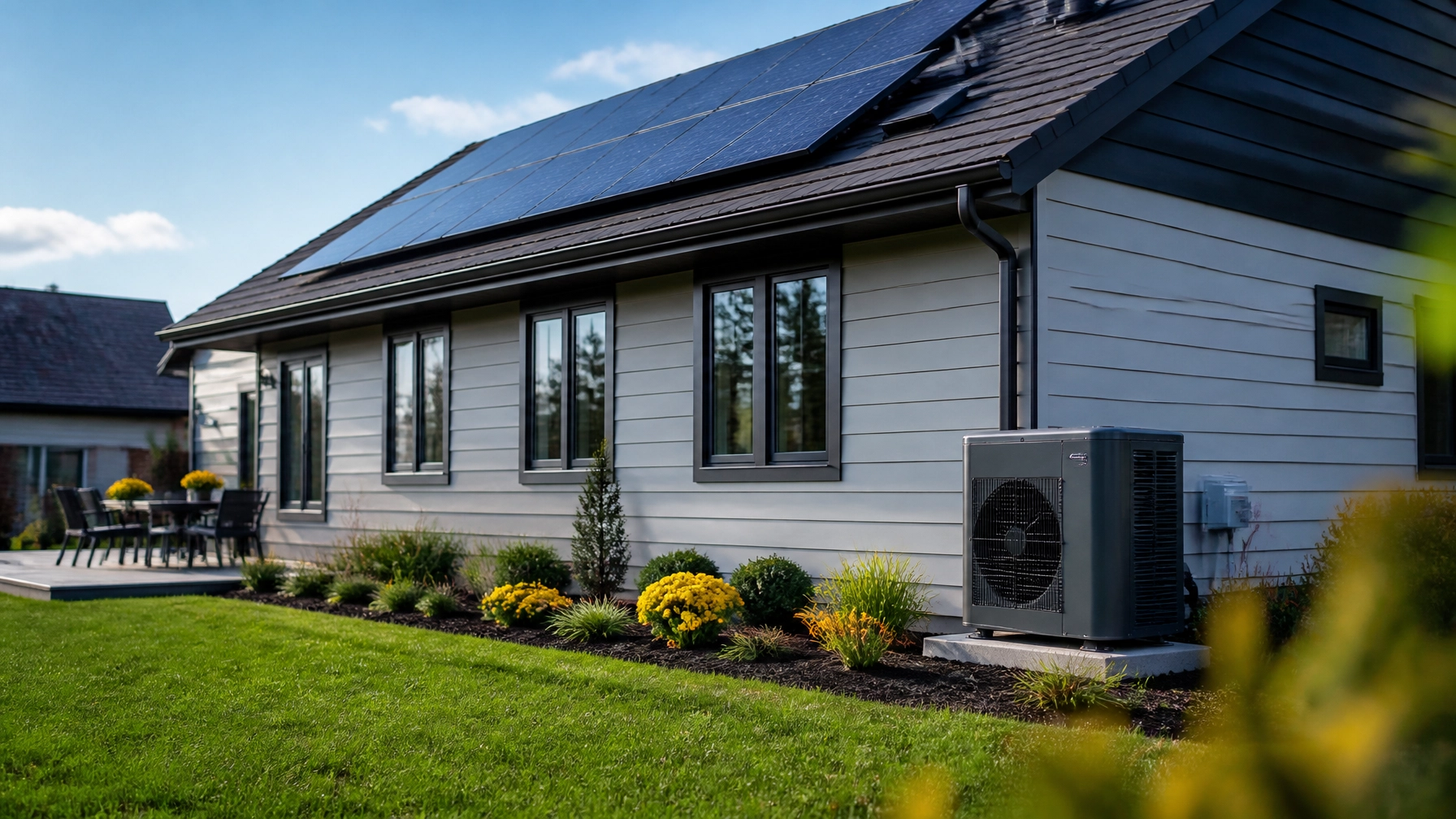
Achieving a net-zero home in the Chicagoland area is no longer a futuristic dream reserved for off-grid enthusiasts. With the rapid advancement of cold-climate heat pump technology and the increasing accessibility of residential solar power, homeowners in Wheeling and the surrounding suburbs are successfully eliminating their utility bills and carbon footprints. At Mechanical Management & Design Solutions (MMDS), we specialize in helping local residents navigate this transition by integrating high-efficiency HVAC systems with renewable energy sources.
Integrating these two technologies creates a powerful synergy. While solar panels generate clean electricity, a heat pump uses that electricity with extreme efficiency to provide both heating and cooling. This combination is the most practical path toward total home electrification and energy independence.
What is a Net-Zero Home in the Chicagoland Area?
A net-zero home is a residence that produces as much renewable energy on-site as it consumes over the course of a year. By combining a high-performance building envelope with ultra-efficient appliances and a solar energy system, the "net" energy balance of the home becomes zero.
In our local climate, where temperatures swing from humid 90-degree summers to sub-zero winter blasts, achieving net-zero requires a strategic approach to HVAC. Traditional gas furnaces and standard air conditioners are often too energy-intensive to be fully offset by a typical rooftop solar array. However, when you transition to a modern heat pump, the energy required to maintain comfort drops significantly, making it much easier for your solar panels to keep up with the demand.
Why Should You Pair Solar Panels With a Heat Pump?
Pairing solar panels with a heat pump allows you to power your entire heating and cooling system using free energy from the sun, drastically reducing or eliminating monthly utility costs. Because heat pumps move heat rather than generate it through combustion, they are roughly three to four times more efficient than traditional electric or gas systems.
When you install a new heater or furnace system that relies on natural gas, you remain tied to fluctuating fuel prices. By contrast, a solar-integrated heat pump system "locks in" your energy costs.
Key Benefits of Integration:
- Maximum Efficiency: Heat pumps convert one unit of electricity into three or four units of heat, a feat impossible for traditional furnaces.
- Full Electrification: By removing gas lines and combustion appliances, you improve indoor air quality and eliminate the risk of carbon monoxide leaks.
- Energy Independence: Generate your own power in Wheeling and use it to keep your family comfortable year-round without relying on the grid.
- Increased Property Value: Homes with integrated renewable systems and modern HVAC upgrades are highly sought after in the current real estate market.

How Do Cold-Climate Heat Pumps Handle Chicago Winters?
Modern cold-climate air-source heat pumps (ASHPs) are specifically engineered to extract heat from outdoor air even when temperatures drop as low as -15°F. These systems utilize variable-speed inverters and advanced refrigerants to maintain high performance during the most "brutal" stretches of a Chicagoland winter.
For decades, many believed heat pumps were only suitable for Southern climates. However, engineering breakthroughs have changed the game. Today, residents in the Chicagoland area can confidently rely on heat pumps as their primary heat source. Unlike older models that struggled in the cold, these high-efficiency units maintain their capacity and efficiency, ensuring your home stays warm even when Lake Michigan freezes over.
Can a Heat Pump Replace My Traditional AC and Furnace?
Yes, a heat pump is a dual-purpose system that replaces both your traditional furnace and your central air conditioner with a single, highly efficient unit. During the summer, it functions exactly like a high-end air conditioning system, removing heat from inside your home and pumping it outdoors.
When the seasons change, a reversing valve allows the system to pull heat from the outside air and move it indoors. This simplifies your home's infrastructure and reduces the number of systems that require annual maintenance. Instead of managing two separate pieces of equipment, you focus on one streamlined system that provides year-round comfort.
What Are the Steps to Integrating Solar and HVAC Systems?
Successful integration begins with an energy assessment to determine your home’s specific heating and cooling loads, followed by the strategic sizing of both the heat pump and the solar array. This ensures that your solar production is sufficient to cover the electrical demands of the HVAC system during peak usage months.
- Home Performance Audit: Before installing new equipment, ensure your home is well-insulated and sealed. This reduces the size of the equipment you need.
- Professional Load Calculation: Our team at MMDS performs a Manual J calculation to determine the exact BTU requirements for your home.
- Solar Array Sizing: Work with a solar professional to determine how many panels are needed to cover your baseline electricity plus the added load of the heat pump.
- Electrical Upgrades: Integrating these systems often requires a modern electrical panel. Our electrical services team can ensure your home is ready for the increased demand of an all-electric system.
- Seamless Installation: Our technicians handle the precise installation of the heat pump, ensuring it is calibrated for maximum communication with your home’s energy management system.

Professional Advice for Net-Zero Success
If you are considering this transition, schedule a consultation with a qualified HVAC professional who understands the specific demands of the Illinois climate. Ensure that you select "cold-climate" rated equipment, as standard heat pumps may still require backup heat in our region. Take a moment to review your current utility bills; this data is crucial for sizing your new solar and HVAC setup correctly.
"We recently transitioned our home in Wheeling to a full heat pump and solar setup with MMDS. The difference in comfort is noticeable, and seeing our electric meter run backward while the heat is on in November is an incredible feeling. The team was professional, knowledgeable, and made the whole process easy."
, John D., Wheeling Homeowner
Frequently Asked Questions
1. Do solar panels work during a Chicago winter?
Yes, solar panels actually perform more efficiently in colder temperatures, provided they are clear of snow. While daylight hours are shorter in the winter, the bright, reflected light from snow can often boost production during clear days.
2. How much can I save on my utility bills?
Homeowners who achieve net-zero often see their monthly "delivery" and "supply" charges drop to the minimum monthly connection fee required by the utility company. Many save thousands of dollars annually compared to traditional gas and electric setups.
3. Is maintenance different for a solar-powered heat pump?
The maintenance for the heat pump itself is similar to traditional AC maintenance, involving regular filter changes and annual professional inspections. The solar integration requires very little additional maintenance, primarily ensuring the panels stay clean and the inverter is functioning correctly.

Take Control of Your Home's Energy Future
Transitioning to a net-zero home is a pragmatic investment in your comfort, your health, and your financial stability. By pairing a high-efficiency heat pump with solar power, you are taking a definitive step toward a more sustainable and cost-effective lifestyle in the Chicagoland area.
If you're upgrading your HVAC system, help yourself and make sure the equipment you are purchasing qualifies for one of these discounts:
- Up to $900 on < 2.5 tons, ≥ 15.2 SEER2, ≥ 9.4 EER2, ≥ 8.1 HSPF2
- Up to $1,400 on ≥ 2.5 tons, ≥ 15.2 SEER2, ≥ 9.4 EER2, ≥ 8.1 HSPF2
- Up to $1,500 on < 2.5 tons, ≥ 17 SEER2, ≥ 9.4 EER2, ≥ 8.5 HSPF2
- Up to $2,000 on ≥ 2.5 tons, ≥ 17 SEER2, ≥ 9.4 EER2, ≥ 8.5 HSPF2
Discount with ENERGY STAR® certified smart thermostat:
- Up to $975 on < 2.5 tons, ≥ 15.2 SEER2, ≥ 9.4 EER2, ≥ 8.1 HSPF2
- Up to $1,475 on ≥ 2.5 tons, ≥ 15.2 SEER2, ≥ 9.4 EER2, ≥ 8.1 HSPF2
- Up to $1,575 on < 2.5 tons, ≥ 17 SEER2, ≥ 9.4 EER2, ≥ 8.5 HSPF2
- Up to $2,075 on ≥ 2.5 tons, ≥ 17 SEER2, ≥ 9.4 EER2, ≥ 8.5 HSPF2
To apply for these discounts, Call or Text MMDS at (847) 221-6280. Our team will help you select the eligible equipment and handle the necessary documentation to ensure you receive your savings.
Mechanical Management & Design Solutions (MMDS)
Serving Wheeling and the Chicagoland area.
Category: HVAC Tips