

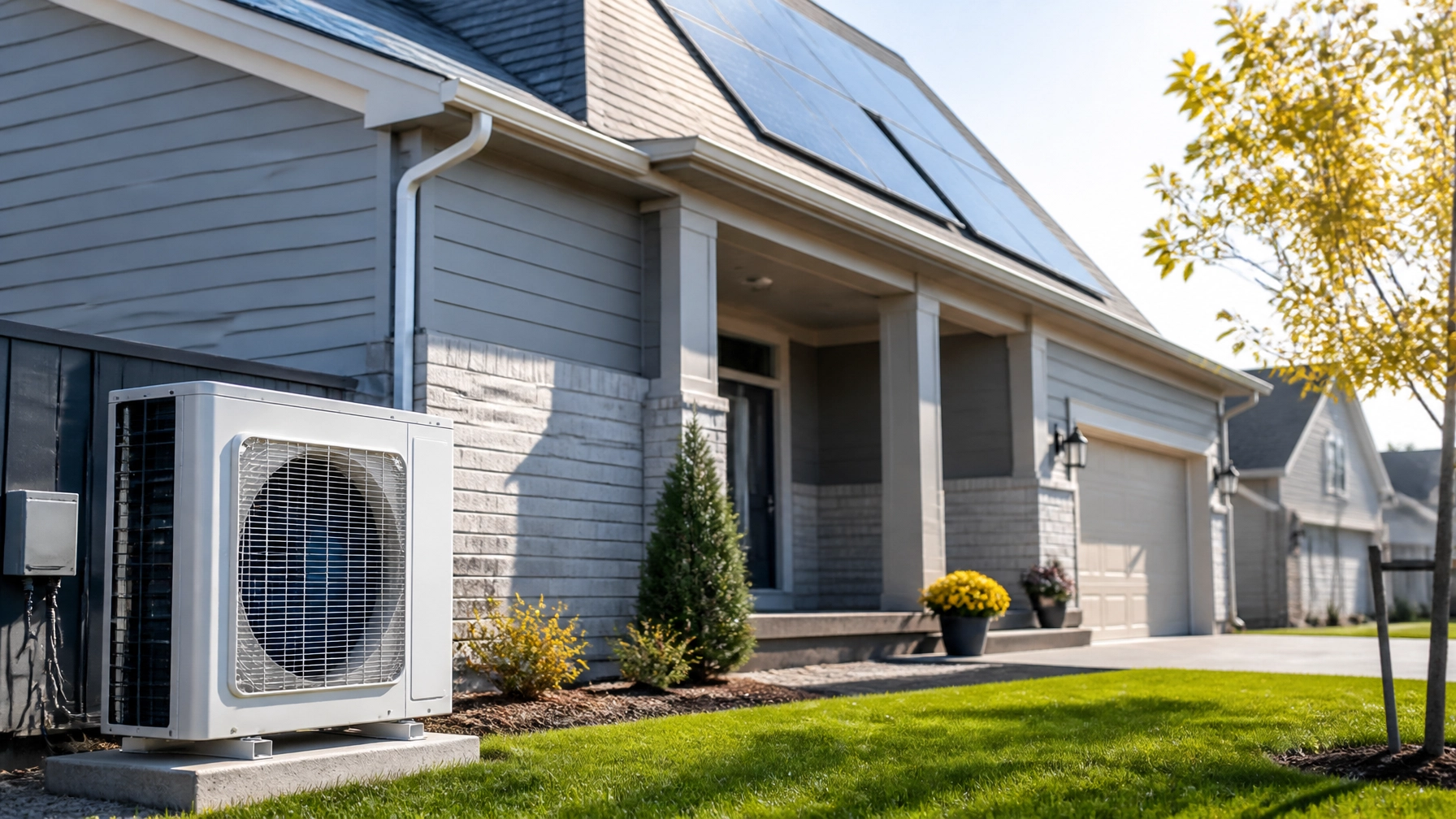
As homeowners in Wheeling and across the Chicagoland area look for ways to reduce their environmental footprint and lower their monthly utility bills, the integration of solar power with advanced HVAC technology has become a leading solution. By combining a residential heat pump with a home solar array, you can create a self-sustaining ecosystem that provides year-round comfort with minimal reliance on the traditional energy grid.
At Mechanical Management & Design Solutions (MMDS), we specialize in helping local residents navigate these complex upgrades. Whether you are looking to replace an aging furnace or want to maximize the ROI on your existing solar panels, understanding how these systems work together is the first step toward a more efficient home.
Why should you combine a heat pump with solar power in Chicagoland?
Combining a heat pump with solar power allows you to use self-generated electricity to provide both heating and cooling, drastically reducing your dependence on volatile natural gas prices and grid-based electricity. This synergy transforms your home into a high-efficiency power plant that harvests energy from the sun to maintain the perfect indoor climate.
In our local climate, we experience dramatic temperature swings. Traditional HVAC systems often rely on burning fossil fuels to keep us warm in the winter, but a heat pump operates by moving heat rather than creating it. When you power this process with solar energy, the "fuel" for your home’s comfort becomes essentially free once the equipment is paid for. For residents in Wheeling and the Chicagoland area, this means protection against rising energy costs and a significant reduction in your household's carbon emissions.
Furthermore, a heat pump serves as both your heater and your air conditioner. During our humid Illinois summers, your solar panels are usually at their peak production, providing more than enough power to run your AC installation and replacement system at full capacity without a spike in your electric bill.

How does a solar-ready heat pump system work?
A solar-ready heat pump system utilizes the DC electricity generated by your solar panels (converted to AC via an inverter) to power the compressor and fans within the outdoor unit. This process moves thermal energy into your home during the winter and pulls it out during the summer to keep your living space comfortable.
The beauty of this integration lies in the "heat transfer" technology. Even in cold air, there is thermal energy available. A cold-climate heat pump can extract this heat and concentrate it to warm your home. Because this process is electrical, it perfectly complements a solar photovoltaic (PV) system. Unlike a gas furnace, which requires a utility hookup and constant combustion, the heat pump simply needs a reliable electric source, which your roof is already providing.
For homes with existing solar, adding a heat pump is often the final piece of the electrification puzzle. It allows you to move away from gas-burning appliances entirely, consolidating your energy needs into a single, clean source.

Is a solar-powered heat pump effective for Wheeling winters?
Yes, modern cold-climate heat pumps are engineered to operate efficiently even when temperatures drop well below freezing, and they can be paired with your solar panels to handle the bulk of your heating needs. While older models struggled in extreme cold, today’s high-performance units are specifically designed for regions like Northern Illinois.
For many homeowners in the Chicagoland area, we recommend a "dual-fuel" approach if you have concerns about the most extreme sub-zero nights. This involves integrating a heat pump with a high-efficiency gas furnace. The heat pump handles the heating for the majority of the season, powered by your solar panels, and the gas furnace only kicks in as a backup during "Polar Vortex" events. This ensures you never sacrifice comfort while still maximizing your solar savings.
When you schedule a heater installation and replacement evaluation with MMDS, we look at your home’s insulation, your solar capacity, and your specific comfort needs to determine if a standalone heat pump or a dual-fuel system is the best fit for your Wheeling property.
What are the best ways to prepare your home for this upgrade?
To prepare for a heat pump and solar integration, you should first focus on your home’s "envelope", ensuring that insulation and air sealing are optimized so that your new HVAC system doesn't have to work harder than necessary. A well-insulated home retains the heat (or cool air) provided by the heat pump, allowing the system to run more efficiently on solar power.
Take a moment to inspect your attic insulation and check for drafts around windows and doors. Professional air sealing can significantly reduce the "load" on your HVAC system. Once the home is sealed, our team at Mechanical Management & Design Solutions (MMDS) can accurately size your heat pump. Sizing is critical: a unit that is too large will cycle on and off too frequently (wasting solar energy), while a unit that is too small won't keep up with a Chicagoland winter.
Additionally, ensure your electrical services are up to date. A heat pump requires a dedicated circuit, and if you are adding solar at the same time, your electrical panel may need an upgrade to handle the increased load and two-way energy flow.
How do you choose the right equipment for maximum energy savings?
Choosing the right equipment involves looking for high SEER2 (Seasonal Energy Efficiency Ratio) and HSPF2 (Heating Seasonal Performance Factor) ratings, which indicate how much heating or cooling the system provides per unit of electricity consumed. The higher these numbers, the less solar energy you’ll need to achieve your desired temperature.
At MMDS, we prioritize equipment that meets the highest standards for performance in the Midwest. We guide you through the technical jargon to find a unit that balances upfront cost with long-term operational savings. Because a heat pump is a long-term investment in your home’s infrastructure, selecting a reliable brand with a strong warranty is essential.
When you choose a system that meets specific efficiency thresholds, you may also be eligible for significant direct discounts. These savings make the transition to a solar-powered home much more accessible for families in Wheeling and the surrounding suburbs.

Take Advantage of Efficiency Discounts
If you're upgrading your HVAC system, help yourself and make sure the equipment you are purchasing qualifies for one of these discounts:
- Up to $900 on < 2.5 tons, ≥ 15.2 SEER2, ≥ 9.4 EER2, ≥ 8.1 HSPF2
- Up to $1,400 on ≥ 2.5 tons, ≥ 15.2 SEER2, ≥ 9.4 EER2, ≥ 8.1 HSPF2
- Up to $1,500 on < 2.5 tons, ≥ 17 SEER2, ≥ 9.4 EER2, ≥ 8.5 HSPF2
- Up to $2,000 on ≥ 2.5 tons, ≥ 17 SEER2, ≥ 9.4 EER2, ≥ 8.5 HSPF2
Discount with ENERGY STAR® certified smart thermostat:
- Up to $975 on < 2.5 tons, ≥ 15.2 SEER2, ≥ 9.4 EER2, ≥ 8.1 HSPF2
- Up to $1,475 on ≥ 2.5 tons, ≥ 15.2 SEER2, ≥ 9.4 EER2, ≥ 8.1 HSPF2
- Up to $1,575 on < 2.5 tons, ≥ 17 SEER2, ≥ 9.4 EER2, ≥ 8.5 HSPF2
- Up to $2,075 on ≥ 2.5 tons, ≥ 17 SEER2, ≥ 9.4 EER2, ≥ 8.5 HSPF2
To apply for these discounts, Call or Text MMDS at (847) 221-6280. Our team will help you select the eligible equipment and handle the necessary documentation to ensure you receive your savings. We are proud to serve Wheeling and the Chicagoland area with expert HVAC solutions that prioritize your comfort and your wallet.
Frequently Asked Questions
Can I use my existing solar panels for a new heat pump?
In most cases, yes. If your current solar array produces excess electricity, that power can be diverted to run your new heat pump. If your system is currently sized exactly for your household needs, you may want to consider adding a few more panels to cover the increased electrical load of the heat pump.
Does a heat pump replace my air conditioner?
Yes, a heat pump is essentially an air conditioner that can run in reverse. It provides cooling in the summer just as effectively as a traditional AC unit, but it also has the ability to heat your home in the winter.
How long does a heat pump installation take?
Most residential heat pump installations in the Wheeling area can be completed in a single day. However, if you are also upgrading your electrical panel or integrating the system with new solar panels, the project may take slightly longer.
Is maintenance different for a solar-integrated system?
The maintenance for the heat pump itself is similar to traditional systems: regular filter changes and annual professional tune-ups are recommended. For the solar side, keeping your panels clean and ensuring your inverter is functioning properly will guarantee your heat pump always has the "green" power it needs.