

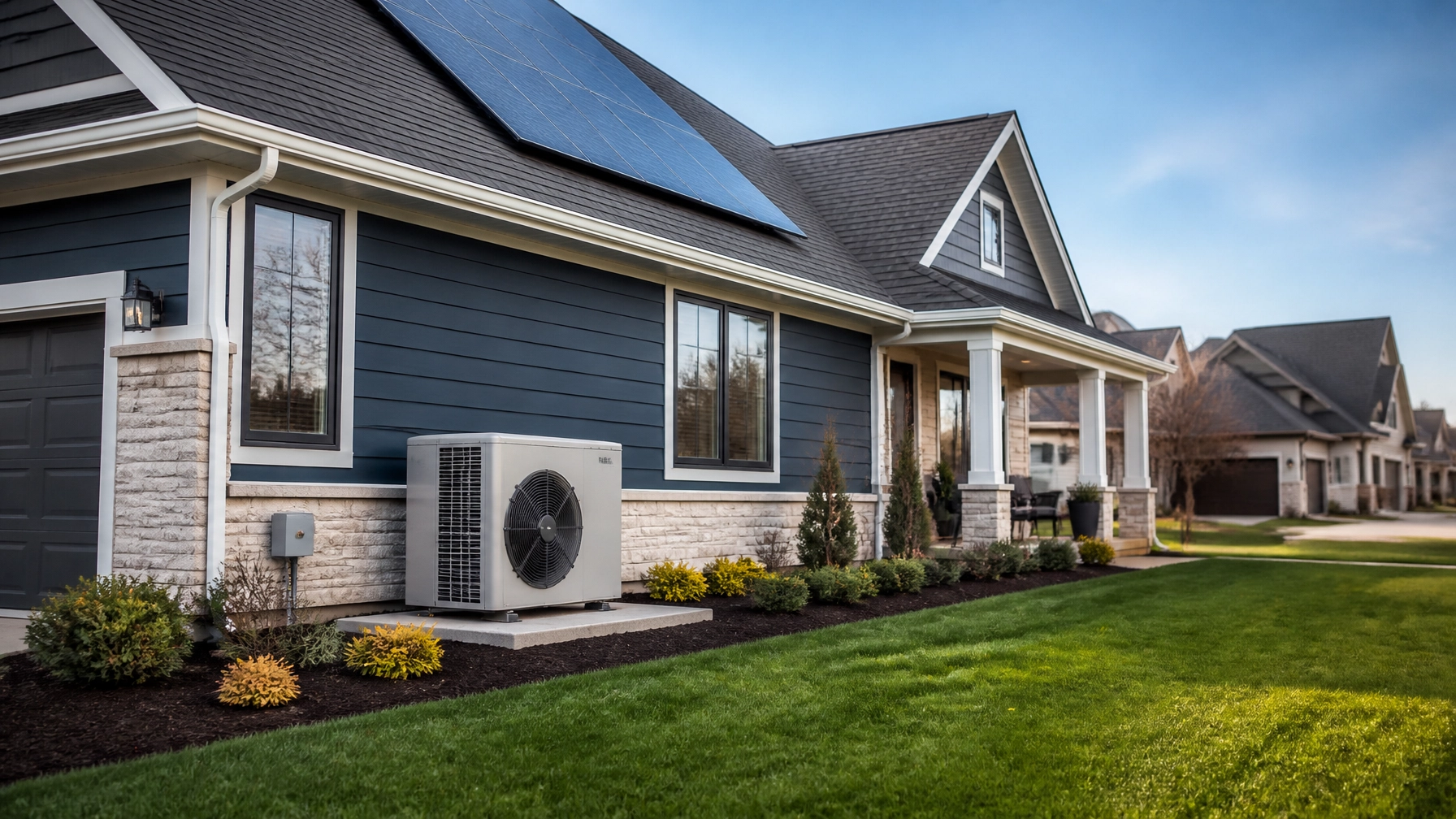
For homeowners in Wheeling and the Chicagoland area, the quest for energy independence and lower utility bills is a top priority. As solar panel installations continue to rise across Illinois, many residents are looking for the most efficient way to utilize the clean energy they generate. The answer lies in the integration of high-efficiency heat pumps. By transitioning from traditional gas furnaces and air conditioners to a unified heat pump system, you can maximize your solar investment and achieve year-round comfort with a significantly reduced carbon footprint.
At Mechanical Management & Design Solutions (MMDS), we specialize in helping homeowners bridge the gap between renewable energy production and efficient energy consumption. Whether you are already "living on sunshine" or planning a solar array for the future, understanding how to integrate a heat pump is the key to a truly sustainable home.
Why should you pair a heat pump with your solar panels?
Pairing a heat pump with solar panels allows you to use the electricity your roof produces to provide both heating and cooling, essentially turning your home into a self-sustaining ecosystem. This synergy eliminates your reliance on volatile fossil fuel prices and maximizes the return on investment for your solar array by increasing your "self-consumption" of generated power.
When you install solar panels, your goal is typically to offset as much of your utility bill as possible. However, traditional homes often use natural gas for heating and electricity for cooling. By installing a heat pump, you shift your entire HVAC load, both heating and cooling, onto the electrical grid. This allows your solar panels to power your home’s temperature control throughout the year.
In the summer, your solar production is at its peak precisely when your heat pump needs power for AC installation and replacement services. In the winter, while solar production is lower, the high efficiency of a cold-climate heat pump ensures that every kilowatt-hour your panels produce goes much further than it would with traditional electric resistance heating.
How does a heat pump work with a residential solar system?
A heat pump works with a solar system by drawing electricity from your solar inverter to power its compressor and fans, which move thermal energy into or out of your home. Instead of burning fuel to create heat, the system uses your solar-generated power to transfer existing heat, making it up to 300% to 400% efficient.
The technical process is remarkably straightforward. Your solar panels capture sunlight and convert it into DC electricity, which an inverter then turns into AC electricity for your home’s use. Your heat pump, which serves as both your primary heating and cooling source, pulls from this supply.
During the cooling season, the heat pump acts like a standard air conditioner, removing heat from your indoors and releasing it outside. During the heating season, it reverses this process, extracting ambient heat from the cold outdoor air and pumping it into your living space. Because the system is moving heat rather than generating it through combustion, the amount of electricity required is minimal compared to the thermal output provided.

What electrical upgrades are needed for solar and heat pump integration?
Integrating a heat pump with a solar-enabled home usually requires a dedicated 240-volt circuit and may necessitate a heavy-up of your electrical panel to 200 amps to handle the combined load of the HVAC system and solar inverter. Ensuring your home's electrical infrastructure is robust enough to support these high-efficiency components is critical for safety and performance.
Before we begin a heat pump installation, we often recommend a thorough evaluation of your current electrical system. Many older homes in the Chicagoland area were built with 100-amp panels, which may not be sufficient for a fully electrified home.
Key considerations include:
- Panel Capacity: You may need to upgrade to a 200-amp service to accommodate the heat pump, solar breakers, and potentially an EV charger in the future.
- Circuit Dedicatedness: A heat pump requires its own dedicated 240V circuit, similar to an electric oven or dryer.
- Sub-panels: In some solar configurations, a dedicated sub-panel is used to manage renewable inputs and heavy loads.
If you are unsure about your home's capacity, our team can guide you through the necessary electrical services to ensure your home is ready for the transition.
How do you size a heat pump for a solar-powered home in Chicagoland?
Sizing a heat pump for a solar home requires a "Manual J" load calculation to determine the exact heating and cooling needs of your space, balanced against your solar array's annual kilowatt-hour production. It is vital to size the system based on the home's thermal envelope, insulation and air sealing, rather than just square footage.
In the Chicagoland market, "Local Hero" SEO tactics and localized knowledge are essential because our weather varies wildly. A system that is too small will struggle during a polar vortex, while an oversized system will cycle on and off too frequently, wasting solar energy and causing unnecessary wear on the equipment.
When we visit your home in Wheeling, we look at:
- Insulation Levels: Better insulation allows for a smaller, more efficient heat pump.
- Solar Offset: We analyze your solar production data to see how much of the heat pump's seasonal load can be covered by your panels.
- Ductwork Integrity: Ensuring your ducts can handle the airflow of a modern heat pump is essential for efficiency.
Can a heat pump handle Wheeling's cold winters when powered by solar?
Yes, modern cold-climate heat pumps are designed to provide effective heating even when outdoor temperatures drop well below zero, and they can be powered by solar energy year-round. While solar production is lower in the winter due to shorter days and potential snow cover, the extreme efficiency of the heat pump ensures you still save significantly compared to gas or electric resistance heat.
Many homeowners worry that a heat pump won't keep up with a Chicago winter. However, the latest technology in heater installation and replacement has revolutionized cold-weather performance. "Cold-climate" models use variable-speed compressors to extract heat from the air even at -15°F.
While your solar panels might not cover 100% of your heating bill in January, they will drastically reduce the "net" energy you need to pull from the grid. Furthermore, Illinois' net metering policies often allow you to "bank" excess solar energy produced in the sunny summer months to use during the winter when your heat pump is working harder.

Maximizing Your Investment: Efficiency and Longevity
Integrating these two technologies is about more than just "going green"; it’s a pragmatic financial decision. By focusing on equipment performance and proper installation, you ensure that your HVAC system lasts for 15–20 years while maintaining peak efficiency.
Mechanical Management & Design Solutions (MMDS) takes a holistic approach. We don't just "swap boxes." We look at how your heat pump interacts with your solar inverter, your thermostat, and your home’s unique airflow patterns. This ensures that you aren't just saving energy, you're improving your indoor air quality and personal comfort.
Benefits of Solar-Heat Pump Integration:
- Predictable Energy Costs: Shield yourself from rising natural gas and electricity rates.
- Dual-Purpose System: One unit handles both heating and cooling, simplifying maintenance.
- Safety: Removing gas lines from the HVAC system eliminates the risk of carbon monoxide leaks.
- Home Value: Modern, energy-independent homes are increasingly desirable in the Chicagoland real estate market.
Save on Your System Upgrade
If you're upgrading your HVAC system, help yourself and make sure the equipment you are purchasing qualifies for one of these discounts:
- Up to $900 on < 2.5 tons, ≥ 15.2 SEER2, ≥ 9.4 EER2, ≥ 8.1 HSPF2
- Up to $1,400 on ≥ 2.5 tons, ≥ 15.2 SEER2, ≥ 9.4 EER2, ≥ 8.1 HSPF2
- Up to $1,500 on < 2.5 tons, ≥ 17 SEER2, ≥ 9.4 EER2, ≥ 8.5 HSPF2
- Up to $2,000 on ≥ 2.5 tons, ≥ 17 SEER2, ≥ 9.4 EER2, ≥ 8.5 HSPF2
Discount with ENERGY STAR® certified smart thermostat:
- Up to $975 on < 2.5 tons, ≥ 15.2 SEER2, ≥ 9.4 EER2, ≥ 8.1 HSPF2
- Up to $1,475 on ≥ 2.5 tons, ≥ 15.2 SEER2, ≥ 9.4 EER2, ≥ 8.1 HSPF2
- Up to $1,575 on < 2.5 tons, ≥ 17 SEER2, ≥ 9.4 EER2, ≥ 8.5 HSPF2
- Up to $2,075 on ≥ 2.5 tons, ≥ 17 SEER2, ≥ 9.4 EER2, ≥ 8.5 HSPF2
To apply for these discounts, Call or Text MMDS at (847) 221-6280. Our team will help you select the eligible equipment and handle the necessary documentation to ensure you receive your savings.

Frequently Asked Questions
1. Do I need to install solar and a heat pump at the same time?
No, you can install them separately. However, it is highly recommended to inform your solar installer if you plan to add a heat pump later, so they can size your solar array to handle the future electrical load. Conversely, if you already have solar, we can size your heat pump based on your existing production.
2. What happens to my heat pump if the power goes out?
Since heat pumps run on electricity, they will stop working during a power outage unless you have a solar battery backup or a standby generator. Solar panels alone (without a battery) typically shut off during grid outages for safety reasons (anti-islanding).
3. How much maintenance do solar-integrated heat pumps require?
Heat pumps require standard bi-annual maintenance, once before the cooling season and once before the heating season. This ensures the coils are clean and the refrigerant levels are optimal, which is crucial for maximizing the "free" energy provided by your solar panels.
4. Is a heat pump quieter than a traditional AC unit?
Yes, modern heat pumps are significantly quieter than older central AC units. They often feature noise-dampening technology and variable-speed fans that ramp up and down slowly, preventing the loud "thud" often associated with older systems starting up.
5. Will I still have a gas bill?
If you choose a "whole-home" heat pump and replace your gas water heater and stove as well, you can eventually disconnect your gas service entirely. If you keep a gas furnace as a "dual-fuel" backup, you will still have a small gas bill during the coldest months of the year.
Take the Next Step Toward Energy Independence
Integrating a heat pump into your Chicagoland solar home is one of the smartest investments you can make for your property and your wallet. By leveraging the expertise of Mechanical Management & Design Solutions (MMDS), you ensure a seamless transition to a high-efficiency lifestyle.
Take a moment to evaluate your current energy usage. If you're ready to stop overpaying for separate heating and cooling and start using your solar power to its full potential, schedule a consultation with our experts today.
Mechanical Management & Design Solutions (MMDS) is proud to serve Wheeling and the Chicagoland area. We are committed to providing the technical excellence and local knowledge you need to succeed.
Call or Text MMDS at (847) 221-6280 today to discuss your heat pump installation and start saving.