

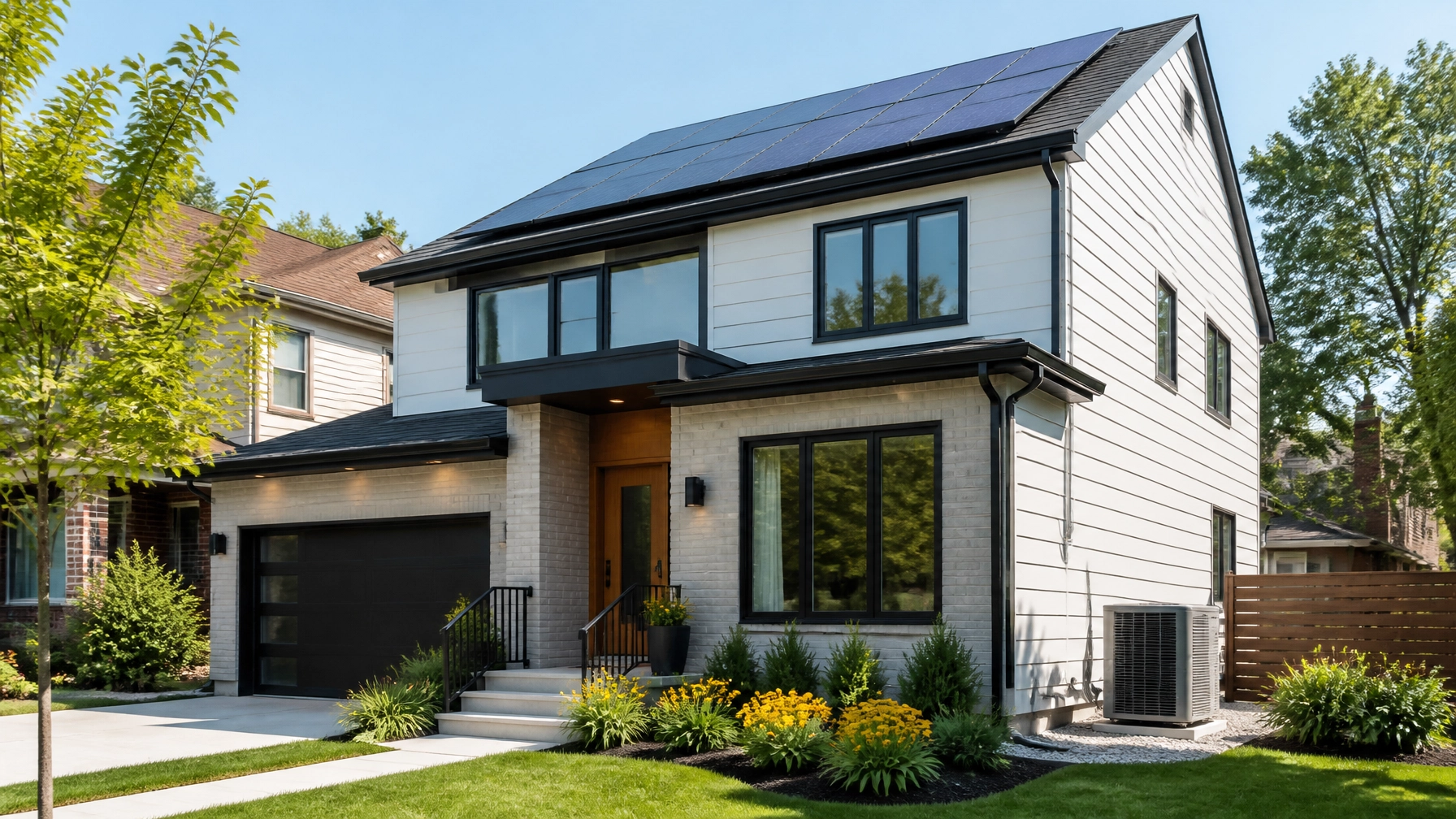
For many homeowners in Wheeling and the Chicagoland area, the journey toward energy independence begins with rooftop solar panels. However, generating your own clean energy is only half the battle; the next step is using that energy as efficiently as possible. Integrating a high-efficiency heat pump with your solar array is the most effective way to maximize your investment, providing both year-round comfort and massive utility savings.
At Mechanical Management & Design Solutions (MMDS), we believe that understanding how these technologies work together is the key to a smarter, more comfortable home. Whether you already have solar or are planning a full home energy overhaul, this guide will walk you through everything you need to know about pairing these two powerhouse systems.
Can a Heat Pump Work Efficiently with Solar Panels?
Yes, heat pumps and solar panels are a perfect match because heat pumps are 100% electric and can be powered directly by the energy your panels produce. By using solar power to run your heating and cooling system, you drastically reduce your reliance on the grid and fossil fuels. This synergy allows you to "bank" solar energy during the day to keep your home comfortable all night long.
When you install a heat pump, you are essentially swapping out traditional gas-fired furnaces or inefficient electric baseboards for a system that moves heat rather than creating it. Because this process is remarkably efficient, a properly sized solar array can often cover a significant portion, if not all, of the electricity needed to keep your home at the perfect temperature throughout the year.

Why Should Wheeling Homeowners Combine Solar and Heat Pumps?
Combining solar panels with a heat pump allows you to lock in low energy costs and protect yourself against the fluctuating prices of natural gas and grid electricity. In the Chicagoland area, where weather can swing from humid 90-degree days to sub-zero winter nights, having a self-sustaining HVAC system provides unmatched financial peace of mind. Additionally, this combination significantly reduces your home's carbon footprint by eliminating on-site combustion.
The pragmatic benefit of this integration is the immediate impact on your monthly overhead. By shifting your home’s primary energy load, heating and cooling, onto your solar production, you are maximizing the "self-consumption" of your solar power. This is far more cost-effective than selling excess power back to the utility company at a lower rate and buying it back later at a premium.
Benefits of Integration:
- Operational Savings: Drastically lower your monthly utility bills by using "free" energy from the sun.
- System Longevity: High-quality heat pumps installed by professionals tend to have long lifespans, and when powered by stable solar energy, they operate under ideal electrical conditions.
- Environmental Impact: Fully electrifying your home helps the environment by removing the need for natural gas lines and reducing CO2 emissions.
- Total Comfort: Modern heat pumps provide more consistent, even heating and cooling compared to traditional "blast-on, blast-off" systems.
How Does the Installation Process Work for Solar-Integrated Heat Pumps?
The installation process involves a comprehensive load calculation to ensure your heat pump is sized for Wheeling's climate, followed by an electrical assessment to integrate the system with your solar inverter. A professional team will first evaluate your home’s insulation and ductwork to ensure the new system performs at peak efficiency. Finally, the outdoor and indoor units are installed and synced with your home’s electrical panel.
When we handle a heater installation and replacement or an AC installation and replacement, we don't just "swap boxes." We look at the entire home as a system. This is especially critical when solar is involved.
Step-by-Step Integration:
- Energy Audit: We assess your home’s current energy usage and solar production capacity.
- Load Calculation: Using Manual J calculations, we determine exactly how much heating and cooling capacity your home needs.
- Electrical Upgrades: Sometimes, moving to an all-electric heat pump requires electrical services to upgrade your main panel or add dedicated circuits.
- Heat Pump Setup: The outdoor condenser and indoor air handler are installed. If your home doesn't have ducts, we may recommend a ductless mini-split system.
- Solar Interconnection: We ensure the heat pump’s electrical draw is prioritized within your solar management system, often incorporating smart thermostats to optimize run times during peak sunlight hours.

What Are the Most Energy-Efficient Heat Pumps for Chicagoland?
For the Chicagoland area, the most efficient options are "cold-climate" air-source heat pumps (ccASHPs) that are specifically designed to maintain high performance even when temperatures drop well below zero. These systems utilize variable-speed compressors to provide precise heating without the need for a secondary backup furnace in most cases. Look for units with high SEER2 (cooling efficiency) and HSPF2 (heating efficiency) ratings to maximize your solar investment.
In our local climate, not all heat pumps are created equal. Older models used to struggle once the temperature hit freezing, but modern cold-climate technology has changed the game. These units can extract heat from the outside air even when it feels frigid to us, ensuring you stay warm in January without a massive spike in your electric bill.
How Much Can You Save by Switching to a Solar-Powered Heat Pump?
Homeowners can often see a 30% to 50% reduction in total annual energy expenditures when transitioning from a traditional gas furnace and central AC to a solar-powered heat pump. The exact savings depend on your home’s insulation, the size of your solar array, and your previous heating fuel type (propane and electric resistance users see the biggest gains). Over the life of the system, these savings can amount to tens of thousands of dollars.
By using your own solar electricity to power your AC installation and replacement during the summer, you essentially eliminate the cost of cooling. In the winter, the heat pump uses that same solar energy to warm your home, often at 300% efficiency or higher, meaning for every one unit of electricity used, it moves three units of heat into your home.

Professional Advice for Long-Term Success
To ensure your integrated system continues to perform, schedule annual maintenance and take a moment to check your air filters every month. At Mechanical Management & Design Solutions (MMDS), we emphasize that a heat pump is a precision machine; keeping it clean and well-maintained is the only way to protect your investment and your comfort.
Ensure your home is properly insulated before installation. Even the best solar-powered heat pump will struggle if your home is leaking air. By sealing gaps and upgrading attic insulation, you allow your HVAC system to work less and last longer.
Frequently Asked Questions
Does a heat pump work when the sun isn't shining?
Yes, your heat pump will continue to function at night or on cloudy days. It will draw power from the grid or from your home’s battery storage system if you have one. The goal of solar integration is to offset your total annual energy use, even if you are using grid power during the night.
Do I need to keep my gas furnace as a backup?
In many cases, a modern cold-climate heat pump can handle the entire heating load for a Wheeling home. However, some homeowners choose a "dual-fuel" setup where the heat pump handles the majority of the heating, and a high-efficiency gas furnace only kicks in during the absolute coldest "Polar Vortex" events.
Will I need to upgrade my electrical panel?
It is possible. Moving from gas heating to an electric heat pump increases the electrical load on your home. Our experts in electrical services can evaluate your current panel and determine if an upgrade is necessary to safely handle the new equipment and your solar interconnection.
How long does a heat pump last?
With proper professional maintenance, a high-quality heat pump typically lasts 15 to 20 years. Because they handle both heating and cooling, they work year-round, which makes regular tune-ups essential for longevity.
Ready to maximize your solar savings?
If you're upgrading your HVAC system, help yourself and make sure the equipment you are purchasing qualifies for one of these discounts:
- Up to $900 on < 2.5 tons, ≥ 15.2 SEER2, ≥ 9.4 EER2, ≥ 8.1 HSPF2
- Up to $1,400 on ≥ 2.5 tons, ≥ 15.2 SEER2, ≥ 9.4 EER2, ≥ 8.1 HSPF2
- Up to $1,500 on < 2.5 tons, ≥ 17 SEER2, ≥ 9.4 EER2, ≥ 8.5 HSPF2
- Up to $2,000 on ≥ 2.5 tons, ≥ 17 SEER2, ≥ 9.4 EER2, ≥ 8.5 HSPF2
Discount with ENERGY STAR® certified smart thermostat:
- Up to $975 on < 2.5 tons, ≥ 15.2 SEER2, ≥ 9.4 EER2, ≥ 8.1 HSPF2
- Up to $1,475 on ≥ 2.5 tons, ≥ 15.2 SEER2, ≥ 9.4 EER2, ≥ 8.1 HSPF2
- Up to $1,575 on < 2.5 tons, ≥ 17 SEER2, ≥ 9.4 EER2, ≥ 8.5 HSPF2
- Up to $2,075 on ≥ 2.5 tons, ≥ 17 SEER2, ≥ 9.4 EER2, ≥ 8.5 HSPF2
To apply for these discounts, Call or Text MMDS at (847) 221-6280. Our team will help you select the eligible equipment and handle the necessary documentation to ensure you receive your savings. We are proud to serve Wheeling and the Chicagoland area with expert HVAC solutions that prioritize your comfort and your wallet.