

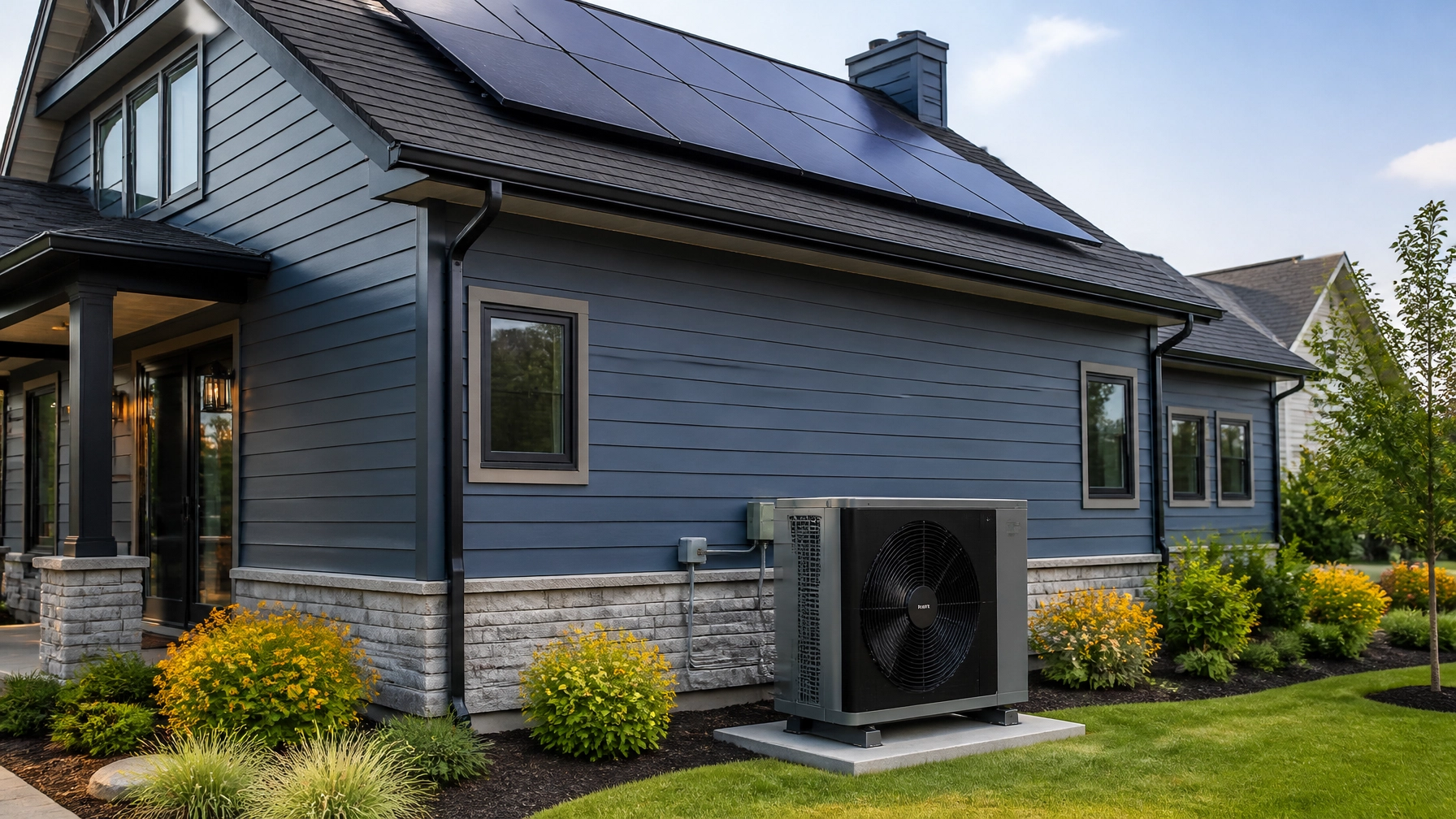
As homeowners in Wheeling and across the Chicagoland area look for ways to lower their monthly bills and increase home comfort, two technologies have emerged as the ultimate "power couple": solar panels and electric heat pumps. By combining the ability to generate your own clean electricity with an ultra-efficient heating and cooling system, you can effectively take control of your energy future.
At Mechanical Management & Design Solutions (MMDS), we specialize in helping our neighbors transition to more sustainable, high-performance HVAC solutions. This guide will walk you through everything you need to know about integrating these two systems to maximize your savings and comfort.
What is the benefit of pairing heat pumps with solar panels?
Integrating a heat pump with solar panels allows you to use self-generated electricity to power your home’s heating and cooling, drastically reducing or even eliminating your dependence on expensive grid power and volatile natural gas prices. This combination maximizes the return on investment for both systems by turning your roof into a private power plant for your most energy-intensive appliance.
When you install a heat pump system, you are choosing a technology that is up to three to four times more efficient than traditional electric resistance heating. However, because heat pumps run entirely on electricity, your utility bill can shift from gas to electric. By adding solar panels to the mix, you offset that new electrical load. Instead of paying ComEd for the power to run your AC in the summer or your heater in the winter, you are simply "spending" the energy you harvested from the sun.
Beyond the financial gains, this pairing offers:
- Energy Independence: You are less vulnerable to the seasonal price spikes of natural gas and electricity.
- Environmental Impact: Since heat pumps move heat rather than burning fuel, and solar provides the power, your home’s carbon footprint drops significantly.
- Increased Property Value: Homes with modern, energy-efficient HVAC and renewable energy systems are highly attractive to modern buyers in the Chicagoland market.
How does a heat pump work with a solar energy system?
A solar energy system generates DC electricity from sunlight, which an inverter converts to AC power for your home; the heat pump then uses this electricity to power its compressor and fans to transfer heat between the indoors and outdoors. Essentially, your solar panels act as the fuel source for your heat pump, replacing the need for external utility inputs.

It is important to understand that a heat pump doesn't "create" heat through combustion like a furnace does. Instead, it works like a reversible air conditioner. In the summer, it pulls heat from inside your home and dumps it outside. In the winter, it pulls heat from the cold outdoor air and moves it inside. This process of moving heat is incredibly efficient, but it requires electricity to keep the cycle moving.
When your solar array is sized correctly, it can produce enough kilowatt-hours (kWh) over the course of a year to cover the total energy consumption of the heat pump. During bright, sunny days, your panels may produce more than you need, sending the excess back to the grid. In the evening or during the depths of a Chicago winter night, you pull that "credit" back from the grid to keep your heat pump running.
Is Wheeling’s climate suitable for solar-powered heat pumps?
Yes, modern "cold-climate" heat pumps are specifically engineered to provide reliable heating even when temperatures in the Chicagoland area drop well below zero, and our region receives more than enough sunlight annually to make solar a viable power source. While Illinois winters are harsh, the latest technology ensures your home stays warm without the need for a traditional gas furnace backup in most cases.
Many homeowners worry that solar won't work in the winter or that heat pumps will fail during a polar vortex. However, solar panels actually work more efficiently in cold temperatures, and as long as they are kept clear of heavy snow, they continue to produce power.
On the HVAC side, the cold-climate heat pumps we install at Mechanical Management & Design Solutions (MMDS) are a far cry from the units of 20 years ago. These systems use variable-speed compressors and specialized refrigerants to extract heat even when it feels like there is none outside. For Wheeling residents, this means year-round comfort that is consistently powered by the sun.
How much can you save by switching to a solar-integrated heat pump?
Homeowners who integrate these systems typically see a 40% to 70% reduction in their total annual energy expenditures, with many approaching "net-zero" status for their heating and cooling costs. The exact savings depend on your home’s insulation, the efficiency rating of the AC unit or heat pump selected, and the size of your solar array.
Consider this: heating and cooling usually account for about half of a typical suburban home’s energy usage. By switching from a 20-year-old gas furnace and standard AC to a high-efficiency heat pump, you’re already cutting energy consumption. When you then produce the electricity for that heat pump yourself, the "operating cost" of your HVAC system can drop to nearly zero. Over the 15- to 20-year lifespan of these systems, the cumulative savings can reach tens of thousands of dollars.
What are the key steps to integrate these two systems?
The integration process begins with a professional energy audit and "Manual J" load calculation to determine your home’s specific heating and cooling needs, followed by sizing a solar array that can handle that calculated electrical load. Finally, a smart control system is installed to ensure the heat pump operates at peak efficiency during peak solar production hours.

Here is a quick checklist for Wheeling homeowners:
- Assess Your Envelope: Before upgrading equipment, ensure your attic insulation and air sealing are up to par. This reduces the "load" the heat pump has to carry.
- Size It Right: Don't just guess. Our team at MMDS performs detailed calculations to ensure your new system isn't too big (wasting energy) or too small (failing to keep you comfortable).
- Coordinate the Solar Load: If you already have solar, we need to ensure your inverter can handle the starting current of the heat pump. If you are installing solar, your solar provider needs to know you are switching to an electric heat pump so they can add 20–30% more panels to your quote.
- Install a Smart Thermostat: Using an ENERGY STAR® certified smart thermostat allows you to "pre-heat" or "pre-cool" your home during the day when the sun is shining, effectively using your home’s thermal mass as a battery.
Frequently Asked Questions (FAQ)
Does a heat pump require a special type of solar panel?
No, any standard high-quality photovoltaic (PV) solar panel system will work. The heat pump simply draws power from your home’s main electrical panel, just like your refrigerator or television.
Will I still have a utility bill?
Most homeowners still have a small monthly "connection fee" from ComEd. However, with a properly sized solar and heat pump setup, your actual energy usage charges can be zeroed out over the course of a year through net metering.
Can I add a heat pump if I already have solar panels?
Absolutely. If your current solar system wasn't sized for a heat pump, you might see a small increase in your electric bill, but you will still be saving significantly compared to using gas or old electric heat. You can also look into adding a few more panels to your array to cover the new load.
How long does the installation take?
At Mechanical Management & Design Solutions (MMDS), we can often complete a full heat pump installation in a single day. Solar installations typically take 1–3 days, depending on the complexity of your roof.

Ready to Upgrade Your Home Comfort?
If you are looking to maximize your home's efficiency in Wheeling and the Chicagoland area, the team at Mechanical Management & Design Solutions (MMDS) is here to help. We provide expert guidance on selecting the right equipment that fits your home and your energy goals.
If you're upgrading your HVAC system, help yourself and make sure the equipment you are purchasing qualifies for one of these discounts:
- Up to $900 on < 2.5 tons, ≥ 15.2 SEER2, ≥ 9.4 EER2, ≥ 8.1 HSPF2
- Up to $1,400 on ≥ 2.5 tons, ≥ 15.2 SEER2, ≥ 9.4 EER2, ≥ 8.1 HSPF2
- Up to $1,500 on < 2.5 tons, ≥ 17 SEER2, ≥ 9.4 EER2, ≥ 8.5 HSPF2
- Up to $2,000 on ≥ 2.5 tons, ≥ 17 SEER2, ≥ 9.4 EER2, ≥ 8.5 HSPF2
Discount with ENERGY STAR® certified smart thermostat:
- Up to $975 on < 2.5 tons, ≥ 15.2 SEER2, ≥ 9.4 EER2, ≥ 8.1 HSPF2
- Up to $1,475 on ≥ 2.5 tons, ≥ 15.2 SEER2, ≥ 9.4 EER2, ≥ 8.1 HSPF2
- Up to $1,575 on < 2.5 tons, ≥ 17 SEER2, ≥ 9.4 EER2, ≥ 8.5 HSPF2
- Up to $2,075 on ≥ 2.5 tons, ≥ 17 SEER2, ≥ 9.4 EER2, ≥ 8.5 HSPF2
To apply for these discounts, Call or Text MMDS at (847) 221-6280. Our team will help you select the eligible equipment and handle the necessary documentation to ensure you receive your savings.