

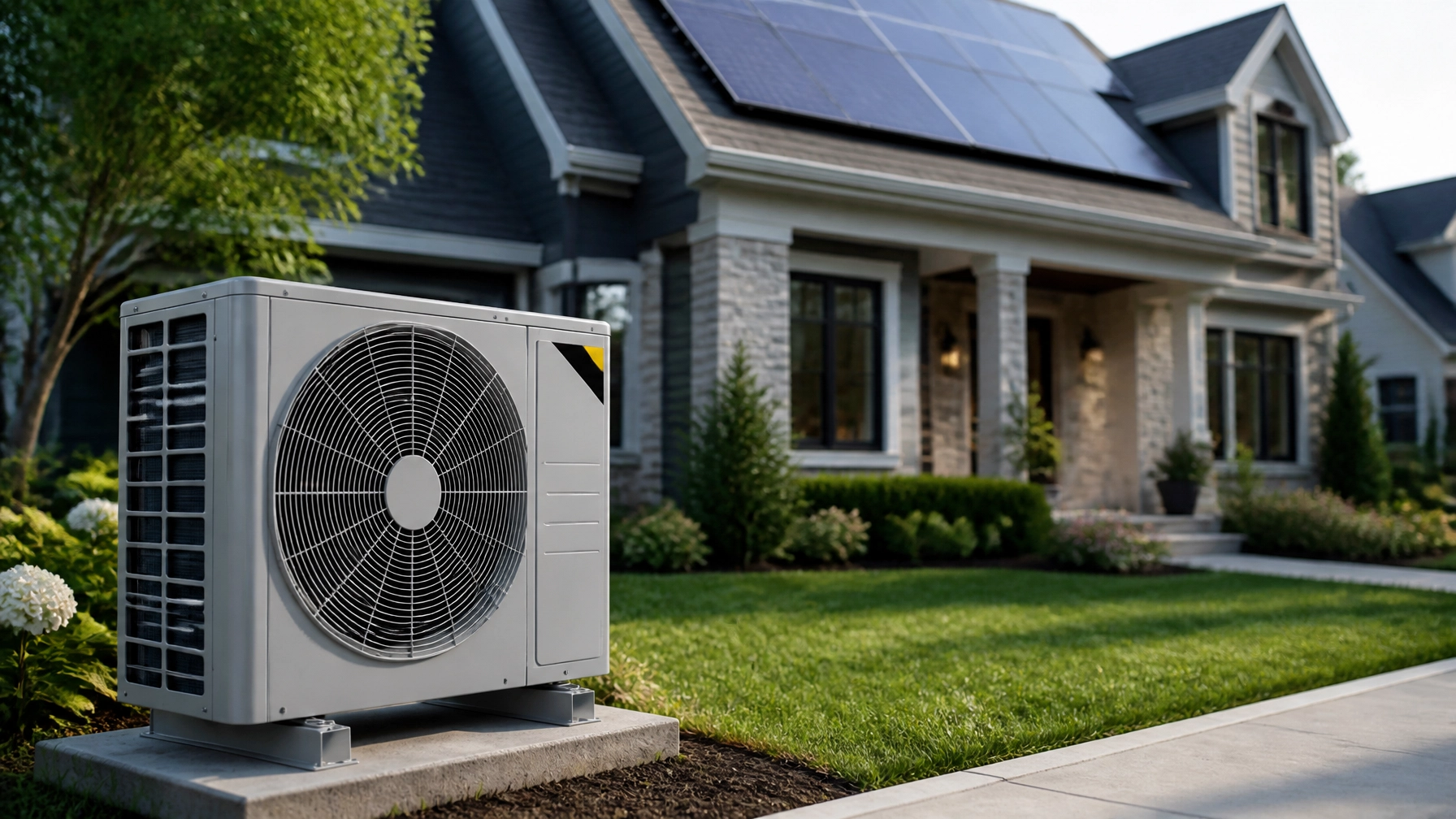
For homeowners in Wheeling and the Chicagoland area, the quest for energy independence and lower utility bills often leads to two powerful solutions: solar panels and heat pumps. Individually, these technologies provide significant benefits, but when integrated, they create a synergistic energy ecosystem that can virtually eliminate your dependence on traditional fossil fuels.
In the Midwest, where seasonal temperature swings are dramatic, finding ways to maximize energy efficiency is a top priority. Combining a high-efficiency heating installation like a heat pump with a rooftop solar array allows you to power your home’s climate control using clean electricity you generate on your own roof. This guide explores how this combination works and how you can leverage it for maximum savings in our local market.
Why should you combine heat pumps with solar panels in Chicagoland?
Combining these technologies allows you to use self-generated solar energy to power your home’s heating and cooling, drastically reducing or eliminating your monthly gas and electric bills. By shifting your HVAC load to electricity, you maximize the return on your solar investment while insulating yourself from rising natural gas prices.
When you install a heat pump, your home’s electrical demand increases because you are no longer burning gas for heat. However, if you have solar panels, that increased demand is met by the sun. In Wheeling and across the Chicagoland area, this means your "fuel" for heating and cooling is essentially free once the equipment is paid for. Furthermore, heat pumps provide both AC installation and heating in a single unit, making them the most versatile option for solar-enabled homes.

How does net metering in Illinois benefit heat pump users?
Net metering in Illinois allows solar owners to send excess electricity generated during the sunny summer months back to the grid in exchange for credits. These credits can then be "banked" and used during the winter months to power your heat pump when solar production is lower.
Under current Illinois net metering rules, homeowners can capture the value of their summer overproduction to offset the costs of winter heating. Since heat pumps are highly efficient, often delivering three units of heat for every one unit of electricity used, those banked credits go a long way. This makes the transition to an electric heat pump particularly attractive for local residents who want to stabilize their year-round energy expenses.
Can a heat pump efficiently heat a home during a Chicago winter?
Modern cold-climate heat pumps are engineered to provide reliable and efficient heating even when outdoor temperatures drop well below zero. These systems utilize advanced compressors and refrigerants to extract heat from the outside air, ensuring your home stays warm throughout the toughest Chicagoland winters.
Years ago, heat pumps struggled in extreme cold, but today’s technology has changed the game. Many systems offered by Mechanical Management & Design Solutions (MMDS) maintain 100% heating capacity even in sub-zero weather. For those who want extra peace of mind, we can also design "dual-fuel" systems that pair a heat pump with a high-efficiency gas furnace, though most solar-focused homeowners prefer to stay fully electric to maximize their solar usage.

What are the primary cost-saving benefits for homeowners in Wheeling?
The primary benefits include a significant reduction in annual energy expenditures, a decrease in equipment maintenance costs over time, and a boost in property value. By utilizing a heat pump for year-round comfort, you eliminate the need for separate heating and cooling maintenance and bypass the delivery fees associated with natural gas.
Beyond the monthly utility bill savings, integrating these systems contributes to the longevity of your home infrastructure. High-efficiency systems are built to last, and because they operate more consistently than older, "on-off" furnaces and air conditioners, they experience less wear and tear. At Mechanical Management & Design Solutions (MMDS), we emphasize equipment longevity through proper sizing and professional installation, ensuring your investment pays off for decades.

How should you prepare your home for a heat pump and solar integration?
Preparation starts with a professional energy audit and ensuring your home’s insulation and air sealing are up to par to minimize heat loss. Once your home is "tight," the next step is to consult with an HVAC expert to right-size your heat pump so it perfectly matches the capacity of your solar array and the layout of your home.
Before you switch to a heat pump, you may also need to evaluate your home's electrical services to ensure your panel can handle the new load. Ensuring that your building envelope is efficient means you can install a smaller, less expensive heat pump, which in turn requires fewer solar panels to power it. It is a holistic approach that ensures every component of your home works in harmony.
Frequently Asked Questions
1. Does a heat pump work during a power outage if I have solar?
Standard solar systems are grid-tied and will shut down during a power outage for safety unless you have a battery backup system. If you have a battery, your heat pump can continue to run, though it is a significant draw on stored power.
2. How long do heat pumps and solar panels typically last?
Solar panels often have warranties of 25 years or more, while modern heat pumps typically last 15 to 20 years with regular annual maintenance. This makes them a long-term pair for sustainable home comfort.
3. Is it better to install solar or a heat pump first?
It is often beneficial to install the heat pump first or at the same time. This allows your solar provider to accurately calculate your increased electrical usage and size your solar array to cover 100% of your new "all-electric" lifestyle.
4. Can I keep my old furnace as a backup?
Yes, this is known as a hybrid or dual-fuel system. The heat pump handles the heating for most of the year, and the gas furnace only kicks in during the most extreme cold snaps. However, with modern cold-climate heat pumps, a backup furnace is often unnecessary for most Wheeling homes.
Maximize Your Savings with MMDS
Taking control of your home's energy future starts with choosing the right equipment and the right partner. Mechanical Management & Design Solutions (MMDS) is proud to serve Wheeling and the Chicagoland area with expert HVAC solutions that prioritize efficiency and customer comfort.
If you're upgrading your HVAC system, help yourself and make sure the equipment you are purchasing qualifies for one of these discounts:
- Up to $900 on < 2.5 tons, ≥ 15.2 SEER2, ≥ 9.4 EER2, ≥ 8.1 HSPF2
- Up to $1,400 on ≥ 2.5 tons, ≥ 15.2 SEER2, ≥ 9.4 EER2, ≥ 8.1 HSPF2
- Up to $1,500 on < 2.5 tons, ≥ 17 SEER2, ≥ 9.4 EER2, ≥ 8.5 HSPF2
- Up to $2,000 on ≥ 2.5 tons, ≥ 17 SEER2, ≥ 9.4 EER2, ≥ 8.5 HSPF2
Discount with ENERGY STAR® certified smart thermostat:
- Up to $975 on < 2.5 tons, ≥ 15.2 SEER2, ≥ 9.4 EER2, ≥ 8.1 HSPF2
- Up to $1,475 on ≥ 2.5 tons, ≥ 15.2 SEER2, ≥ 9.4 EER2, ≥ 8.1 HSPF2
- Up to $1,575 on < 2.5 tons, ≥ 17 SEER2, ≥ 9.4 EER2, ≥ 8.5 HSPF2
- Up to $2,075 on ≥ 2.5 tons, ≥ 17 SEER2, ≥ 9.4 EER2, ≥ 8.5 HSPF2
To apply for these discounts, Call or Text MMDS at (847) 221-6280. Our team will help you select the eligible equipment and handle the necessary documentation to ensure you receive your savings.