

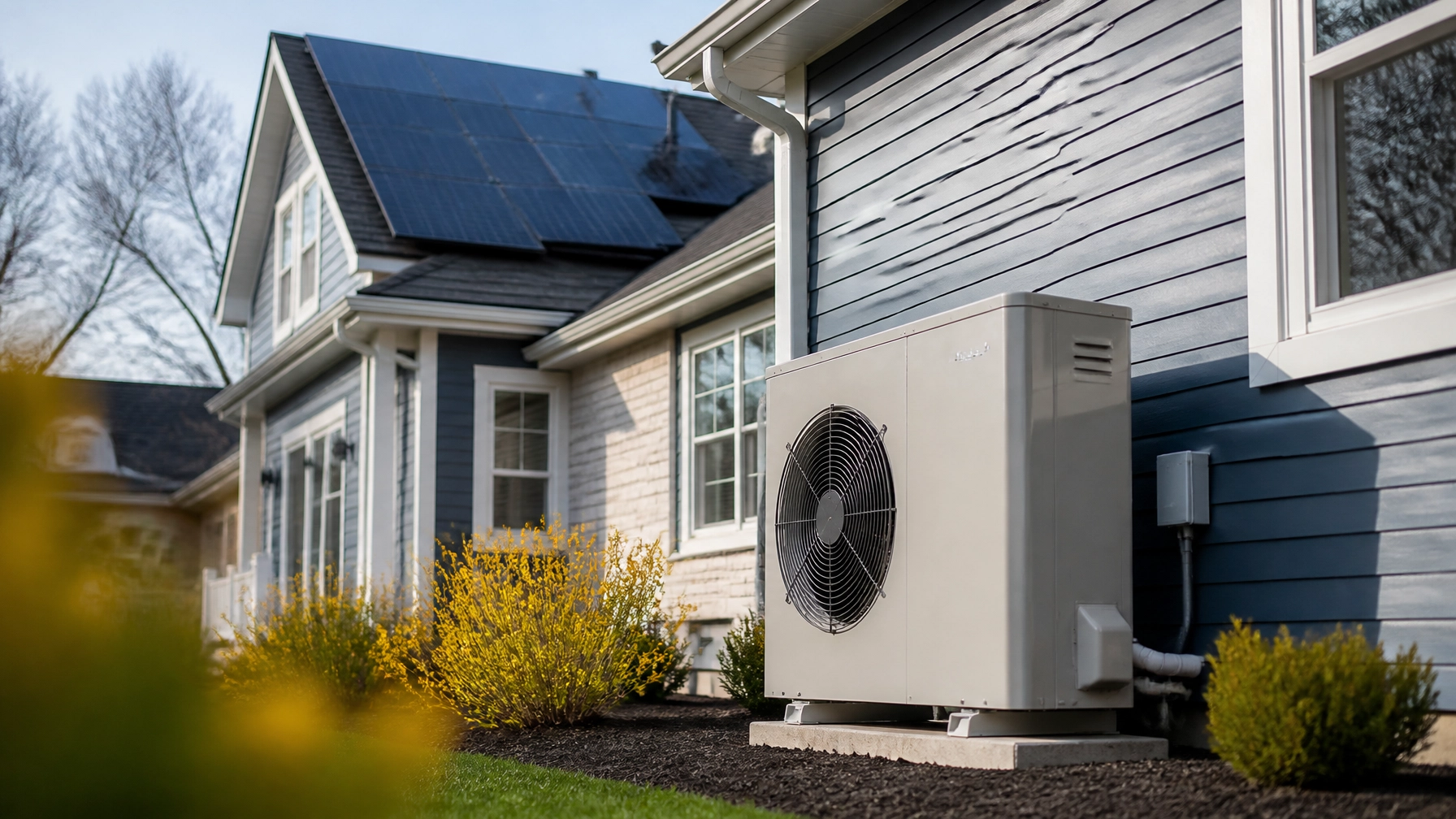
Homeowners in Wheeling and the Chicagoland area are increasingly looking for ways to stabilize their monthly utility costs while improving home comfort. Integrating a heat pump with a solar power system is one of the most effective ways to achieve energy independence and drastic long-term savings. By using the free energy from the sun to power a high-efficiency heating and cooling system, you can virtually eliminate your dependence on volatile fossil fuel prices.
At Mechanical Management & Design Solutions (MMDS), we specialize in helping local residents navigate these advanced technology upgrades. Whether you are looking to replace an aging furnace or want to maximize the ROI of your existing solar panels, understanding how these systems work together is the first step toward a more efficient home.
Can a heat pump run on solar power?
Yes, a heat pump can run entirely on solar power because it is an all-electric HVAC system. Since heat pumps move heat rather than generate it through combustion, they use significantly less electricity than traditional electric heaters, making them a perfect match for the limited output of residential solar arrays.
When you install a heat pump system, you are essentially adding a major electrical load to your home. However, because modern heat pumps are incredibly efficient, often delivering three to four units of heat for every unit of electricity consumed, they do not require a massive solar farm to operate. A standard rooftop solar installation in the Chicagoland area can often generate enough power during the day to run the heat pump and even charge a battery backup for nighttime use.
For homeowners who have already invested in electrical services like solar panels, adding a heat pump is the final piece of the puzzle. It allows you to transition away from natural gas or propane, consolidating all your home’s energy needs into one clean, renewable source.
What are the benefits of combining solar panels with a heat pump?
The primary benefits of combining solar panels with a heat pump include near-zero energy bills, reduced carbon footprint, and enhanced equipment longevity. This "dynamic duo" of green technology ensures that your heating and cooling, which typically account for over 50% of home energy use, are powered by the sun rather than the grid.
- Drastic Cost Savings: By generating your own electricity, you "pre-pay" for years of heating and cooling. This protects you from the rising costs of electricity and natural gas in the Illinois market.
- Year-Round Efficiency: A heat pump provides both heating in the winter and air conditioning in the summer. Solar production is highest in the summer, perfectly aligning with your cooling needs.
- Increased Home Value: Homes with integrated renewable energy and high-efficiency HVAC systems are highly attractive to modern buyers in the Chicagoland market.
- Environmental Impact: You eliminate on-site combustion, meaning no carbon monoxide risks and a significantly smaller carbon footprint for your household.

How does a heat pump work with a solar energy system?
A heat pump works with solar power by drawing electricity from your solar inverter to power its compressor and fans. During the day, your solar panels produce DC electricity, which is converted to AC electricity to run the heat pump; any excess energy can be sent back to the grid via net metering or stored in a home battery.
In the winter, a cold-climate heat pump extracts ambient heat from the outside air, even in freezing temperatures, and moves it indoors. This process requires electricity to run the refrigerant cycle. In the summer, the process reverses to provide high-efficiency cooling. Because solar panels produce the most energy during the sunniest parts of the day, many homeowners use "thermal storage" strategies, such as slightly over-cooling or over-heating the home during the day so the system doesn't have to work as hard at night when the sun is down.
What should you consider before installing a solar-ready heat pump in Chicagoland?
Before installation, you must consider the system's SEER2 and HSPF2 ratings, your home’s insulation levels, and the specific climate demands of Northern Illinois. Ensuring your home is "tight" through proper insulation and sealing will allow a smaller, less expensive solar-heat pump combo to keep you comfortable year-round.
When we evaluate a home in Wheeling or nearby suburbs, we look at several technical factors:
- Cold-Climate Performance: Not all heat pumps are created equal. You need a unit rated for sub-zero performance to handle a typical Chicago winter.
- System Sizing: A system that is too large will cycle on and off too frequently, wasting solar energy. A system that is too small won't keep up during a polar vortex.
- Inverter Compatibility: Ensure your solar inverter can handle the "startup surge" of an HVAC compressor, or opt for an inverter-driven, variable-speed heat pump that starts up gently.

How much can you save by pairing heat pumps with solar?
Homeowners can save between 50% and 90% on their total annual energy costs by pairing a high-efficiency heat pump with a correctly sized solar array. While the exact savings depend on your previous fuel source (gas vs. electric) and home size, the elimination of monthly gas bills and reduced grid-electricity usage creates an immediate positive cash flow.
In the Chicagoland area, where summer humidity and winter freezes are the norm, the efficiency of a 17 SEER2 or higher heat pump is a game-changer. When this equipment is powered by "free" solar energy, the payback period for both systems is significantly shortened. Instead of paying a utility company every month, you are essentially investing that money back into your own property's infrastructure.
Take Action for a More Efficient Home
If you're ready to maximize your home's efficiency, the team at Mechanical Management & Design Solutions (MMDS) is here to help. We provide expert installation and replacement services tailored to the unique climate of Wheeling and the Chicagoland area.
Call or Text MMDS at (847) 221-6280 to schedule a consultation.
Exclusive Equipment Discounts
If you're upgrading your HVAC system, help yourself and make sure the equipment you are purchasing qualifies for one of these discounts:
- Up to $900 on < 2.5 tons, ≥ 15.2 SEER2, ≥ 9.4 EER2, ≥ 8.1 HSPF2
- Up to $1,400 on ≥ 2.5 tons, ≥ 15.2 SEER2, ≥ 9.4 EER2, ≥ 8.1 HSPF2
- Up to $1,500 on < 2.5 tons, ≥ 17 SEER2, ≥ 9.4 EER2, ≥ 8.5 HSPF2
- Up to $2,000 on ≥ 2.5 tons, ≥ 17 SEER2, ≥ 9.4 EER2, ≥ 8.5 HSPF2
Discount with ENERGY STAR® certified smart thermostat:
- Up to $975 on < 2.5 tons, ≥ 15.2 SEER2, ≥ 9.4 EER2, ≥ 8.1 HSPF2
- Up to $1,475 on ≥ 2.5 tons, ≥ 15.2 SEER2, ≥ 9.4 EER2, ≥ 8.1 HSPF2
- Up to $1,575 on < 2.5 tons, ≥ 17 SEER2, ≥ 9.4 EER2, ≥ 8.5 HSPF2
- Up to $2,075 on ≥ 2.5 tons, ≥ 17 SEER2, ≥ 9.4 EER2, ≥ 8.5 HSPF2
How to apply for these discounts:
To apply for these discounts, Call or Text MMDS at (847) 221-6280. Our team will help you select the eligible equipment and handle the necessary documentation to ensure you receive your savings.

Frequently Asked Questions
1. Do heat pumps work in Chicago winters?
Absolutely. Modern "cold-climate" heat pumps are designed to operate efficiently even when temperatures drop to -15°F or lower. MMDS ensures your system is properly sized for Wheeling's toughest winter days.
2. Is it better to install solar or a heat pump first?
If your current HVAC system is over 10–12 years old, it is often better to install the heat pump first or at the same time. This allows your solar provider to accurately size your panels based on your new, lower electricity demand.
3. Can I use my old furnace as a backup?
Yes, many Chicagoland homeowners opt for a "dual-fuel" system. This uses the solar-powered heat pump for the majority of the year and switches to a gas furnace only during extreme temperature drops, ensuring total peace of mind.
4. How long does a heat pump last?
With professional maintenance from MMDS, a high-quality heat pump typically lasts 15 to 20 years. Regular tune-ups are essential to maintain the efficiency levels required to maximize your solar savings.
5. Does a heat pump require special wiring?
A heat pump requires a dedicated electrical circuit. If you are integrating with solar, our team will coordinate with your electrical setup to ensure the unit is powered safely and efficiently.