

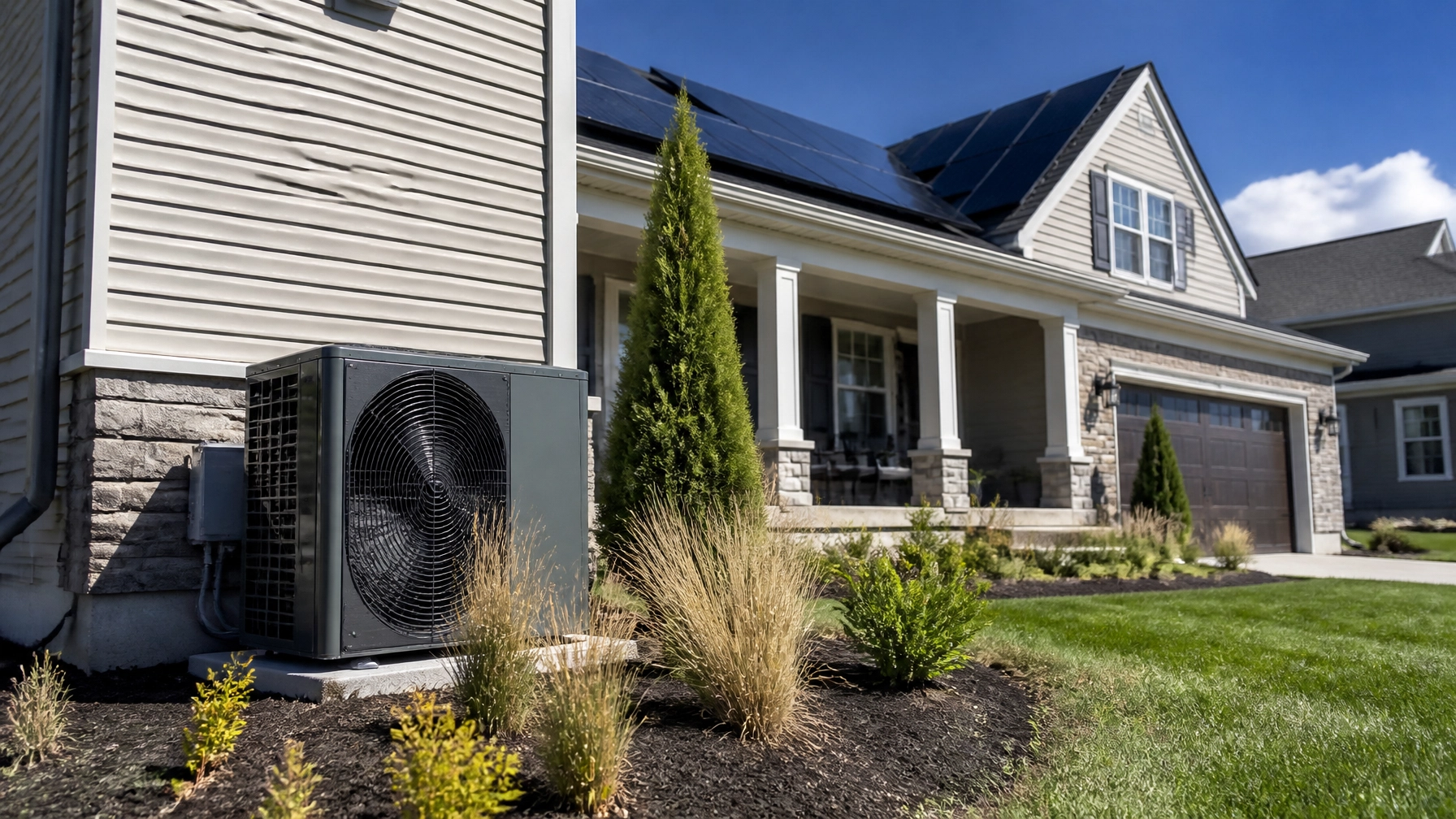
For homeowners in Wheeling and the broader Chicagoland area, the quest for energy independence and lower utility bills often starts with solar panels. However, the true potential of a solar-powered home is only realized when you transition your heating and cooling to a high-efficiency electric system. By integrating a modern heat pump with your solar array, you can transform your home into a self-sustaining powerhouse that provides year-round comfort with minimal environmental impact.
At Mechanical Management & Design Solutions (MMDS), we specialize in helping local residents navigate this transition. Whether you are looking into heater installation and replacement or seeking a full AC installation and replacement that works with your existing solar setup, understanding the synergy between these technologies is the first step toward significant long-term savings.
Why should you pair a heat pump with solar power in Chicagoland?
Integrating a heat pump with solar power allows you to use the electricity generated on your roof to heat and cool your home, effectively reducing or eliminating your reliance on expensive natural gas and grid electricity. This combination maximizes your return on investment for both systems by creating a closed-loop energy ecosystem within your property.
In the Chicagoland market, where energy prices can fluctuate wildly during peak summer and winter months, this integration offers a layer of financial predictability. When you generate your own power, every kilowatt-hour used by your heat pump is a kilowatt-hour you don't have to purchase from the utility company.
The Power of Electrification
When you "cut the pipe" and move away from traditional gas furnaces, you simplify your home's infrastructure. Instead of managing two separate energy sources (gas for heat, electricity for cooling), you consolidate everything into one highly efficient electrical system.
- Efficiency Gains: Modern heat pumps can be up to 300% efficient, meaning they move more energy than they consume.
- Cost Stability: By using solar energy, you protect yourself against future hikes in natural gas prices.
- Total Comfort: Heat pumps provide a more consistent, gentle flow of air compared to the "blast" of a traditional furnace.
How does a heat pump benefit a solar-enabled home?
A heat pump acts as a "smart consumer" for your solar energy, utilizing the excess power produced during the day to maintain your home’s temperature. This synergy is particularly effective in Illinois due to net metering programs that allow you to bank excess summer solar production to offset the increased electrical load of heating your home in the winter.

Enhancing Your Solar ROI
If you have solar panels but still use a gas furnace, you are likely exporting a significant amount of electricity back to the grid for a lower credit value than what you pay for gas. By switching to a heat pump, you "soak up" that excess electricity yourself, using it to provide thermal comfort.
- Increased Self-Consumption: Use more of the energy you produce on-site.
- Reduced Carbon Footprint: Move toward a carbon-neutral home by powering your HVAC with renewable energy.
- One System for All Seasons: A heat pump replaces both your furnace and your central air conditioner, streamlining your maintenance needs.
What are the best practices for sizing your HVAC system for solar?
Properly sizing your heat pump requires a detailed load calculation that accounts for your home's insulation, window quality, and your solar array's peak output. It is essential to ensure the heat pump's electrical demand aligns with your solar production capacity to maximize "free" heating and cooling hours.
At MMDS, we recommend a "Whole-Home" approach. Before installing a new system, take a moment to ensure your home is well-insulated. Reducing the energy leakages in your home allows us to install a smaller, more efficient heat pump that requires fewer solar panels to power.
Key Factors for Sizing:
- Manual J Calculation: Never rely on "rule of thumb" sizing. A professional technician should perform a Manual J calculation to determine the exact BTU requirements of your Wheeling home.
- Solar Production Curve: Analyze when your solar panels produce the most energy. We can often program smart thermostats to "pre-cool" or "pre-heat" your home during peak production hours.
- Electrical Panel Capacity: Ensure your electrical services are up to date. Integrating a heat pump may require an upgrade to your main panel or specific circuits and wiring to handle the load.
Can heat pumps handle Chicagoland's sub-zero winters?
Yes, modern cold-climate air-source heat pumps are specifically engineered to provide reliable heat even when temperatures drop well below zero in the Chicagoland area. These units utilize advanced variable-speed compressors and specialized refrigerants to extract heat from the outside air at temperatures as low as -15°F.

For many years, there was a misconception that heat pumps were only for southern climates. Technology has changed that. In fact, many residents in the Wheeling area are finding that their heat pumps keep them more comfortable during the "Polar Vortex" than their old furnaces did, providing a steady, even warmth without the dry air issues common with gas heat.
Reliability in the Cold
- Dual-Fuel Options: If you aren't ready to go 100% electric, we can install a hybrid system that uses a heat pump for most of the year and switches to a high-efficiency gas backup only on the very coldest nights.
- Variable Speed Technology: Unlike traditional systems that are either "on" or "off," modern heat pumps modulate their output, meaning they run longer at lower speeds to maintain a perfect temperature.
How do you maximize energy savings with this integration?
To maximize savings, you should integrate a smart thermostat that can be scheduled to run the heat pump during peak solar production hours and implement weatherization measures like attic insulation. This strategy, often called "thermal mass charging," allows your home to act as a battery, storing the heat produced by solar energy for use after the sun goes down.
Strategies for Maximum Efficiency:
- Schedule Maintenance: Ensure you schedule annual maintenance to keep your system running at peak SEER2 and HSPF2 ratings. A dirty coil can reduce efficiency by 20% or more.
- Upgrade Your Thermostat: Use an ENERGY STAR® certified smart thermostat to optimize your heating cycles.
- Monitor Your Solar: Keep an eye on your solar production app and adjust your heavy energy usage (like laundry or dishwashing) to coincide with times when your heat pump is most active and your panels are producing the most power.

Professional Expertise You Can Trust
Don't just take our word for it: homeowners across the Chicagoland area are already seeing the benefits. One local client recently shared: "After MMDS installed our new heat pump to work with our solar panels, our ComEd bill dropped significantly. We were worried about the winter, but the house stayed perfectly warm even in January."
As a leader in HVAC Services, Mechanical Management & Design Solutions (MMDS) is committed to helping you achieve a more efficient, comfortable home. We serve Wheeling and the Chicagoland area with pride, bringing expert knowledge to every project.
Exclusive Upgrade Discounts
If you're upgrading your HVAC system, help yourself and make sure the equipment you are purchasing qualifies for one of these discounts:
| Equipment Size & Efficiency | Standard Discount | Discount with SMART Thermostat |
|---|---|---|
| < 2.5 tons, ≥ 15.2 SEER2, ≥ 8.1 HSPF2 | Up to $900 | Up to $975 |
| ≥ 2.5 tons, ≥ 15.2 SEER2, ≥ 8.1 HSPF2 | Up to $1,400 | Up to $1,475 |
| < 2.5 tons, ≥ 17 SEER2, ≥ 8.5 HSPF2 | Up to $1,500 | Up to $1,575 |
| ≥ 2.5 tons, ≥ 17 SEER2, ≥ 8.5 HSPF2 | Up to $2,000 | Up to $2,075 |
How to Apply for These Discounts:
To apply for these discounts, Call or Text MMDS at (847) 221-6280. Our team will help you select the eligible equipment and handle the necessary documentation to ensure you receive your savings.
Ready to take control of your home energy? Whether you need a new installation, a repair, or a consultation on solar integration, we are here to help.
Call or Text MMDS at (847) 221-6280 today to schedule your consultation!