

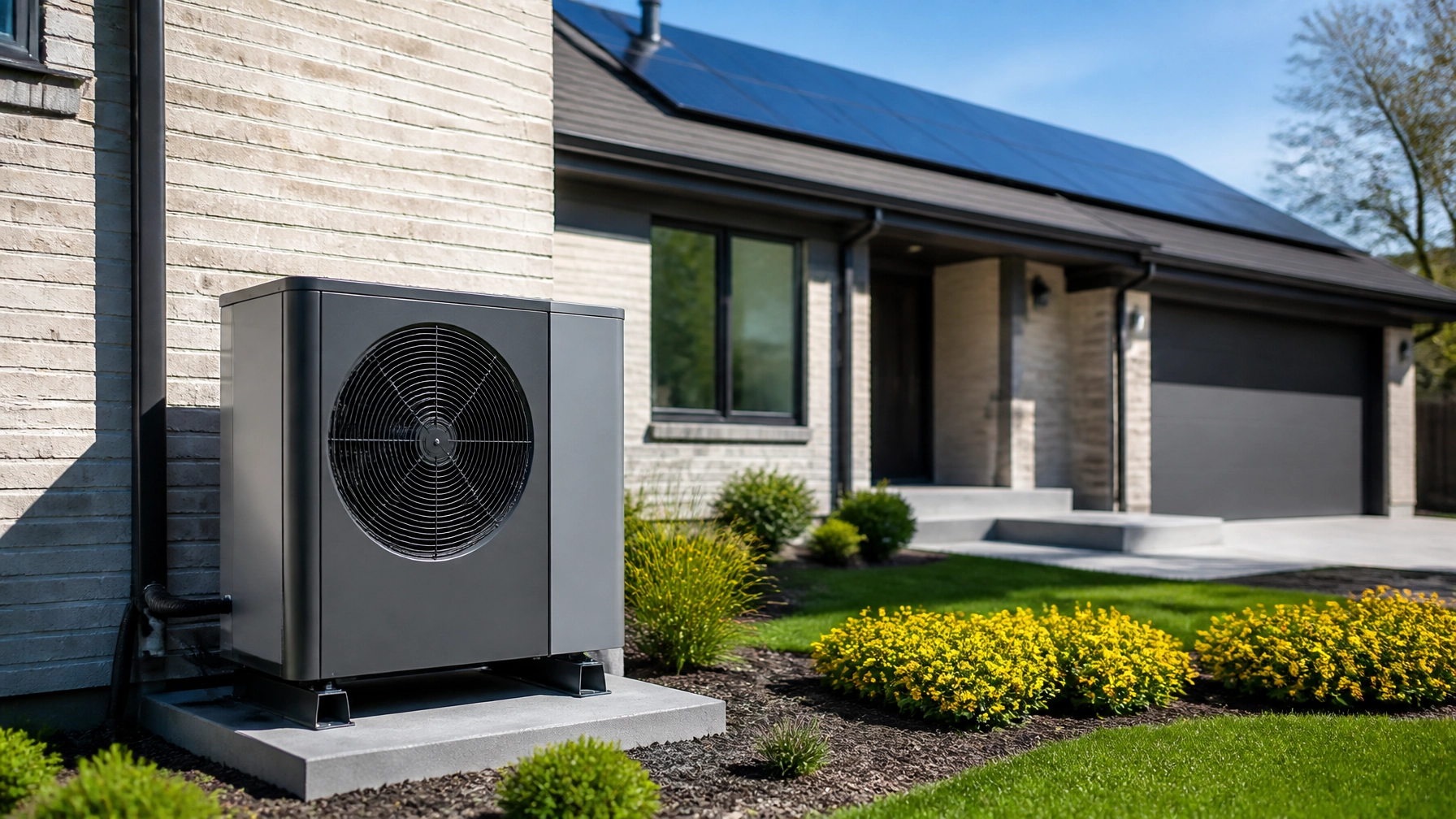
For homeowners in Wheeling and the Chicagoland area, the dream of a truly energy-independent home is becoming a reality. By combining the renewable energy generated by solar panels with the high-efficiency performance of a modern heat pump, you can effectively heat and cool your home for a fraction of the cost of traditional fossil fuel systems.
At Mechanical Management & Design Solutions (MMDS), we specialize in helping local residents navigate this transition. Whether you already have a solar array or are planning to install one, integrating a heat pump is one of the smartest upgrades you can make for your comfort and your wallet.
What are the benefits of combining solar panels with a heat pump?
Integrating solar panels with a heat pump allows you to power your home’s climate control system using "free" electricity generated on your roof, drastically reducing or even eliminating your monthly heating and cooling bills. This combination transforms your home into a high-efficiency energy loop where the sun provides the power and the heat pump provides the comfort.
When you use a traditional furnace, you are paying for every therm of natural gas. With a heat pump, you are using electricity to move heat rather than generate it. When that electricity comes from your own solar panels, the operational cost of your heater installation and replacement effectively drops to near zero during sunny periods. Furthermore, in the summer, your solar production is typically at its peak exactly when your AC installation and replacement needs are highest, creating a perfect synergy of supply and demand.

Will a heat pump work during a Wheeling winter?
Yes, modern cold-climate heat pumps are specifically engineered to maintain high efficiency and heating capacity even when outdoor temperatures in Chicagoland drop well below freezing. These systems utilize advanced variable-speed compressors and specialized refrigerants to extract heat from the air even in sub-zero conditions.
In years past, many people believed that heat pumps were only for the South. However, technology has advanced significantly. Today’s cold-climate air-source heat pumps (ASHPs) can operate efficiently down to -13°F or lower. For Wheeling residents, this means you can rely on your heat pump for the vast majority of the winter. In extreme polar vortex events, some homeowners choose a "hybrid" setup where a backup gas furnace kicks in only during the most extreme hours, but the goal is always to maximize the use of your solar-powered heat pump for the best cost savings.
How does solar power improve the efficiency of your HVAC system?
Solar power doesn't change the physical efficiency of the heat pump itself, but it dramatically improves the "financial efficiency" of your home by eliminating the cost of the electricity required to run the unit. Because a heat pump can be up to 300% to 400% efficient, it uses significantly less energy than electric resistance heating, making it the only HVAC system capable of being fully offset by a standard residential solar array.
Think of it this way: a heat pump is an "energy multiplier." For every one unit of solar electricity you put into the system, you get three to four units of heat out of it. This high Coefficient of Performance (COP) is what makes solar and heat pumps a "power couple." In the Chicagoland market, where energy prices can fluctuate, locking in your own energy source through solar provides long-term stability and protects you from utility price spikes.

What should I check before installing a heat pump for my solar home?
Before integrating a heat pump into your solar-powered home, you must ensure your electrical panel has the capacity for the additional load and that your home’s insulation is sufficient to minimize heat loss. It is also critical to perform a "Manual J" load calculation to size the heat pump correctly for your specific square footage and Chicagoland’s climate extremes.
1. Evaluate Your Electrical Capacity
A heat pump is a powerful electrical appliance. If you are also running solar inverters, you need to ensure your electrical services are up to the task. Our team at MMDS often finds that older homes in Wheeling may need a panel upgrade to 200 amps to safely handle a modern HVAC system alongside a solar array and perhaps an EV charger.
2. The Manual J Calculation
Never settle for a contractor who "guesstimates" the size of your unit based on square footage alone. A Manual J calculation takes into account your home’s orientation, window types, insulation levels, and local weather data. An oversized heat pump will cycle on and off too frequently (short-cycling), while an undersized unit won't keep you warm in January. We take the time to get these numbers right so your solar energy isn't wasted.
3. Tighten the Envelope
A solar-powered heat pump is most effective when it doesn't have to work harder than necessary. Take a moment to check the weatherstripping around your doors and the insulation in your attic. By reducing the "load" on your home, you can often install a smaller, less expensive heat pump and fewer solar panels while achieving the same level of comfort.
Maximizing Your Investment in Wheeling
Living in Wheeling and the Chicagoland area means dealing with high humidity in the summer and bone-chilling cold in the winter. A heat pump excels at both. Unlike standard AC units, high-efficiency heat pumps are excellent at dehumidification, which makes your home feel cooler at higher temperatures during our muggy July afternoons.
When you work with Mechanical Management & Design Solutions (MMDS), we don't just swap out a box. We look at your home as a complete system. We ensure that your ductwork is properly sized and that your smart thermostat is configured to prioritize solar energy consumption when possible. This holistic approach is why we are the preferred choice for homeowners looking for sustainable, long-term HVAC solutions.

Ready to Upgrade?
If you're upgrading your HVAC system, help yourself and make sure the equipment you are purchasing qualifies for one of these discounts:
- Up to $900 on < 2.5 tons, ≥ 15.2 SEER2, ≥ 9.4 EER2, ≥ 8.1 HSPF2
- Up to $1,400 on ≥ 2.5 tons, ≥ 15.2 SEER2, ≥ 9.4 EER2, ≥ 8.1 HSPF2
- Up to $1,500 on < 2.5 tons, ≥ 17 SEER2, ≥ 9.4 EER2, ≥ 8.5 HSPF2
- Up to $2,000 on ≥ 2.5 tons, ≥ 17 SEER2, ≥ 9.4 EER2, ≥ 8.5 HSPF2
Discount with ENERGY STAR® certified smart thermostat:
- Up to $975 on < 2.5 tons, ≥ 15.2 SEER2, ≥ 9.4 EER2, ≥ 8.1 HSPF2
- Up to $1,475 on ≥ 2.5 tons, ≥ 15.2 SEER2, ≥ 9.4 EER2, ≥ 8.1 HSPF2
- Up to $1,575 on < 2.5 tons, ≥ 17 SEER2, ≥ 9.4 EER2, ≥ 8.5 HSPF2
- Up to $2,075 on ≥ 2.5 tons, ≥ 17 SEER2, ≥ 9.4 EER2, ≥ 8.5 HSPF2
To apply for these discounts, Call or Text MMDS at (847) 221-6280. Our team will help you select the eligible equipment and handle the necessary documentation to ensure you receive your savings.
Frequently Asked Questions (FAQ)
1. Can I add a heat pump if I already have solar panels installed?
Absolutely. We can evaluate your current solar production and determine how much of a new heat pump's load it will cover. If your solar array is currently producing a surplus, a heat pump is the perfect way to utilize that extra energy.
2. What happens to my heat pump at night when the sun isn't shining?
Your home remains connected to the local grid. During the day, your solar panels power the heat pump and any excess energy is often "banked" with the utility company (depending on your net metering agreement). At night, your heat pump draws from the grid, using those banked credits to keep your costs low.
3. Does a heat pump replace both my furnace and my air conditioner?
Yes. A heat pump is a dual-purpose system. In the summer, it acts exactly like a high-efficiency central air conditioner. In the winter, the process reverses to provide heat. It is a space-saving and efficient way to handle all your year-round comfort needs in Wheeling and the Chicagoland area.
4. How long do these systems typically last?
With professional installation and regular maintenance from MMDS, a high-quality heat pump can last 15 to 20 years. When paired with solar panels (which often last 25+ years), you are setting your home up for decades of low-cost energy.
5. Are heat pumps noisy?
Not at all. Modern units are designed with quiet-run technology and sound-dampening covers. In many cases, they are significantly quieter than the older AC units they replace.
If you are ready to take control of your home's energy future, don't wait. Call or Text MMDS at (847) 221-6280 today to schedule a consultation. We proudly serve Wheeling and the Chicagoland area with expert HVAC solutions tailored to your unique needs.