

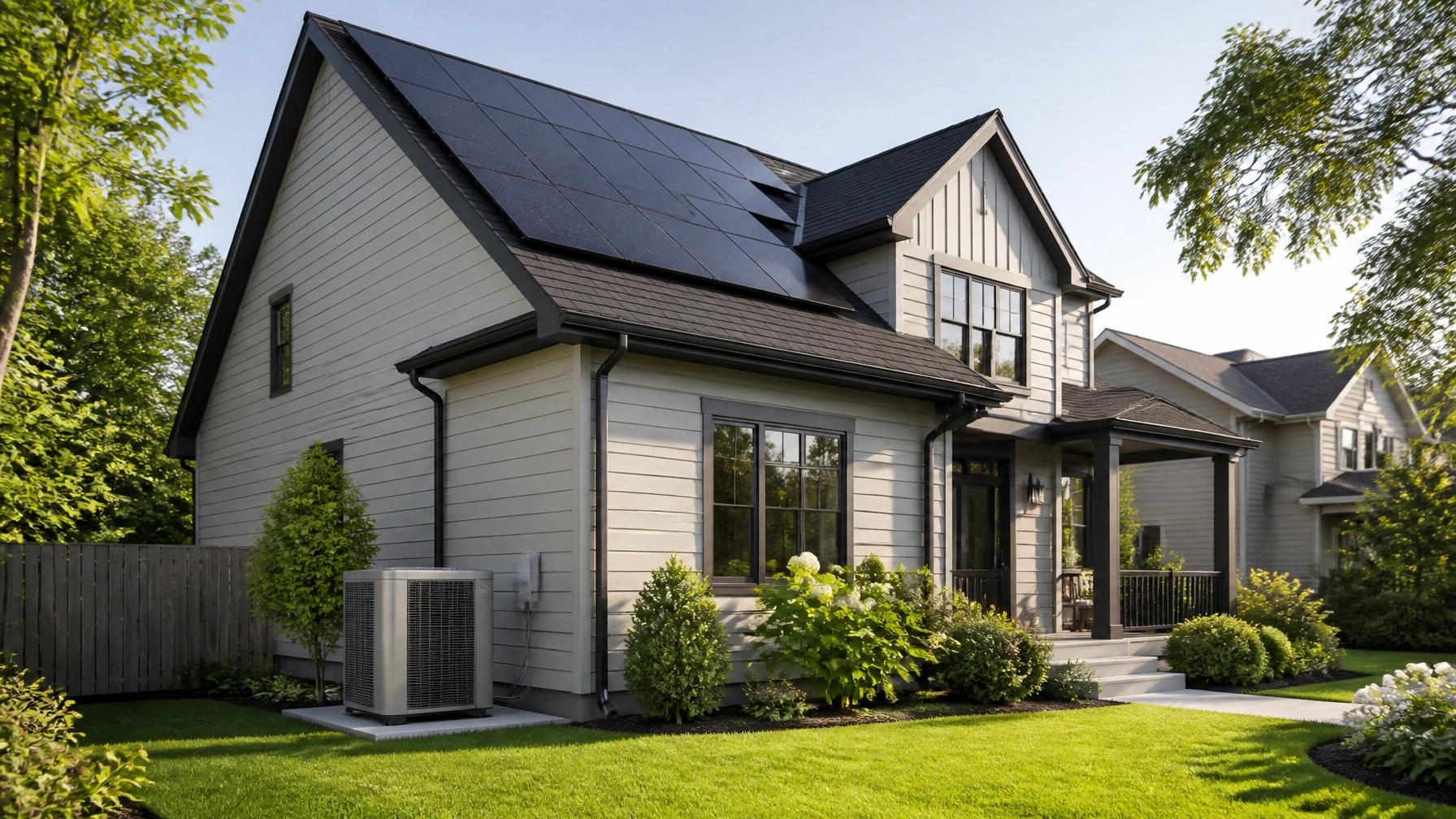
Homeowners and business owners in Wheeling and the Chicagoland area are increasingly looking for ways to achieve energy independence while reducing their monthly overhead. While solar panels have become a common sight on rooftops across Illinois, many people overlook the most critical component of a truly energy-efficient building: the HVAC system. Pairing a solar array with a high-efficiency heat pump is the single most effective way to maximize your investment in renewable energy.
At Mechanical Management & Design Solutions (MMDS), we specialize in helping our neighbors transition to modern, sustainable climate control. Whether you are managing a commercial property or looking to upgrade your family home, understanding the synergy between solar power and heat pumps is the first step toward a more comfortable and cost-effective future.
Why do heat pumps and solar panels work so well together?
Heat pumps and solar panels are a perfect match because heat pumps run entirely on electricity, allowing you to use the "free" power generated by your roof to heat and cool your building. Unlike traditional furnaces that require natural gas or heating oil, a heat pump moves heat rather than creating it, resulting in efficiency levels that can exceed 300%. By sourcing that electricity from a solar PV system, you can virtually eliminate the fuel costs associated with climate control.
When you install solar panels, you are essentially pre-paying for your electricity for the next 20 to 25 years. If you continue to use an old gas furnace for heating, you are still tied to the fluctuating prices of fossil fuels. However, by switching to a heat pump, you move your entire HVAC load onto your electrical system. This "electrification" allows you to utilize every kilowatt-hour your panels produce, turning your home into a self-sustaining ecosystem that is shielded from rising utility rates.

Can heat pumps handle the cold Chicagoland winters?
Yes, modern cold-climate heat pumps are specifically designed to provide reliable, efficient heating even when outdoor temperatures drop well below zero. These advanced systems utilize variable-speed compressors and specialized refrigerants to extract ambient heat from the frozen air, ensuring your home stays warm throughout a typical Illinois winter. For those in Wheeling and the Chicagoland area, a properly sized heat pump is a viable and powerful alternative to a traditional heating system.
For decades, the standard advice was that heat pumps weren't built for the Midwest. That has changed with the advent of "Cold Climate" technology. These units maintain high efficiency at temperatures as low as -15°F. For property owners who want an extra layer of security, we often install "dual-fuel" systems, pairing a heat pump with a high-efficiency gas furnace backup, to ensure total peace of mind during the most extreme polar vortex events. Whether you need a full heater installation or a hybrid upgrade, the focus is always on maintaining consistent indoor comfort while minimizing energy waste.
How do solar-powered heat pumps benefit commercial property managers?
Commercial property managers can see a massive reduction in operating expenses by combining solar power with heat pumps, as these systems lower peak demand charges and simplify building maintenance. By replacing separate rooftop AC units and large boilers with integrated heat pump systems, managers can consolidate their HVAC infrastructure and reduce the carbon footprint of their commercial assets. This transition is particularly attractive for multi-family housing and office complexes looking to attract environmentally conscious tenants.
In the commercial sector, energy costs are often one of the largest line-item expenses. A solar-integrated heat pump system doesn't just lower the monthly bill; it increases the property's value and protects against future carbon regulations. Furthermore, because heat pumps provide both heating and cooling, the maintenance schedule is simplified. Instead of servicing two different systems, your team can focus on one high-performance electric unit. For businesses in the Chicagoland area, this shift represents a pragmatic approach to long-term financial stability and equipment longevity.

What should homeowners consider before switching to a solar-HVAC system?
Homeowners should evaluate their home's insulation levels and current electrical capacity before making the switch to ensure the new system operates at peak efficiency. It is essential to confirm that your electrical panel can handle the load of an all-electric HVAC system and that your solar array is sized correctly to meet the increased demand. Consulting with a professional for electrical services is a critical first step in the planning process.
Before we install a new AC system or heat pump, we recommend a thorough home energy audit. Even the most efficient heat pump will struggle if your home is leaking air through old windows or poor attic insulation. By tightening the building envelope and ensuring your electrical wiring is up to code, you create the ideal environment for your solar-powered heat pump to thrive. This holistic approach ensures that every bit of energy your panels produce is used effectively to keep you comfortable.
Why is professional maintenance essential for solar-integrated heat pumps?
Professional maintenance ensures that both the heat pump and its electrical connections remain in peak condition, preventing minor issues from turning into costly repairs. Regular inspections allow technicians to clean coils, check refrigerant levels, and verify that the system is communicating correctly with your smart thermostat and solar inverter. Taking a moment to schedule seasonal tune-ups is the best way to safeguard your investment and ensure year-round reliability.
A heat pump works much harder than a traditional air conditioner because it operates year-round. In the summer, it provides high-efficiency cooling, and in the winter, it reverses the process to heat your home. This constant operation makes routine check-ups vital. At Mechanical Management & Design Solutions (MMDS), we focus on proactive care, identifying wear and tear before it leads to a mid-winter breakdown. For residents in Wheeling, our maintenance plans are designed to give you one less thing to worry about.

Frequently Asked Questions (FAQ)
1. How long does a heat pump last in the Chicagoland climate?
With proper professional maintenance, a high-quality heat pump typically lasts 15 to 20 years. Because these units work year-round, staying on top of seasonal service is key to reaching that 20-year milestone.
2. Can I use my existing ductwork for a heat pump?
In most cases, yes. Modern heat pumps are designed to integrate with standard ductwork. If your home currently has a central furnace and AC, a heat pump can usually serve as a direct replacement.
3. Does solar power still work during cloudy Illinois winters?
Yes, solar panels still generate electricity on cloudy days, though at a lower rate than on sunny days. When paired with the grid (net metering), you can use "credits" earned during the sunny summer months to power your heat pump during the winter.
4. Is a heat pump quieter than a traditional AC unit?
Yes, most modern heat pumps are significantly quieter than older AC units and furnaces. They utilize variable-speed fans that ramp up and down slowly, eliminating the loud "clunk" often associated with older systems starting up.

Upgrade Your Comfort Today
Transitioning to a solar-powered heat pump is a smart move for your wallet and the environment. If you are ready to explore your options for a more efficient home or business in Wheeling and the Chicagoland area, our team is here to help.
If you're upgrading your HVAC system, help yourself and make sure the equipment you are purchasing qualifies for one of these discounts:
- Up to $900 on < 2.5 tons, ≥ 15.2 SEER2, ≥ 9.4 EER2, ≥ 8.1 HSPF2
- Up to $1,400 on ≥ 2.5 tons, ≥ 15.2 SEER2, ≥ 9.4 EER2, ≥ 8.1 HSPF2
- Up to $1,500 on < 2.5 tons, ≥ 17 SEER2, ≥ 9.4 EER2, ≥ 8.5 HSPF2
- Up to $2,000 on ≥ 2.5 tons, ≥ 17 SEER2, ≥ 9.4 EER2, ≥ 8.5 HSPF2
Discount with ENERGY STAR® certified smart thermostat:
- Up to $975 on < 2.5 tons, ≥ 15.2 SEER2, ≥ 9.4 EER2, ≥ 8.1 HSPF2
- Up to $1,475 on ≥ 2.5 tons, ≥ 15.2 SEER2, ≥ 9.4 EER2, ≥ 8.1 HSPF2
- Up to $1,575 on < 2.5 tons, ≥ 17 SEER2, ≥ 9.4 EER2, ≥ 8.5 HSPF2
- Up to $2,075 on ≥ 2.5 tons, ≥ 17 SEER2, ≥ 9.4 EER2, ≥ 8.5 HSPF2
To apply for these discounts, Call or Text MMDS at (847) 221-6280. Our team will help you select the eligible equipment and handle the necessary documentation to ensure you receive your savings.