

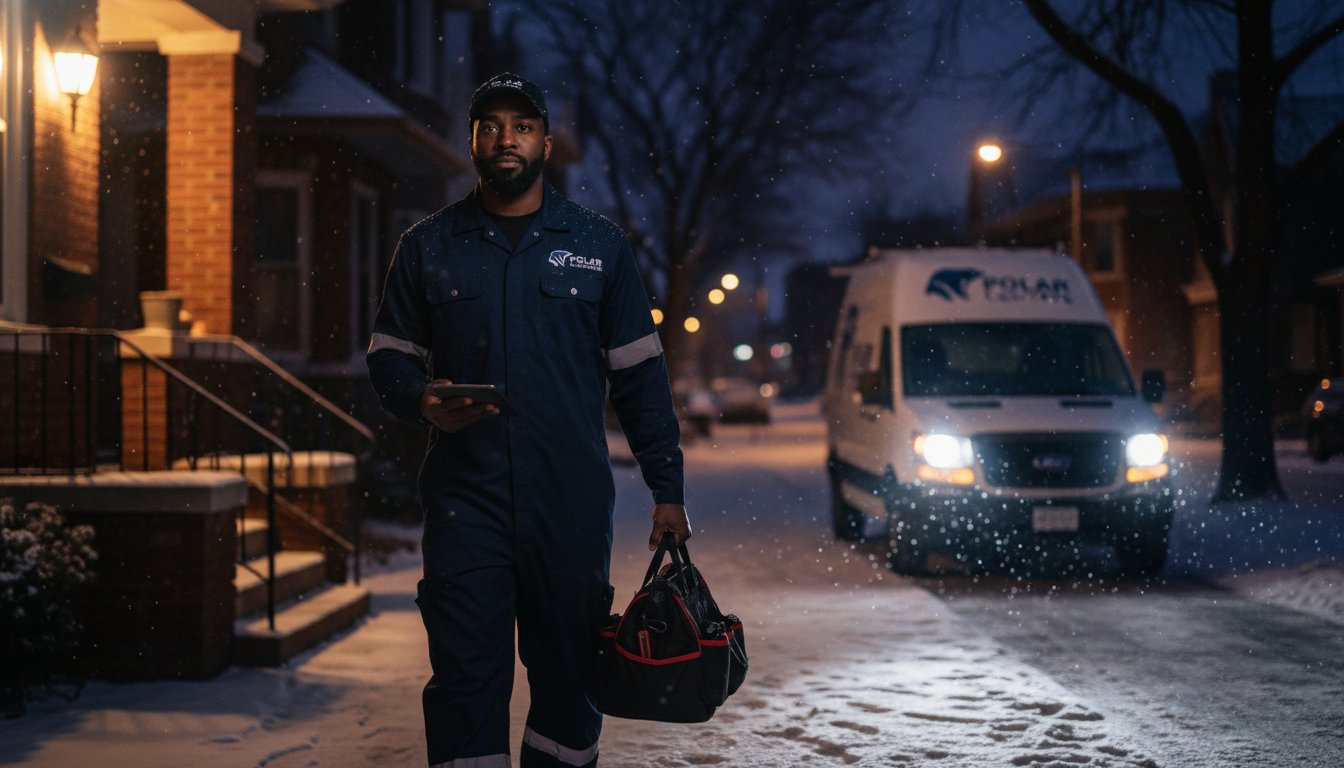
Did you know that the average Chicago home was built in 1952? This means most of our local infrastructure relies on aging components that face immense pressure during the 122 days a year our city spends below freezing. When a furnace or boiler fails in the middle of a sub-zero night, the need for emergency heating repair becomes a race against frozen pipes and potential carbon monoxide leaks, creating a heavy burden for any property owner.
You’re right to prioritize the safety of your family and the structural integrity of your building. This survival guide provides the immediate answers you need to restore warmth quickly while adhering to the April 2026 Chicago construction code updates. As your local technical experts with decades of experience in the Chicago area, we will walk through how to identify critical system failures, what to look for in a professional service response, and how to secure a permanent fix that keeps your property compliant with city heat ordinances.
Key Takeaways
- Learn to distinguish between standard maintenance and a true crisis by understanding how Chicago’s extreme wind chill necessitates immediate action for your safety.
- Follow a professional step-by-step checklist to safely troubleshoot your furnace or boiler before calling for emergency heating repair, ensuring you don’t accidentally void your system’s warranty.
- Identify the specific licensing and insurance credentials necessary to safeguard your Chicago property when evaluating contractors in the middle of a cold-weather crisis.
- Gain insight into how electrical panel upgrades can stabilize your heating system’s performance and prevent common mechanical failures during peak demand.
- Explore how an integrated approach to HVAC, electrical, and plumbing expertise ensures a permanent fix rather than a temporary patch for your mechanical systems.
Identifying a True Heating Emergency in Chicago
Chicago’s winter climate is uniquely unforgiving. While a noisy fan or a slightly cool draft is a nuisance, a true heating crisis occurs when your system can no longer maintain a safe environment against the city’s extreme wind chill. During the 122 days our region typically spends below freezing, a complete system failure isn’t just a comfort issue; it’s a threat to your property’s infrastructure. If your indoor temperature is plummeting while the outdoor “RealFeel” hits double digits below zero, you are facing a situation that requires immediate emergency heating repair. This is especially true for older homes, where the median construction date of 1952 means insulation may not be sufficient to hold residual heat for more than a few hours.
Safety Red Flags: Gas Leaks and Carbon Monoxide
Some mechanical failures require an immediate exit rather than a phone call from the living room. If you detect a sharp, “rotten egg” odor, you likely have a natural gas leak. Since approximately 78% of Chicago households rely on natural gas, this is a common but deadly risk. Evacuate all occupants immediately and call emergency services from outside the property. Similarly, be vigilant for symptoms of carbon monoxide poisoning, such as sudden headaches, dizziness, or nausea. Because this gas is odorless and colorless, your Heating, ventilation, and air conditioning (HVAC) system’s safety depends on functional detectors. If an alarm sounds, do not investigate the unit yourself. Open the windows if possible as you exit and wait for a professional technician to clear the building.
Temperature Thresholds for Property Safety
Understanding when to call for emergency heating repair often comes down to the thermometer. In Cook County, once indoor temperatures drop below 50°F, the risk of frozen pipes in exterior walls increases exponentially. This can lead to catastrophic water damage that far exceeds the cost of a mechanical fix. A single “cold room” might be caused by poor airflow, a common issue in 30% of residential systems, but a system-wide failure during an overnight outage is a different story. Commercial properties face even higher risks. Large-scale facilities often have complex piping and building automation systems that can suffer massive damage if the ambient temperature remains low for an extended period. Facility managers overseeing older Chicago commercial stock should also be aware of the signs of commercial plumbing problems that can compound heating failures and lead to costly structural damage. Recognizing these thresholds helps you prioritize a permanent fix before a mechanical failure turns into a structural disaster.
Immediate Steps to Take Before Your Technician Arrives
Discovering your heat has failed in the middle of a Chicago winter is a high-stress event. While you wait for a professional to arrive, there are several methodical steps you can take to ensure your safety and potentially resolve the issue if it stems from a minor oversight. Taking these actions now helps protect your property and provides the dispatcher with critical data to streamline your emergency heating repair. Always prioritize safety; if you suspect a gas leak or carbon monoxide presence as discussed in the previous section, bypass these steps and exit the building immediately.
Thermostat and Power Source Verification
Begin with the simplest components. Digital thermostats often fail due to depleted batteries, which can lead to a complete loss of communication with your furnace or boiler. If the screen is blank or flashing a low-battery icon, replacing the cells might restore your heat instantly. Next, navigate to your electrical panel. Heating systems reside on dedicated circuits that can trip during the high-demand cycles common in Cook County’s sub-zero stretches. A tripped breaker can mimic a total motor failure. If you find a tripped switch, reset it once. If it trips again immediately, leave it off to prevent electrical damage and wait for a professional Heating System Repair expert to diagnose the underlying short.
Boiler and Furnace Visual Inspections
Perform a basic visual scan of your unit without removing any sealed panels, as DIY internal repairs can void manufacturer warranties. Check the emergency shut-off switch, which often looks like a standard light switch located near the unit; it is surprisingly common for these to be toggled accidentally during storage or cleaning. If you have a high-efficiency system, head outside to ensure your PVC intake and exhaust vents aren’t obstructed by drifting snow or ice buildup. Common furnace problems frequently involve sensors that shut the system down if they detect a lack of proper airflow or a failed electronic ignition. For older boilers, look through the sight glass to see if the pilot light is still active, but never attempt to relight it if you smell gas.
While the heat is offline, protecting your plumbing is paramount. As noted earlier, pipes become vulnerable once indoor temperatures hit 50°F. Open cabinet doors under sinks to allow residual room heat to reach the pipes and set your faucets to a slow drip to keep water moving. Finally, locate the model and serial number on your unit’s data plate. Providing this information to your technician during the initial call ensures they arrive with the specific components required for your emergency heating repair, significantly reducing the time it takes to restore your comfort.

Evaluating Emergency HVAC Contractors in Chicagoland
Selecting a contractor during a sub-zero freeze requires a balance of speed and scrutiny. In Chicago, the stakes are higher. Our local building stock often utilizes complex, older boiler systems that modern, residential-only technicians might not fully understand. You need a partner with the seasoned capability to handle high-stakes environments. A major red flag during extreme weather is the “storm chaser.” These are often out-of-state or unlicensed individuals who appear when demand spikes. Always verify that your chosen firm holds valid Chicago-specific licensing and comprehensive liability insurance to protect your property from botched repairs.
Verifying Credentials and Local Expertise
Local tenure is your best indicator of reliability. A firm that has operated in Chicagoland for decades understands the intersection of our aging infrastructure and the April 2026 construction code updates. Look for NATE-certified technicians who possess a deep technical understanding of both modern heat pumps and vintage steam boilers. Choosing a full-service mechanical contractor provides a distinct advantage; they can address the root cause of a failure, whether it requires Boiler Maintenance and Repair or a complex electrical intervention. The U.S. Consumer Product Safety Commission emphasizes that a professional inspection of all fuel-burning heating systems is the only way to ensure your family remains safe from fire and carbon monoxide hazards after a major system failure. This seasoned expertise prevents a temporary patch from failing when the next polar vortex arrives.
Transparency in Emergency Service Pricing
Anxiety over costs shouldn’t prevent you from seeking emergency heating repair. While you should expect an initial dispatch fee for after-hours calls, a reputable company remains transparent about their pricing structure. Never agree to work based on a verbal quote over the phone. A professional technician will perform a diagnostic assessment and provide a written estimate before any parts are replaced. This document must clearly outline the labor rates and material costs. To avoid predatory pricing during a deep freeze, look for established firms that value their long-term local reputation over short-term profit. If a contractor refuses to provide a written breakdown or pressures you into an immediate, high-cost replacement without exploring Heating System Repair options, it’s a sign to look elsewhere. Reliable experts act as consultants, helping you navigate the technical remedy with logic and precision.
Common Causes of Emergency Furnace and Boiler Failure
Chicago’s climate is a brutal testing ground for mechanical systems. When temperatures drop to double digits below zero, your furnace or boiler doesn’t just work harder; it operates at the absolute edge of its engineering limits. Many emergency heating repair calls stem from the cumulative stress of these prolonged cold snaps on aging infrastructure. In a city where the median home was built in 1952, the interaction between older electrical systems and modern HVAC components often creates unique points of failure that require a seasoned professional to diagnose. If your building’s electrical health is compromised, it can lead to intermittent power delivery that mimics a mechanical breakdown.
Ignition and Sensor Failures
Modern gas furnaces rely on precision sensors to ensure safe operation. The flame sensor is a critical safety component that detects if a burner has actually lit; if it’s coated in carbon or dust, it will trigger a system lockout to prevent unburned gas from accumulating. This is a frequent culprit in emergency heating repair scenarios during peak winter months. While high-efficiency gas furnaces use electronic igniters that can crack under intense thermal stress, older boiler systems typically utilize a thermocouple. A thermocouple is a safety device that senses the heat of the pilot light and allows the main gas valve to open only when a flame is present. If these components fail during a deep freeze, the system shuts down entirely to protect the occupants from gas leaks.
Mechanical Stress and Airflow Blockages
Over 30% of residential HVAC issues in Chicago relate to poor airflow. When a filter is clogged, the furnace must work significantly harder to move air, leading to overheating within the cabinet. This excessive heat is the primary cause of cracked heat exchangers, which is one of the most frequent and serious furnace repairs in the local market. Continuous operation during a polar vortex also places immense strain on blower motors, which can burn out if they’re forced to fight against blocked vents or dirty internal components. Additionally, high-efficiency units produce liquid condensate that must drain away. If the drain line is exposed to the elements, it can freeze solid, causing the system to back up and shut down as a safety precaution.
In older Chicago apartment buildings and homes, boiler pressure issues are often linked to aging expansion tanks or failing pressure relief valves. These systems require a delicate balance of water and air that extreme cold can easily disrupt. For commercial facility managers, these boiler pressure fluctuations can also signal broader infrastructure concerns; understanding the early signs of commercial plumbing problems in your mechanical room can help you catch a developing pipe failure before it compounds a heating emergency. The reliability of your heating depends heavily on your building’s electrical infrastructure. If you experience frequent system resets or flickering lights when the furnace kicks on, you should consider Electrical Panel Upgrades to ensure your HVAC system receives a steady, safe power supply. Ignoring these minor electrical or mechanical warning signs during the autumn months is the fastest path to a catastrophic mid-winter failure.
The MEMASO Response: Professional Heating Restoration
When the temperature drops and your system fails, you don’t just need a technician; you need a partner who understands the high stakes of a Chicago winter. Our 24/7 emergency dispatch process is designed for speed and technical precision. We don’t just fix parts. We restore systems. By leveraging our extensive experience in commercial mechanical services, we bring a level of troubleshooting sophistication to your doorstep that residential-only contractors simply cannot match. This integrated approach combines HVAC, electrical, and plumbing expertise to ensure that when we leave, your property is safe, warm, and structurally sound.
Why Chicago Trusts MEMASO for Emergencies
Our history as a local, seasoned professional in Cook County has taught us that every building has a unique mechanical story. We approach every emergency heating repair with a consulting mindset, looking beyond the immediate symptom to find the true mechanical or electrical root cause. This is vital when performing boiler service chicago for the city’s diverse building stock. We understand the delicate pressure balances required for historic steam systems and the complex control boards of modern high-efficiency units. Our goal is long-term reliability. We refuse to apply a quick temporary patch that might fail when the next polar vortex hits. Instead, we provide a permanent technical remedy that instills confidence and peace of mind.
Beyond the Repair: Planning for Future Reliability
Restoring your heat is only the first step in our process. Once the crisis is managed, we work with you to transition from a reactive fix to a proactive, high-efficiency hvac repair chicago plan. We often find that emergency failures are symptoms of broader system fatigue or electrical panel inadequacies. For larger properties, we utilize building automation systems to monitor performance and catch minor fluctuations before they escalate into total system lockouts. This forward-thinking strategy reduces your long-term costs and ensures your system remains compliant with the latest 2026 Chicago construction codes. Don’t let a mechanical failure compromise your comfort or safety. Contact MEMASO now for immediate, professional heating restoration and a permanent fix for your Chicago property.
Securing Your Chicago Property Against the Cold
Facing a heating failure during a Chicago winter is a significant challenge, but you don’t have to navigate it alone. By recognizing the critical safety signs of gas leaks and performing basic troubleshooting on your thermostat and electrical panel, you can maintain control over your environment while waiting for help. Remember that a successful emergency heating repair depends on choosing a partner who understands the unique intersection of our city’s aging infrastructure and modern mechanical standards.
MEMASO brings over 20 years of collective Chicago mechanical expertise to every call. Our team consists of licensed HVAC, electrical, and plumbing specialists who provide a rapid response for both residential and commercial facilities. We focus on providing a permanent technical remedy that ensures your building remains safe and compliant with local heat ordinances. Restore your heat now with MEMASO’s 24/7 emergency experts and regain the peace of mind that comes with professional reliability. You can trust that warmth and safety are just a phone call away.
Frequently Asked Questions
How long can a house stay without heat before pipes freeze in Chicago?
A house typically remains safe for 24 to 48 hours depending on its insulation quality and the severity of the outdoor temperature. During extreme Chicago cold snaps where temperatures drop well below zero, this safety window can shrink to less than 12 hours for pipes located in exterior walls. You can help extend this time by opening cabinet doors under sinks and setting faucets to a slow drip to keep water moving through the lines.
Is it safe to use a space heater as a temporary solution during a furnace failure?
Space heaters are safe for temporary use if you follow strict safety protocols and never leave them unattended. You should always plug the heater directly into a wall outlet rather than an extension cord to prevent electrical fires or tripped breakers. Keep a three foot clearance from flammable materials like curtains or furniture to maintain a safe environment until your primary heating system is restored.
What is the average response time for emergency heating repair in the Chicago area?
Response times for emergency heating repair vary based on weather severity and current technician availability throughout the city. During peak demand periods like a polar vortex, local firms prioritize life safety situations and total system failures. Most established contractors strive to reach customers as quickly as possible, though travel times can increase during heavy snowfall or high traffic periods on the Kennedy or Dan Ryan expressways.
Can I perform my own emergency boiler repair if the pilot light goes out?
You should only attempt to relight a pilot light if you feel comfortable following the manufacturer’s specific instructions and do not detect any scent of gas. If the light fails to stay lit after a few attempts, it often indicates a faulty thermocouple or a deeper mechanical issue that requires professional attention. Avoid dismantling the unit yourself, as improper handling can lead to safety hazards or void your equipment warranty.
What should I do if I smell gas near my heating unit?
Exit the building immediately and call emergency services from a safe distance if you detect the sharp scent of natural gas. Don’t turn any lights on or off, use a phone inside the house, or attempt to shut off the gas valve yourself, as any spark could be dangerous. Once the utility company or fire department deems the area safe, contact a professional for a comprehensive inspection and necessary repairs.
Does homeowners insurance typically cover emergency heating repairs?
Homeowners insurance usually covers the secondary damage caused by a heating failure, such as water damage from frozen pipes, rather than the mechanical repair of the furnace itself. Most policies exclude coverage for repairs resulting from normal wear and tear or a lack of routine maintenance. It’s best to review your specific policy or contact your agent to understand your coverage limits before a crisis occurs.
How can I prevent my furnace from failing during a Chicago polar vortex?
Preventive maintenance is the most effective way to ensure your system survives the extreme temperature drops common in Cook County. You should replace your air filters every 30 to 90 days and ensure your outdoor intake vents remain clear of drifting snow and ice. Scheduling a professional inspection before the heating season begins helps identify weakened components that might fail under the stress of continuous operation. This process should also include your home’s venting and chimney systems; for homeowners in the broader Midwest region, Best Chimney Services offers expert inspections to ensure these critical exhaust paths remain safe and clear.
Why is my furnace blowing cold air during an emergency lockout?
A furnace blowing cold air often indicates that the blower motor is running while the burners have been disabled by an internal safety sensor. This happens during emergency heating repair scenarios when the system detects an issue like a failed igniter or a dirty flame sensor. The fan continues to run to cool down the internal components, but the lockout prevents the system from cycling back on until the error is professionally cleared.