

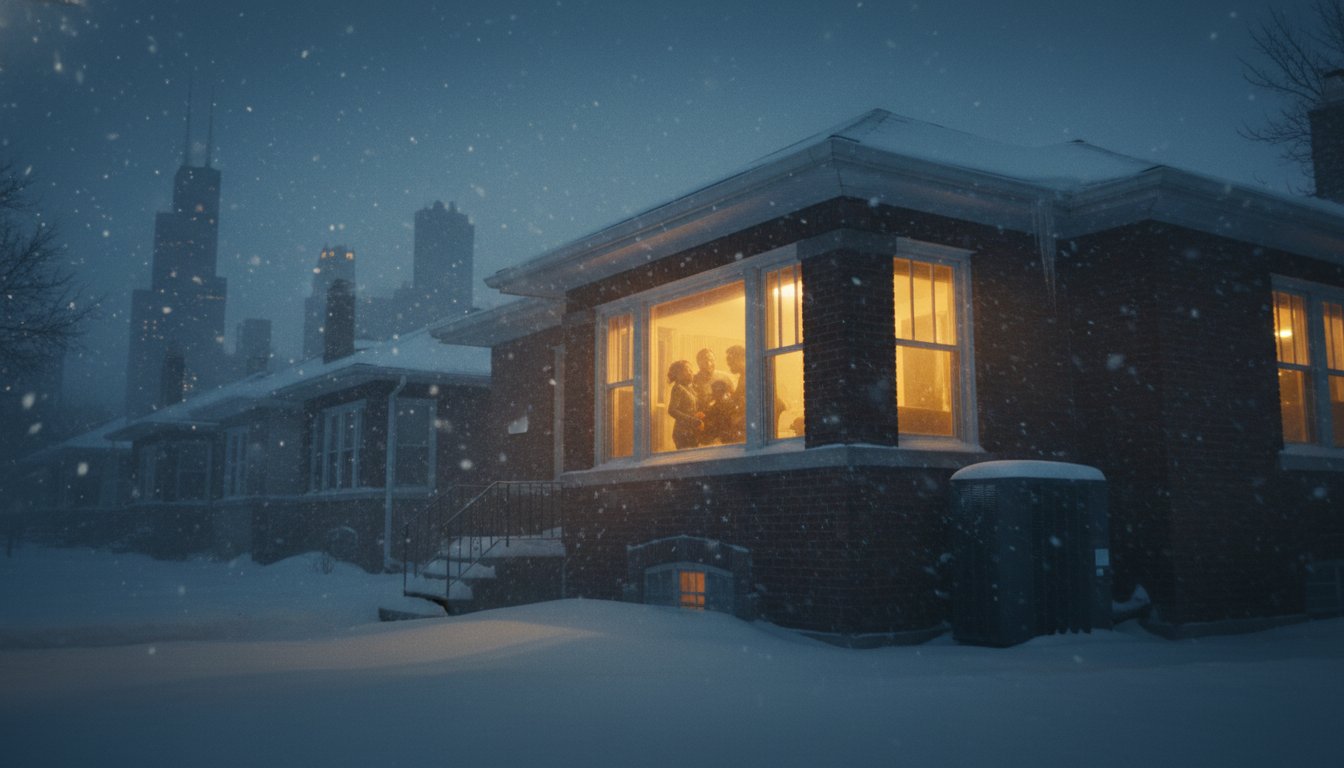
Imagine the thermometer hitting -20°F during a January Polar Vortex while your home stays a steady, cozy 68°F without burning a single cubic foot of natural gas. We understand the skepticism. For years, traditional contractors told neighbors across the city that electric heat simply couldn’t handle the “Big Shoulders” winters. You’ve likely felt the sting of rising utility bills and worried if an aging furnace would survive the next record-breaking cold snap.
Choosing a cold climate heat pump Chicago residents can rely on is no longer a gamble; it’s the smartest HVAC investment for 2026. Modern engineering has evolved to outperform traditional systems in our harshest extremes while significantly lowering your carbon footprint. In this guide, you’ll discover how these systems extract warmth from sub-zero air and how “stacking” new 2026 state rebates with federal tax credits makes the transition more affordable than ever. We’ll show you how to achieve total energy independence without sacrificing the reliable comfort your family deserves.
Key Takeaways
- Understand how specialized inverter technology allows a cold climate heat pump Chicago homeowners choose to remain efficient during extreme Polar Vortex events.
- Learn why a professional Manual J Load Calculation is more reliable than standard “rules of thumb” for sizing your heating system correctly.
- Compare the safety and efficiency of modern electric heating against traditional gas combustion systems to lower your home’s carbon footprint.
- Explore the advantages of a “dual fuel” hybrid system as a practical, reliable transition for older residences in the Cook County area.
- Discover how a design-build approach to HVAC installation results in a more precise and dependable climate control solution for your specific property.
Can a Heat Pump Actually Handle a Chicago Winter?
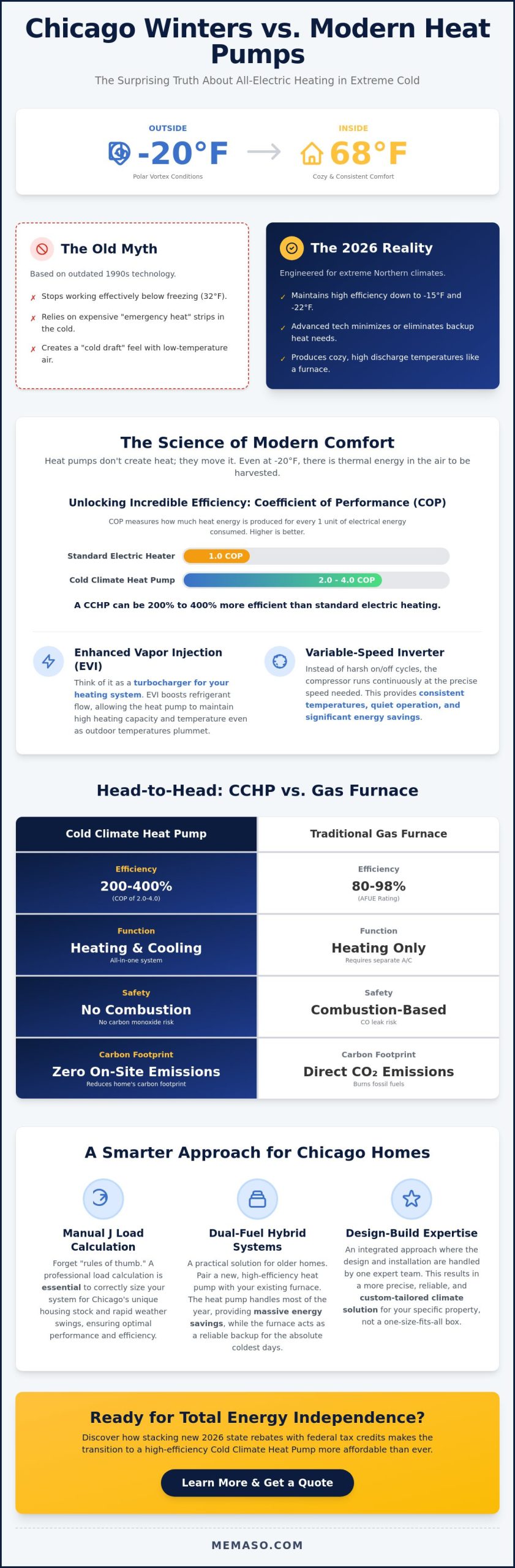
For decades, the standard advice across Cook County was simple: if the temperature drops below freezing, you need a gas furnace. That old-school perspective was based on “air conditioners in reverse” that struggled the moment frost hit the windows. A modern cold climate heat pump Chicago homeowners install today is a fundamentally different machine. These are specialized systems engineered specifically for low-ambient performance. While older models lost their effectiveness at 32°F, 2026 units are designed to maintain high heating capacity even when temperatures plummet between -15°F and -22°F.
Understanding The Science of Cold Climate Heat Pump Technology reveals why this shift occurred. Unlike traditional units, these systems use advanced variable-speed compressors and specialized refrigerants to pull heat from air that feels bone-chilling to humans. Even during a Polar Vortex, there is usable thermal energy available in the atmosphere. It just takes the right technology to harvest that energy and move it into your living room. This isn’t a experimental tech; it’s a proven mechanical solution for northern latitudes.
The Myth of the “Inadequate” Heat Pump
Many traditional contractors still discourage heat pump adoption because they’re stuck in the 1990s. They remember systems that relied on expensive, inefficient “emergency heat” strips the moment it started to snow. We focus exclusively on NEEP-listed cold climate models that have been rigorously tested for performance in extreme cold. The “switchover point,” which is the outdoor temperature where a heat pump might require a backup source, has dropped significantly. In many of our modern installations, that point is now well below zero. This means your electric system handles the vast majority of the winter workload without breaking a sweat.
Why Chicago is the Ultimate Testing Ground
Chicago presents unique engineering challenges that go beyond simple temperature. Our proximity to Lake Michigan creates high humidity and rapid temperature swings that can lead to heavy frost on outdoor coils. A cold climate heat pump Chicago installation must account for these specific local variables. Sizing a system for a bungalow in Berwyn or a Victorian in Oak Park requires more than a “rule of thumb” approach. With the 2026 updates to the Chicago Construction Codes and a state-wide push toward electrification, the industry is changing fast. Local expertise is vital to ensure your system is sized correctly for the specific demands of Cook County winters.
The Science of Cold Climate Heat Pump (CCHP) Technology
To understand why a cold climate heat pump Chicago installation works, we have to look past the freezing air and into the laws of thermodynamics. To a physicist, heat is simply energy; as long as the temperature is above absolute zero (-459°F), there is thermal energy available in the atmosphere. A CCHP acts like a molecular magnet, concentrating that scattered energy from the outside air and moving it into your home. This process is measured by the Coefficient of Performance (COP). While a standard electric space heater has a COP of 1.0 (1 unit of energy in, 1 unit of heat out), a modern heat pump can achieve a COP of 2.0 to 4.0 even in chilly weather.
One common complaint from the 1990s was the “cold draft” feel of early electric systems. Older units blew air that was technically warm but felt cool against the skin because it was lower than human body temperature. Modern units solve this by maintaining much higher discharge temperatures. When evaluating a cold climate heat pump Chicago residents should look for these high-efficiency markers that prioritize domestic comfort. If you’re wondering, Can a Heat Pump Handle a Chicago Winter?, the answer lies in these specific mechanical advancements that produce the cozy, consistent warmth you expect from a traditional furnace.
Enhanced Vapor Injection (EVI) Explained
Think of Enhanced Vapor Injection as a turbocharger for your heating system. In standard units, the compressor can struggle as the air gets thinner and colder. EVI technology injects a small amount of extra refrigerant vapor into the compression cycle at a mid-stage point. This increases the mass flow of the refrigerant, allowing the system to produce higher discharge temperatures without overworking the hardware. This specific engineering allows 2026 models to maintain their rated capacity even when the wind starts howling off the Lake.
Variable-Speed Inverter Compressors
Traditional furnaces and old heat pumps were either 100% on or 100% off. This led to annoying “temperature swings” where the house would get too hot, then too cold. Variable-speed inverters work more like a dimmer switch than a light switch. They ramp up and down to match the exact heating load of your home. This is especially valuable during Chicago’s unpredictable “shoulder seasons” like April and October. Instead of cycling on and off constantly, the system hums at a low, efficient level. This reduces mechanical wear and tear, ensuring your investment lasts longer. If you need a technical assessment of your current layout, our team at MEMASO can help you determine the best configuration for your floor plan.
Comparing Heat Pumps to Traditional Chicago Heating Systems
Chicago homes have long relied on the steady roar of a gas furnace. While a high-efficiency gas unit might reach 95% AFUE, it’s fundamentally limited by the energy contained within the fuel itself. A cold climate heat pump Chicago system operates on a different scale of physics. By moving heat rather than creating it through combustion, these units often achieve efficiencies over 300%. This means for every unit of electricity used, you get three units of heat. It’s a level of performance that traditional fossil fuel systems simply cannot match.
Safety is another critical factor in this comparison. Gas systems carry the inherent risk of carbon monoxide leaks and require complex venting through the roof or side walls. Transitioning to a heat pump removes combustion from the equation entirely. This shift leads to better indoor air quality and a lower carbon footprint. Many homeowners also notice that heat pumps don’t produce the “scorched” dry air typical of gas furnaces. This makes a significant difference for those with sensitive sinuses or dry skin during the peak of winter.
Heat Pump vs. Gas Furnace
The efficiency gap is the most striking difference. Even the best gas furnaces lose 5% of their energy up the flue. In contrast, a heat pump harvests free energy from the outside air. While gas prices in Illinois have historically been low, the long-term trend in urban areas is moving toward the gradual phase-out of gas infrastructure. Choosing a cold climate heat pump Chicago residents can rely on is a way to future-proof your home against shifting energy regulations. Plus, with high-performance equipment from providers like Commodus, you get a world-class air conditioner built into the same unit, which simplifies your mechanical room and lowers maintenance costs.
Integrating with Chicago’s Boiler and Radiator Systems
Many historic Chicago bungalows and Victorians use hot water radiators. While retrofitting these for forced air can be invasive, air-to-water heat pumps are becoming a viable alternative. These systems can sometimes integrate with existing radiator loops. This provides a path to electrification for homes that aren’t suited for traditional ductwork. If you aren’t ready for a full conversion, a “dual fuel” setup allows you to keep your existing boiler as a backup. We often provide boiler maintenance and repair for clients who are using their traditional systems as a bridge toward a more sustainable, all-electric future. This hybrid approach offers the peace of mind of a familiar backup while slashing your monthly gas consumption.
Preparing Your Chicago Home for a Heat Pump Installation
The success of a cold climate heat pump Chicago installation depends more on the expertise of the installer than the brand of the equipment. While high-quality hardware is important, even the most expensive unit will fail if it’s poorly integrated into an older Chicago residence. Preparing your home requires a methodical, step-by-step assessment of your existing infrastructure. This ensures the system operates at peak efficiency when the next Polar Vortex arrives. Our process focuses on four critical preparation steps to guarantee long-term reliability.
- Step 1: Professional Load Calculation. We never rely on “rules of thumb” based on square footage. A precise Manual J calculation is the only way to determine the exact heating and cooling needs of your specific floor plan.
- Step 2: Ductwork Audit. Modern heat pumps move a higher volume of air at lower temperatures than gas furnaces. We evaluate your existing ductwork for static pressure compatibility to prevent noisy operation or restricted airflow.
- Step 3: Electrical Capacity Review. Transitioning from gas to electric heating increases the load on your building’s electrical system. We check if your current service can handle the new equipment.
- Step 4: Strategic Unit Placement. In Cook County, snow drifts are a reality. We mount outdoor units on specialized stands or wall brackets to keep them clear of accumulation and ensure proper drainage during defrost cycles.
The Importance of a Manual J Load Calculation
Oversizing a heat pump is a common mistake that leads to “short-cycling.” This occurs when a unit that’s too powerful turns on and off rapidly, which wears out the compressor and fails to manage indoor humidity. We use design-build principles to size your system based on specific local weather data and the unique insulation properties of Chicago-style brick bungalows or vintage Victorians. This precision ensures your home stays comfortable without wasting energy or overstressing the hardware.
Electrical Panel Requirements for CCHPs
Many older homes in our area still operate on 100-amp electrical service. While this was sufficient for gas-heated homes, a full-home heat pump conversion often requires more “headroom” in your panel. We frequently perform electrical panel upgrades to prepare buildings for 200-amp service. This provides a dedicated circuit for the outdoor condenser and ensures your home’s safety as you move toward full electrification. A robust electrical foundation is the first step toward energy independence. If you’re ready to modernize your home’s infrastructure, contact our team at MEMASO to schedule a comprehensive site evaluation.
Why MEMASO is Chicago’s Choice for High-Efficiency HVAC
When the wind picks up across Lake Michigan and the city prepares for another record-breaking cold snap, the difference between a standard installation and a precision-engineered system becomes clear. National aggregators often treat HVAC as a simple “box swap” and rely on a rotating network of subcontractors who may not understand the specific architectural demands of Cook County. We take a different path. Choosing a cold climate heat pump Chicago residents can trust requires a partner who functions as a long-term performance consultant. Our team brings decades of cumulative experience to every project, ensuring your home remains a sanctuary of comfort regardless of the outdoor extremes.
We position ourselves as more than just service providers; we are technical experts who understand the local landscape from the ground up. Whether we are retrofitting a historic residence or installing systems in modern developments, our focus remains on safety, precision, and efficiency. We don’t just guess at what might work. We use a methodical, data-driven process to ensure every component of your climate control system is optimized for the unique challenges of the Midwest. This seasoned capability helps lower your anxiety when investing in large-scale technical projects, providing the peace of mind that only comes from local authority.
Our Design-Build Approach to Home Comfort
One of the primary advantages of working with our team is our comprehensive design-build approach. Most HVAC contractors only look at the furnace or the condenser. We look at the entire building as a single, integrated machine. This means we manage the mechanical, electrical, and plumbing requirements in-house to ensure a seamless installation. For our commercial clients, we often integrate building automation systems to provide high-level control over facility performance. We bring that same level of institutional-grade precision to private residences. This holistic view allows us to guarantee system reliability and high-efficiency performance that standalone installers simply cannot match.
Local Expertise from Skokie to the Loop
Our roots run deep throughout the Chicago area, from the quiet streets of Skokie to the high-stakes environments of the Loop. This local identity isn’t just a badge; it’s a practical advantage. We navigate the complexities of Chicago’s 2026 building codes and permitting processes every day, ensuring your installation is fully compliant and eligible for all available state and federal incentives. If a Polar Vortex strikes at 3:00 a.m., you aren’t calling a faceless national chain. You’re calling a neighborly expert who provides 24/7 emergency support to keep your family safe. We are ready to help you transition to a cleaner, more reliable future. Schedule your heat pump consultation with MEMASO today and experience the standard of a truly seasoned professional.
Secure Your Home Against the Next Polar Vortex
Transitioning to a cold climate heat pump Chicago homeowners can trust is a strategic move toward energy independence and long-term reliability. As we’ve explored, modern systems are engineered to thrive in sub-zero extremes while significantly reducing your carbon footprint. Success depends on more than just high-quality hardware; it requires a methodical design-build approach that addresses your home’s specific electrical and structural needs.
Since 2000, our team has served as seasoned experts helping neighbors across the city navigate complex HVAC retrofits. We provide full design-build capabilities and stand by our work with 24/7 emergency electrical and HVAC support. For homeowners and landlords seeking additional guidance on property-wide improvements, specialist firms like Madison May Consulting Ltd provide expert consultancy on retrofit strategies to maximize energy efficiency. You don’t have to worry about an aging furnace during the next record-breaking cold snap. Take control of your home’s comfort and efficiency today.
Get a Professional Heat Pump Consultation for Your Chicago Property and discover how we can modernize your heating system. We look forward to helping you create a safer, more sustainable home for the years ahead.
Frequently Asked Questions
Do I need a backup furnace for a heat pump in Chicago?
No, you don’t strictly need a backup furnace if you install a high-performance cold climate heat pump Chicago residents use for total electrification. While 2026 models maintain capacity at -22°F, some homeowners prefer a “dual fuel” setup that pairs the heat pump with a gas furnace for extreme emergencies. This hybrid approach provides a safety net while still allowing the heat pump to handle over 90% of the annual heating load.
How much can I save on my heating bill with a cold climate heat pump?
Annual savings vary based on your existing fuel source. According to regional data, Chicago households switching from electric resistance heating to a heat pump save an average of $1,110 per year. For those switching from natural gas, the average annual savings is approximately $390. These numbers fluctuate based on current utility rates and how well your home is insulated.
Will a heat pump work during a Chicago “Polar Vortex”?
Yes, modern units are engineered to operate efficiently during a Polar Vortex. Unlike older models that failed at freezing, specialized low-ambient systems use Enhanced Vapor Injection to harvest heat from air as cold as -22°F. This technology ensures that your home stays at your desired setpoint even when the wind chill off Lake Michigan reaches dangerous levels.
What is the lifespan of a modern cold climate heat pump?
You can expect a modern cold climate heat pump Chicago installation to last between 15 and 20 years. This longevity is achieved through variable-speed technology, which reduces the mechanical stress caused by constant on and off cycling. Regular professional maintenance and keeping the outdoor coils clear of debris are essential factors in reaching the upper end of this lifespan.
Are there Illinois state rebates for heat pump installation in 2026?
Illinois homeowners have access to several significant incentives in 2026. The state-administered HEEHRA program offers rebates up to $8,000 based on household income. Also, ComEd provides tiered rebates reaching $2,000 for Tier 2 systems. These can be stacked with the federal 25C tax credit, which covers 30% of the project cost up to $2,000 annually.
Can I install a heat pump in an older Chicago home with no ductwork?
Yes, ductless mini-split systems are the ideal solution for older Chicago homes without existing ductwork. These systems allow for zoning, where individual indoor units are mounted in different rooms. This is a popular choice for historic brick bungalows or Victorians where installing large metal ducts would be too invasive or expensive.
What maintenance does a heat pump require compared to a gas furnace?
A heat pump requires an annual professional inspection similar to a gas furnace, but with a focus on refrigerant levels and electrical connections. You must also ensure the outdoor unit remains clear of snow drifts and fallen leaves to maintain proper airflow. Because these systems provide both heating and cooling, they work year-round and benefit from a check-up before each peak season.