

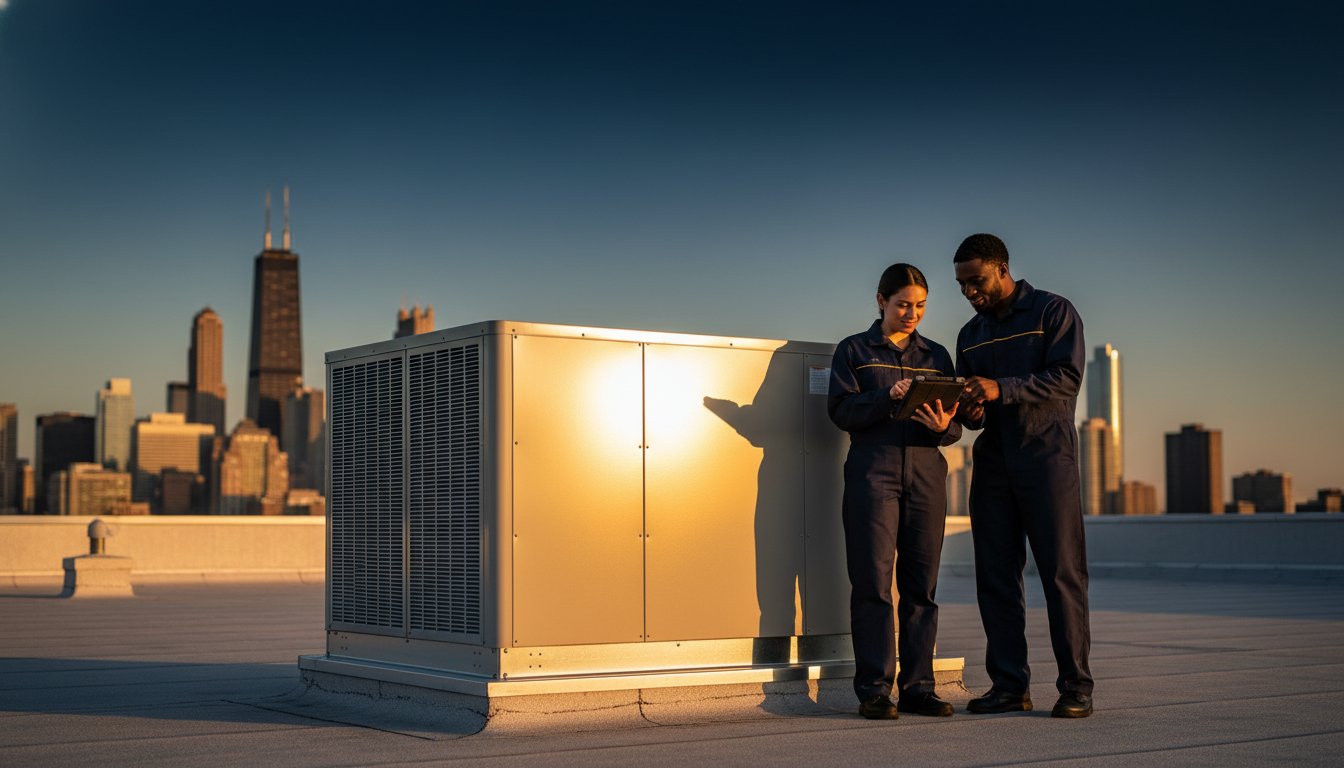
As of January 1, 2026, the era of R-410A manufacturing has officially ended, leaving many Chicago building owners with a ticking clock on their mechanical infrastructure. You already know that managing a commercial rooftop in our climate is a constant battle against soaring utility bills and the threat of system failure during a sub-zero cold snap. It’s frustrating to deal with complex city permits or the requirement for a structural evaluation letter from an engineer just to keep your facility comfortable and compliant.
At Mechanical Management & Design Solutions, we draw on over 100 years of combined experience to help you turn these challenges into long-term savings. This guide will help you master the current landscape, from selecting high-efficiency A2L systems to securing ComEd rebates that can cover up to 30% of your upgrade costs through April 30, 2026. We’ll walk through the 2022 Chicago Energy Transformation Code requirements and explain how to reduce maintenance emergencies through smart automation and precision installation. You’ll gain the clarity needed to lower your energy bills and ensure your facility operates at peak performance throughout the year.
Key Takeaways
- Understand why a packaged commercial rooftop unit is the most efficient choice for balancing Chicago’s extreme seasonal temperature swings.
- Learn how to size your system correctly and evaluate dual fuel options to guarantee heating reliability during the coldest winter months.
- Identify the specific IEER and SEER2 ratings that will maximize your energy savings and qualify your facility for local utility incentives.
- Navigate the complexities of Chicago building codes, including mandatory structural assessments and the logistics of crane day coordination.
- Discover the benefits of a Design-Build approach that integrates mechanical and electrical systems to eliminate downtime and reduce long-term maintenance costs.
Understanding Commercial Rooftop Systems in Chicago’s Climate
A Packaged Rooftop Unit (RTU) is an all-in-one Heating, ventilation, and air conditioning (HVAC) system designed specifically for flat-roof commercial buildings. In the Chicago market, these systems are the industry standard for retail, industrial, and office spaces because they consolidate the compressor, condenser, and evaporator into a single, weather-tight cabinet. At Mechanical Management & Design Solutions, we’ve spent nearly twenty-five years installing these units across the city. We know that a commercial rooftop unit isn’t just a piece of equipment; it’s the lungs of your facility.
Chicago’s “Lake Effect” presents a unique challenge that many national manufacturers overlook. The high humidity and salt-laden wind off Lake Michigan can cause rapid oxidation on standard aluminum fins. In Cook County, heavy-duty casing and specialized corrosion-resistant coatings are non-negotiable for long-term reliability. Without these protections, the brutal wind off the lake can push debris into the coils, forcing the system to work harder and driving up your operational costs. Our seasoned experts prioritize units with reinforced cabinets to withstand these specific local pressures.
Packaged Units vs. Split Systems
In dense Chicago neighborhoods like the Loop or West Loop, ground-level space is non-existent. Packaged units offer a massive space-saving advantage over split systems by centralizing the entire mechanical footprint on the roof. This configuration minimizes business disruption because technicians can perform maintenance without entering your retail or office space. For historic Chicago buildings with thick masonry, a commercial rooftop installation is often the only viable solution. It eliminates the need to run extensive refrigerant lines through vintage masonry, which helps preserve the building’s structural integrity.
The Impact of Chicago Weather on RTU Lifespan
Our mechanical systems face some of the most extreme seasonal shifts in the country. We move from 100-degree humidity in the summer to -20 degree polar vortexes in the winter. These fluctuations put immense stress on motors and heat exchangers. To combat this, we utilize high-performance economizers during Chicago’s transitional spring and fall months. These components draw in cool, dry outdoor air to provide “free cooling,” which significantly reduces compressor wear. While the national average lifespan for an RTU is 15 to 20 years, a packaged unit in Chicago typically lasts 12 to 15 years due to our severe weather patterns and lakefront exposure.
Selecting the Right Rooftop Unit (RTU) for Your Facility
Selecting a commercial rooftop unit requires more than just a glance at the square footage of your building. At Mechanical Management & Design Solutions, we believe in “Services Done Right The First Time.” This philosophy begins with a precise tonnage calculation that accounts for Chicago’s specific peak summer cooling loads. For a high-occupancy retail space in the Loop, you might need significantly more cooling capacity than a low-occupancy warehouse in Elk Grove Village, even if the floor plans are identical. We analyze internal heat gains from lighting, machinery, and occupants to ensure your system doesn’t short-cycle or fail when local temperatures hit those 95-degree humidity peaks.
Heating reliability is the other side of the coin for Illinois business owners. While gas-fired heat exchangers have long been the Chicago standard, the shift toward electrification is changing how we design these systems. Choosing between gas/electric, heat pump, or dual-fuel systems depends on your building’s electrical capacity and your specific operational goals. If you’re weighing these options for a new project, our design-build construction services can provide a custom load analysis to guide your investment. We prioritize matching unit capacity to your specific building use to prevent the high operational costs associated with oversized or undersized equipment.
Heat Pumps in the Midwest: Are They Ready?
Modern cold-climate heat pumps have improved significantly. They can now operate efficiently down to -5 or even -10 degrees Fahrenheit. However, Chicago winters frequently drop lower during extreme weather events. For maximum reliability, we often recommend a hybrid dual-fuel system. This setup utilizes a high-efficiency heat pump for the majority of the season and switches to a gas furnace only when the temperature plummets. This approach balances energy savings with the peace of mind that your facility will remain warm during a record-breaking cold snap like the one we saw in January 2024.
Indoor Air Quality (IAQ) and Ventilation Requirements
Meeting Chicago building codes for fresh air intake is critical for both legal compliance and the health of your tenants. In high-traffic commercial spaces, we often integrate MERV 13 filters and UV-C light systems within the RTU to neutralize airborne pathogens. Older facilities in Northbrook or Skokie often struggle with poor ventilation. We solve this by installing demand-controlled ventilation (DCV) systems. These use CO2 sensors to adjust fresh air intake based on actual occupancy. It ensures you aren’t paying to heat or cool unnecessary outdoor air while still maintaining premier air quality for everyone inside.

Maximizing ROI: Energy Efficiency and Building Automation
Investing in a new commercial rooftop unit is a significant capital expense, but the true value lies in long-term operational savings. In Illinois, where energy costs fluctuate, understanding IEER (Integrated Energy Efficiency Ratio) and SEER2 ratings is essential. While SEER2 measures peak cooling efficiency, IEER is more critical for Chicago businesses because it evaluates how the system performs at part-load. Since our local weather stays in transitional temperatures for much of the spring and fall, a system that excels at part-load will save you more than one designed only for the hottest days. Upgrading to ENERGY STAR certified equipment can reduce your heating and cooling energy use by up to 30%, providing a clear path to a healthier bottom line.
The financial impact of Variable Speed Inverter Compressors cannot be overstated. Traditional single-stage units are either 100% on or completely off, which wastes immense amounts of energy. In contrast, inverter technology allows the compressor to modulate its speed to match the exact cooling or heating demand of the building. This precision prevents “ghost energy” waste and reduces the mechanical stress that leads to premature failure. We leverage over 100 years of combined experience to program these systems specifically for the Chicago climate, ensuring your equipment isn’t fighting against itself during a humid July afternoon.
Integrating Building Automation Systems (BAS)
A commercial rooftop unit is only as smart as the controller managing it. By integrating Building Automation Systems (BAS), you can monitor your facility’s performance in real-time from any device. This technology allows us to catch small mechanical issues, such as a sticking damper or a refrigerant leak, before they escalate into an emergency repair. For multi-tenant properties in neighborhoods like River North, BAS enables sophisticated zoning strategies that provide comfort to individual offices without cooling empty hallways. Additionally, these systems automate the data collection required for Chicago’s Energy Benchmarking ordinance, keeping your building compliant without the administrative headache.
Chicago Utility Rebates and Incentives
You shouldn’t leave money on the table when upgrading your infrastructure. Through April 30, 2026, eligible small businesses in the private sector can receive up to 30% in additional ComEd incentives for energy-efficient upgrades, capped at $30,000 per customer. Furthermore, Peoples Gas offers substantial rebates for high-efficiency gas-fired RTUs that meet specific thermal efficiency standards. When you combine these local utility programs with federal tax credits like Section 179D, which rewards energy-efficient building improvements, the payback period for a premium system often drops below five years. We help you navigate these complex applications to ensure your project qualifies for every available dollar.
The Installation Process: Navigating Chicago Codes and Logistics
Navigating the physical installation of a commercial rooftop system in the city requires more than just mechanical skill; it demands a deep understanding of urban logistics. At Mechanical Management & Design Solutions, we utilize a Design-Build approach to eliminate the friction between engineering and execution. This method allows us to identify potential issues, such as inadequate electrical service or structural weak points, long before the equipment arrives. Chicago building codes are notoriously strict, requiring a structural evaluation letter from a licensed architect or structural engineer for any new rooftop mechanical installation. Because modern high-efficiency units are often larger and heavier than the equipment they replace, ensuring your roof can support the load is a critical first step.
Efficiency isn’t just about the machine; it’s about the process. We coordinate directly with the Chicago Building Department to secure all necessary permits and ensure compliance with the latest environmental regulations. Our goal is to minimize business downtime, often scheduling the physical unit swap during off-peak hours or weekends. This precision ensures that your retail or office operations remain undisrupted while we transform your facility’s infrastructure. If you’re planning a major facility upgrade, our Design-Build Construction Services provide a seamless path from initial engineering to final inspection.
Urban Logistics: Crane Day in the Windy City
Crane day in a dense Chicago corridor is a high-stakes event that requires meticulous planning. We handle the complex task of securing street closure permits and sidewalk canopy protections, particularly in high-traffic areas like the West Loop or along the Magnificent Mile. Our team works with professional riggers and follows stringent safety protocols to manage high-rise RTU placement safely. By scheduling these major lifts with surgical precision, we reduce the impact on local traffic and your neighbors, ensuring the job is finished without legal or logistical setbacks.
Post-Installation Commissioning
Our commitment to “Services Done Right The First Time” extends well beyond the final bolt. Once the commercial rooftop unit is set, we begin the rigorous commissioning process. This includes professional air balancing and a thorough ductwork inspection to ensure the system delivers its rated efficiency to every corner of the building. We also provide hands-on training for your facility staff, teaching them how to navigate new building automation interfaces and smart controllers. To protect your investment, we establish a preventative maintenance schedule that aligns with your specific operational needs and the brutal Chicago weather patterns we’ve managed for nearly twenty-five years.
Why MEMASO is Chicago’s Trusted Rooftop Mechanical Partner
Choosing a partner for your commercial rooftop needs is a decision that impacts your facility’s safety and operational budget for the next fifteen years. Mechanical Management & Design Solutions brings nearly twenty-five years of local market experience and over 100 years of combined mechanical expertise to every project. We don’t just act as contractors; we serve as consultants who understand the specific stresses Chicago weather puts on your infrastructure. Our local presence ensures we’re ready to respond with 24/7 emergency support when a polar vortex or a summer heatwave threatens your business continuity.
Our approach is fundamentally holistic. We recognize that a mechanical system is part of a larger ecosystem. By integrating mechanical, electrical, and plumbing services, we eliminate the communication gaps that often lead to project delays. Whether we’re handling a complex boiler repair or a full system replacement, our core promise is “Services Done Right The First Time.” This commitment to precision reduces your long-term maintenance costs and ensures your building remains a comfortable, safe environment for tenants and employees alike.
Comprehensive Commercial Services
Our expertise extends far beyond standard HVAC work. We provide top-notch commercial plumbing maintenance and critical electrical panel upgrades to support modern, high-efficiency equipment. For specialized industries, we design tailored solutions such as heavy-duty exhaust hoods for high-volume restaurants and precise climate control systems for cannabis grow operations. Working with a single-source mechanical partner reduces project friction. It allows for a unified strategy where your building automation, plumbing, and electrical systems work in perfect harmony.
Your Local Chicago Consultants
We are deeply rooted in the communities we serve, providing professional reliability across Cook, Lake, and DuPage counties. As seasoned professionals, we don’t just install equipment; we consult on performance and energy optimization. We take pride in helping our neighbors lower their anxiety regarding large-scale construction or mechanical repairs. Our stability and knowledge make us the premier choice for institutional and commercial facilities throughout the Chicagoland area. Schedule a rooftop evaluation with Mechanical Management & Design Solutions today to ensure your commercial rooftop is ready for whatever the Chicago climate brings next.
Future-Proof Your Chicago Facility’s Mechanical Infrastructure
Managing a commercial rooftop in Chicago requires a strategy that looks far beyond the next season. We’ve explored the critical industry shift toward next-generation refrigerants and the necessity of structural engineering letters to meet strict 2026 city codes. Don’t forget that the window for maximum ComEd rebates, which can cover up to 30% of your upgrade, closes on April 30, 2026. Taking action now prevents the high costs of emergency downtime and ensures your facility remains compliant with local energy benchmarking ordinances.
At Mechanical Management & Design Solutions, we stand by our core promise: “Services Done Right The First Time.” Our team brings over 100 years of combined experience to every project, ensuring your building automation and mechanical systems work in perfect harmony. Whether it’s a routine performance evaluation or 24/7 emergency support during a record-breaking freeze, we provide the stability and local knowledge you need to lower operational costs and gain peace of mind.
Request a Professional Rooftop HVAC Consultation from MEMASO today. Let’s ensure your property remains comfortable, compliant, and efficient for the long haul.
Frequently Asked Questions
How long does a commercial rooftop unit typically last in Chicago?
A commercial rooftop unit in Chicago typically lasts between 12 and 15 years. While the national average is 15 to 20 years, our extreme seasonal temperature swings and high humidity from Lake Michigan accelerate the wear on mechanical components. Regular preventative maintenance is essential to reach the upper end of this range in the Cook County climate.
What is the average cost to replace an RTU in a Chicago commercial building?
The national average cost for a typical packaged rooftop unit (RTU) ranges between $5,000 and $12,000 installed. For larger commercial facilities exceeding 20,000 square feet, installation costs can range from $40,000 to over $100,000. These price points depend heavily on the unit’s tonnage, efficiency ratings, and any necessary structural reinforcements required by the city.
Are heat pumps a viable option for rooftop heating in Illinois winters?
Cold-climate heat pumps are a viable and increasingly popular option, though they’re often paired with a backup heat source. Modern units can maintain high efficiency at temperatures as low as -10 degrees Fahrenheit. For total peace of mind during a Chicago polar vortex, we often recommend dual-fuel systems that switch to gas heating when temperatures drop below the heat pump’s optimal range.
What permits are required for a commercial rooftop HVAC installation in Chicago?
You must obtain a mechanical permit from the Chicago Building Department and submit a structural evaluation letter. This letter must be signed by a licensed architect or structural engineer to certify that the roof can support the weight of the new commercial rooftop equipment. Failure to secure these documents can lead to significant fines and project delays during city inspections.
How often should commercial rooftop units be serviced in the Chicagoland area?
We recommend professional service at least twice a year, specifically before the peak cooling and heating seasons. Because of Chicago’s urban dust and seasonal debris, filter changes should occur quarterly. Regular inspections are also critical for staying compliant with 2026 EPA regulations, which mandate stricter leak detection and repair timelines for systems containing 15 pounds or more of refrigerant.
Can a new RTU be integrated with my existing building automation system?
Most modern rooftop units use open communication protocols like BACnet or LonWorks, allowing for seamless integration with your existing building automation system (BAS). This connection enables you to manage setpoints, monitor energy data, and receive fault alerts from a central interface. Our team ensures the new controllers are properly mapped to your system to maintain full facility visibility.
What are the most common signs that my commercial rooftop unit needs replacement?
Frequent repair calls and a 20% or higher increase in energy bills are the most common signs of a failing system. You might also notice uneven temperatures across different zones or excessive noise coming from the roof during startup. If your unit has reached the 12-year mark and requires a major component repair, such as a compressor or heat exchanger, replacement is usually the more cost-effective choice.
Does MEMASO offer emergency repair services for commercial rooftop systems?
We provide 24/7 emergency mechanical and electrical support to commercial and institutional clients across the Chicago area. Our local presence in the surrounding counties allows us to respond quickly when a system failure threatens your operations. We focus on stabilizing your environment and performing repairs correctly the first time to prevent recurring downtime during extreme weather events.