

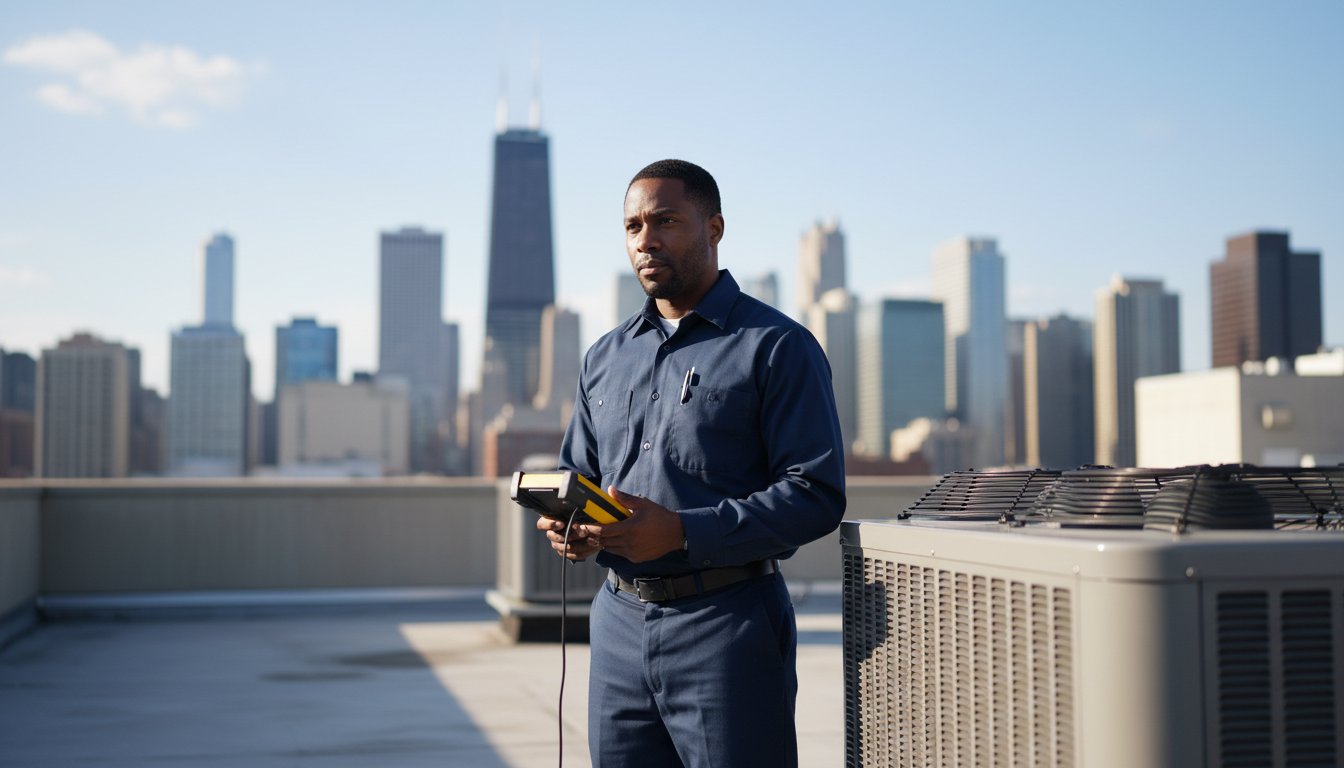
What if the contractor you hire today isn’t equipped to handle the specific mechanical demands of a record-breaking Chicago winter? With equipment prices rising and the 2026 transition to next-generation refrigerants now in full effect, the stakes for choosing between hvac companies chicago have never been higher. It’s natural to feel anxious about the rising costs of system replacements or the complexity of modern heat pump technology. You need a partner who understands the local infrastructure and the brutal reality of our climate.
We believe you deserve a mechanical partner who acts as a consultant rather than just a repair shop. This guide provides a comprehensive checklist to help you identify reliable experts and avoid the “no-show” contractors who disappear during peak seasons. We’ll walk through essential licensing verification, the benefits of design-build engineering, and how to ensure your mechanical investment is protected for the long term. By the end of this article, you’ll have the confidence to choose a partner who delivers services done right the first time.
Key Takeaways
- Learn how to verify municipal registrations and bonded status to ensure your property is fully protected against common installation liabilities.
- Understand the critical differences between marketing-heavy firms and top-tier hvac companies chicago to ensure your system is engineered for local climate extremes.
- Explore the advantages of the design-build service model, which provides a single point of responsibility for everything from initial engineering to final installation.
- Master the technical requirements for specialized Chicago systems, including boiler maintenance for vintage homes and selecting heat pumps that thrive in sub-zero temperatures.
- Identify the markers of a seasoned mechanical partner who prioritizes long-term system longevity and energy efficiency over quick, temporary fixes.
Evaluating HVAC Companies in Chicago: Why the Stakes are Higher in the Windy City
Chicago’s climate is notoriously harsh on mechanical equipment. We experience a massive temperature variance throughout the year, swinging from oppressive 95°F summer humidity to brutal -20°F winter wind chills. When you’re searching for hvac companies chicago, you aren’t just looking for a technician; you’re looking for a partner who understands how these extremes strain every internal component. A “parts changer” might swap a capacitor and leave, but a mechanical management specialist analyzes why that part failed in the first place. Without this high-level technical expertise, property owners often face the nightmare of a mid-winter furnace failure during a sub-zero cold snap when emergency services are stretched thin.
Standard, one-size-fits-all HVAC solutions often fail in Chicagoland because our building stock is incredibly diverse. A system designed for a modern suburban home won’t perform correctly in a 100-year-old brick bungalow or a commercial facility with vintage piping. We bring over 100 years of combined experience to every project, ensuring that your mechanical systems are engineered specifically for the unique architectural demands of the local landscape.
The Local Knowledge Requirement
In the Chicagoland area, local expertise is non-negotiable. Our team navigates complex Cook County building codes and specific permit requirements that vary significantly by municipality. We align our installation standards with the International Mechanical Code (IMC) to ensure every project is safe, efficient, and compliant with recognized global standards. Whether you’re managing a residential living room or a large-scale institutional facility, your contractor needs to understand Chicago-style infrastructure. Proximity matters too. A local partner with established neighborhood routes can offer faster emergency response times when the temperature drops below zero and your comfort is on the line.
The Financial Impact of a Poor Choice
A cheap installation often becomes the most expensive mistake a property owner makes. If a system is improperly sized, it will “short-cycle,” turning on and off constantly. This doesn’t just wear out the equipment prematurely; it sends your Peoples Gas bills skyrocketing. We often see marketing-heavy hvac companies chicago cut corners on the initial setup, which leads to voided manufacturer warranties and frequent, costly repairs. One critical step these contractors often skip is air balancing. Air balancing is the process of testing and adjusting your HVAC system to ensure that the correct amount of conditioned air reaches every room in your home or facility. By focusing on this level of precision, we provide services done right the first time, protecting your investment for decades. For a deeper look at how to optimize efficiency and lower utility costs through proper system design, our comprehensive guide to HVAC service in Chicago covers the full scope of what a high-performing mechanical system requires in 2026.
The Essential Vetting Checklist for Chicago HVAC Contractors
Star ratings on review sites are easily manipulated and don’t guarantee technical proficiency. When you evaluate hvac companies chicago, you need a rigorous rubric that separates marketing machines from seasoned professionals. True peace of mind comes from knowing your contractor is legally registered and fully insured to work on your specific property type. We’ve spent nearly twenty-five years in the local market, and we’ve seen how often a lack of proper vetting leads to disastrous results for property owners.
In Illinois, licensing happens at the municipal level rather than through a single state agency. The City of Chicago requires contractors to be registered with the Department of Buildings to legally perform permitted work. Every technician handling refrigerants must also hold a federal EPA Section 608 certification. If a company can’t provide these documents immediately, they shouldn’t be on your job site. These credentials are the baseline for professional reliability and local authority.
Insurance and bonding are your primary defenses against liability. Always verify that a contractor carries both Workers’ Compensation and General Liability insurance. This ensures that if a technician is injured or your property is damaged during a complex project, you aren’t left holding the bill. A bonded contractor provides an extra layer of financial security, guaranteeing that the work will be completed according to the terms of your contract.
Look for NATE (North American Technician Excellence) certification as the industry gold standard for technician skill. Stability also matters. A firm with over 100 years of combined experience has seen every mechanical failure Chicago weather can cause. This depth of knowledge ensures they won’t be practicing on your equipment. Professional hvac companies chicago provide detailed, written estimates that outline the scope of work, equipment models, and total costs. Avoid “ballpark” verbal quotes, as they often lead to surprise fees and corner-cutting during the installation process.
Credential Verification Steps
Start by checking the City of Chicago portal to confirm the contractor’s registration status. You should also consult official government guidelines for Hiring a Contractor to avoid common industry pitfalls. Don’t forget to check the Better Business Bureau. Look past the letter grade and focus on how many complaints were actually resolved. A company that actively manages its reputation is more likely to provide the high-level service you expect.
Interviewing Your Contractor
Ask specific questions about their experience with your property’s infrastructure. If you have a vintage radiator system, ask about their boiler maintenance history. Inquire about their emergency response protocol for the peak of January. If you want to see how a seasoned mechanical partner handles these challenges, ask for local Chicago references from similar property types in your neighborhood. This step ensures you’re choosing a consultant who understands the local landscape, not just a service provider.

Design-Build vs. Traditional HVAC: Choosing the Right Service Model
Many hvac companies chicago rely on a simple transactional model: you call when a unit breaks, and they swap the old box for a new one. This “box-swapping” approach often ignores the underlying engineering of the building. A design-build model provides a superior alternative by offering single-source responsibility from the initial engineering phase through final installation. Instead of managing multiple contractors who might point fingers at each other when issues arise, you work with one consultant who owns the entire process. This integrated approach ensures that your mechanical systems work in harmony with your building’s specific infrastructure.
When evaluating hvac companies chicago, look for firms that prioritize custom mechanical design for high-efficiency results. As federal regulations phase out older refrigerants in 2026, the precision required for modern installations has increased. This is particularly true for high-performance Heat Pump Systems, which must be engineered to handle the specific thermal loads of Chicago’s varied building types. By utilizing Mechanical, Electrical, and Plumbing (MEP) integration, we ensure that your electrical panel can handle the new load and your ductwork is sized for optimal airflow. This level of detail prevents the common performance gaps that plague traditional installations.
For commercial and institutional facilities, Building Automation Systems (BAS) are no longer a luxury. These systems provide centralized control over your entire facility, allowing for real-time energy management and predictive maintenance. When your HVAC, plumbing, and electrical systems are integrated into a single automation platform, you gain a level of transparency that traditional service models simply can’t match. It’s about moving from reactive repairs to proactive mechanical management, ensuring safety and comfort across your entire property portfolio.
When to Choose a Design-Build Firm
If you’re planning new construction or a major renovation in Skokie, Northbrook, or downtown Chicago, the design-build model is your best path forward. It’s also the right choice for complex retrofits where standard off-the-shelf units won’t fit or meet current energy codes. Facilities that require smart building technology and remote monitoring benefit most from a partner who understands the intersection of mechanical engineering and digital control systems. We bring over 100 years of combined experience to these complex projects, ensuring your facility operates at peak efficiency from day one.
The Value of Integrated Services
Having electrical and plumbing expertise under one roof, as we do at Mechanical Management & Design Solutions, prevents the project delays that often occur when waiting for separate subcontractors. You gain a single point of contact for all mechanical systems, which streamlines communication and simplifies long-term maintenance. The return on investment is clear: systems designed for specific facility performance last longer and consume less energy. We focus on providing services done right the first time, ensuring your mechanical infrastructure is a stable asset rather than a constant source of anxiety.
Chicago-Specific Mechanical Challenges: Boilers, Heat Pumps, and Old Wiring
Every Chicago neighborhood has its own mechanical personality. While downtown high-rises often utilize advanced building automation, many historic homes in the North Shore still rely on complex radiator systems. Most hvac companies chicago focus almost exclusively on modern forced-air furnaces, leaving owners of boiler-heated properties with few reliable options. We understand that maintaining a vintage steam or hot water boiler requires a specialized touch that a standard service tech simply doesn’t possess. Our team brings nearly twenty-five years of local experience to these unique challenges, ensuring your home stays comfortable regardless of the architectural era.
The transition to electrification is another major hurdle for Chicagoland residents in 2026. The debate over heat pumps in sub-zero weather has shifted as technology has improved, but selecting the right unit is still critical. You need equipment specifically rated for the extreme temperature drops we experience during a typical January. Without proper selection, an underpowered unit will struggle to keep up, leading to both discomfort and excessive energy consumption. We help our clients navigate these choices as consultants, ensuring the mechanical remedy fits the household issue perfectly. Understanding the full landscape of reliable HVAC service in Chicago, including the latest state-administered incentives and Phase 3 Construction Code requirements, is essential before committing to any new equipment purchase.
Mastering Chicago’s Heating Diversity
Vetting a contractor’s ability to service steam and hot water boiler systems is essential for owners of older Chicagoland bungalows and estates. If you’re considering a transition from gas to electric, you need to know how a heat pump will integrate with your existing infrastructure. A professional Manual J load calculation is mandatory before any equipment purchase to ensure your new system isn’t over or under-sized for your specific floor plan. This step prevents the uneven heating and humidity issues that often plague poorly planned installations.
The Electrical Connection
Modern high-efficiency HVAC systems often demand more power than an aging electrical panel can provide. This is a common issue in neighborhoods like Skokie or Wilmette, where original wiring wasn’t designed for the load of a high-SEER2 air conditioner or a large-scale heat pump. If your lights flicker when the AC kicks on, it’s a clear sign you need an electrical panel upgrade. We offer 24/7 emergency electrical services alongside our mechanical work to prevent fire hazards and ensure your entire system operates safely. This integrated approach allows us to handle the full scope of your project without the need for outside subcontractors.
Commercial facilities face their own set of urban challenges, particularly regarding plumbing and sewer line maintenance. Managing high-capacity systems in a dense environment requires a partner who understands both the mechanical and the regulatory landscape. Whether you need a boiler repair or an electrical panel upgrade, choosing a seasoned professional ensures the job is done right the first time.
Why MEMASO is the Premier Choice for Chicago Mechanical Solutions
Selecting a partner among the many hvac companies chicago offers is a decision that impacts your property’s safety and your financial bottom line for decades. We aren’t just contractors who show up to fix a broken part; we are seasoned consultants who analyze your entire mechanical ecosystem. With nearly twenty-five years in the local market and over 100 years of combined experience, Mechanical Management & Design Solutions (MEMASO) provides a level of stability that is rare in the mechanical field. Our approach is steady and methodical, moving beyond temporary fixes to provide long-term reliability and peace of mind.
Our comprehensive MEP capabilities set us apart from standard service providers. If we’re installing a new high-efficiency system, we don’t need to call an outside electrician to handle the panel upgrade or a separate plumber for boiler pipework. We manage the entire scope in-house, ensuring that every component of your building’s infrastructure works in perfect harmony. This versatility allows us to handle everything from complex institutional facilities to residential living rooms with the same level of seasoned capability and precision.
Our Chicago Roots and Expertise
We’ve built our reputation on a deep understanding of the local landscape. Whether you’re dealing with a temperamental industrial boiler or need a high-performance heat pump for your home, we understand the specific challenges presented by Chicago’s diverse architecture and brutal climate. Our commitment to safety and local code compliance is unwavering. We take the anxiety out of complex repairs by ensuring every project meets the highest technical standards and local municipal requirements. Contact MEMASO for a professional mechanical consultation today to see how we can optimize your property’s performance.
The MEMASO Difference
The MEMASO difference lies in our design-build expertise. This model translates directly to better comfort and lower energy bills because we engineer systems for your specific environment rather than relying on one-size-fits-all solutions. We also understand that Chicago weather is unpredictable. Our 24/7 emergency support ensures that when the temperature drops to record lows, you have a reliable, neighborly partner ready to respond. We treat your facility’s performance as a critical component of your success, focusing on efficiency and longevity. Our core brand promise is simple: we provide Services Done Right The First Time. This focus on precision reduces downtime, eliminates the need for repeat visits, and ensures your mechanical investment is fully protected.
Secure Your Chicago Property’s Comfort for 2026 and Beyond
Selecting a partner from the many hvac companies chicago offers requires a shift from reactive repairs to proactive mechanical management. By verifying municipal credentials and prioritizing a design-build model, you ensure your system is engineered specifically for your building’s unique infrastructure. Whether you’re managing a vintage boiler in a historic bungalow or implementing building automation in a commercial facility, the right partner provides a stable foundation for long-term energy efficiency and safety.
Mechanical Management & Design Solutions offers the seasoned capability you need to handle the Windy City’s most brutal temperature swings. We bring over 100 years of combined experience to every project, specializing in integrated design-build services and 24/7 emergency electrical and mechanical support. Don’t leave your comfort to chance when the next sub-zero cold snap arrives. Schedule your Chicago HVAC inspection or consultation with MEMASO today to experience the peace of mind that comes with services done right the first time. We’re ready to help you optimize your mechanical systems for peak performance and lasting reliability.
Frequently Asked Questions
How do I check if an HVAC company is licensed in Chicago?
You can verify a contractor’s status through the City of Chicago Department of Buildings web portal. While Illinois doesn’t issue a statewide license, reputable hvac companies chicago must be registered with the city to legally perform permitted work. Always ask for their registration number and confirm they hold a federal EPA Section 608 certification for handling refrigerants, which is a legal requirement for all technicians.
What is the average cost for HVAC repair in Chicago?
The average cost for a repair in the Chicago area is $363, though prices typically range from $135 to $2,072 depending on the complexity. These costs reflect the local market rates for skilled labor and the specialized parts required for our varied building stock. We recommend choosing a partner who provides transparent, written estimates rather than verbal ballpark figures to avoid surprise fees during the project.
Do I need a permit for a new furnace installation in Cook County?
Yes, the City of Chicago and most Cook County municipalities require a mechanical permit for furnace and boiler replacements. Permit fees in the city average between $50 and $300. Professional contractors handle the permit application process for you, ensuring that the installation meets all local safety codes and passes the required inspections.
Can heat pumps really work in Chicago winters?
Modern cold-climate heat pumps are highly effective in our region, even when temperatures drop significantly. The key to success is selecting a unit specifically engineered for sub-zero performance and ensuring a professional load calculation is performed. Many homeowners now stack ComEd rebates of up to $2,000 with federal incentives to offset the initial cost of these high-efficiency systems.
What should be included in a professional HVAC maintenance contract?
A comprehensive contract should include cleaning coils, testing safety controls, and verifying refrigerant levels, which is especially important given the 2026 transition to new refrigerants. It should also cover air balancing to ensure conditioned air reaches every room. We focus on these technical details to ensure your services are done right the first time, preventing the need for emergency calls during peak seasons.
Why is my Chicago energy bill so high in the winter?
Skyrocketing Peoples Gas bills are often caused by an oversized furnace that short-cycles or poor attic insulation. In Chicago, the minimum recommended insulation is R-49 for attics to prevent heat loss. If your system isn’t properly maintained, it works harder to combat the cold, which drives up energy consumption and places unnecessary strain on the mechanical components.
How often should I have my commercial boiler serviced?
Commercial boilers require professional servicing at least once per year, ideally before the heavy heating season begins in autumn. Regular maintenance for institutional and commercial facilities prevents minor issues from turning into catastrophic failures during a cold snap. Given our century of combined experience, we’ve found that annual inspections significantly extend the longevity of these complex mechanical systems.
What is the benefit of a design-build HVAC contractor over a standard one?
A design-build contractor offers single-source responsibility by handling both the engineering and the installation in-house. This model eliminates communication gaps between separate designers and installers, which is a common problem with many hvac companies chicago. You get a system tailored to your building’s specific thermal needs, resulting in better comfort, higher efficiency, and lower long-term operating costs.