

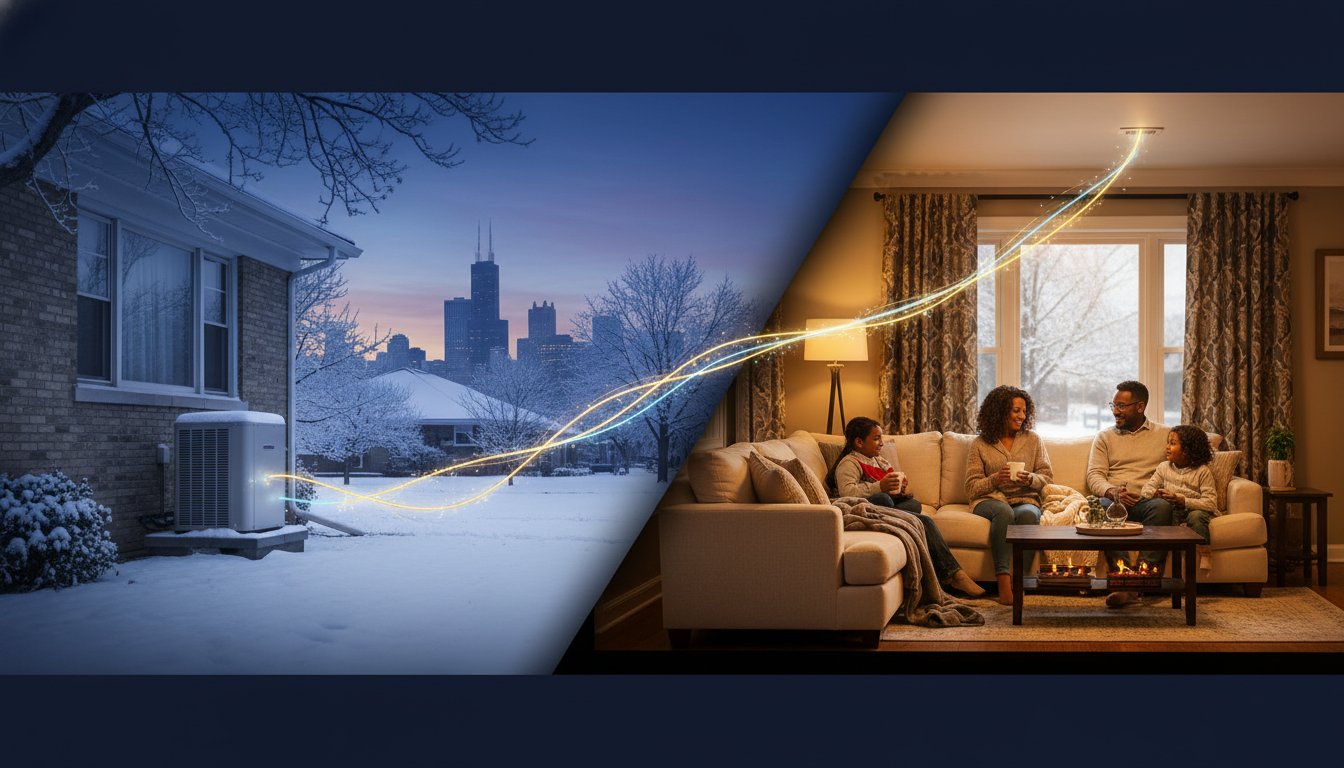
Could a single piece of equipment actually replace your furnace and air conditioner while the thermometer drops to sub-zero levels in Cook County? Finding the best heat pump for Chicago weather 2026 is about more than just cooling; it’s about ensuring your family stays safe when the “Polar Vortex” returns. Many homeowners worry that switching to electricity means shivering through a deep freeze or watching their utility bills skyrocket. We understand that hesitation. In Chicago, a heating failure is a serious safety issue. Since the federal 25C tax credit expired at the end of 2025, you need a clear path to return on investment before making the switch.
This guide identifies the top cold-climate performers designed specifically for our brutal winters. We’ll show you how to maximize ComEd rebates of up to $2,000 by working with a certified Trade Ally and explain why the new 2026 refrigerant standards are a win for your home’s efficiency. You’re about to discover which models maintain their heating capacity at minus ten degrees, helping you achieve a lower carbon footprint and significant energy savings over the life of your system. We’ve analyzed the latest engineering to help you transition to a reliable, high-performance system with confidence.
Key Takeaways
- Learn the technical distinction between standard units and cold-climate heat pumps (ccASHPs) to ensure your system doesn’t lose capacity during a Chicago deep freeze.
- Compare the performance of leading brands like Mitsubishi and Carrier to determine the best heat pump for Chicago weather 2026 based on your home’s existing ductwork.
- Understand the critical role of “Low-Ambient Cutout” settings in protecting your equipment and maintaining indoor comfort when outdoor temperatures plummet.
- Navigate the 2026 incentive landscape by learning how to stack tiered ComEd rebates with manufacturer promotions to offset your initial investment.
- Discover why the transition to lower Global Warming Potential (GWP) refrigerants in 2026 makes this the ideal year for a high-efficiency system upgrade.
Why Chicago Weather Demands Cold-Climate Heat Pump Technology
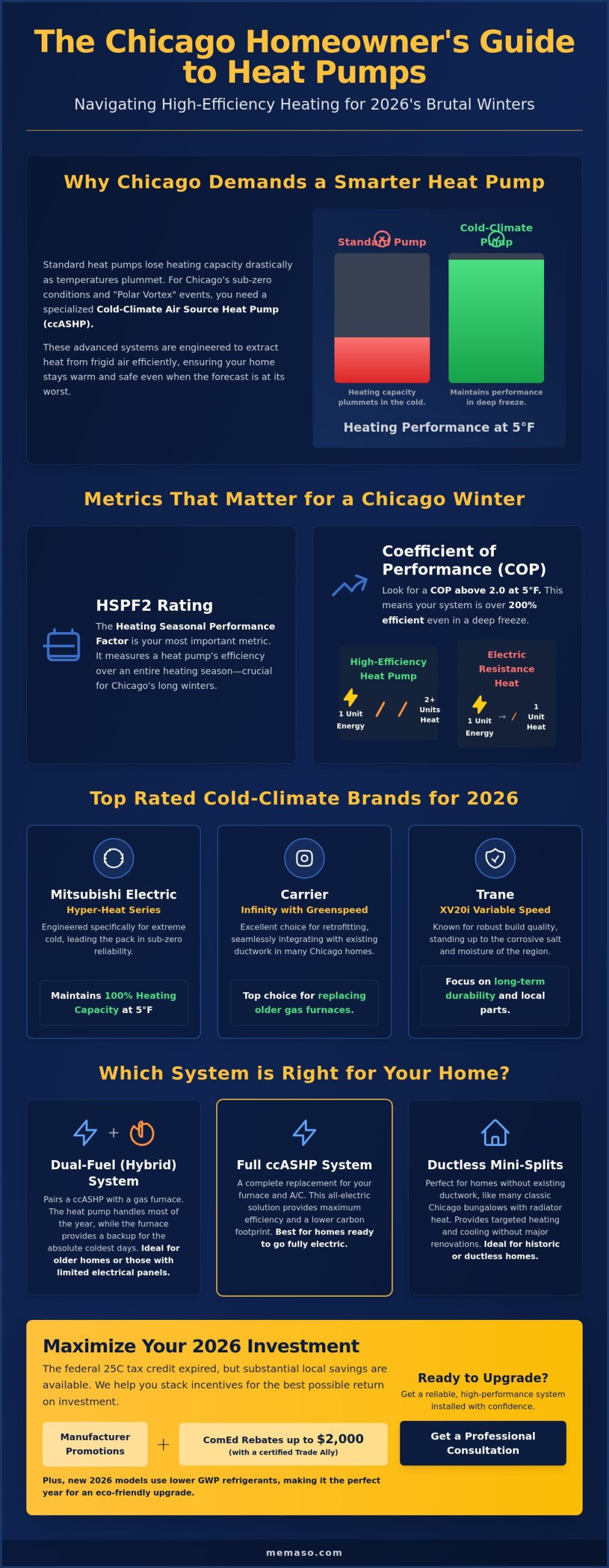
Chicago winters aren’t just cold; they’re relentless. A standard air-source heat pump might work well in milder climates, but it will struggle when the lake effect snow starts piling up. To find the best heat pump for Chicago weather 2026, you must look specifically for Cold-Climate Heat Pumps (ccASHPs). These systems utilize specialized compressors and vapor injection to extract heat from outside air even when it feels like there’s none left. Heat pump technology has advanced rapidly, debunking the old myth that these systems stop working at freezing. Modern units are engineered to provide reliable warmth at -15°F or lower without breaking a sweat.
The “Low-Ambient Cutout” is a critical technical specification for local homeowners. It represents the specific temperature at which the system stops trying to extract heat from the outside air and switches to a backup source. Inverter technology serves as the engine that allows these systems to modulate power precisely, ensuring the unit doesn’t just shut down when the mercury drops. By choosing a unit with a low cutout point, you ensure your home stays comfortable during the most dangerous stretches of January and February.
The Critical Metrics: HSPF2 and COP in the Midwest
While many people focus on SEER2 for summer cooling, Chicago residents should prioritize HSPF2 (Heating Seasonal Performance Factor). This metric measures heating efficiency over a full season, which is vital for our six month winters. You should also look for a high Coefficient of Performance (COP). A COP rating above 2.0 at 5°F is a game-changer for local utility bills. It means the system is still 200% efficient even during a deep freeze, far outperforming traditional electric resistance heat.
The Hybrid Advantage: Dual-Fuel Systems for Chicagoland
For many older Chicago homes, a “Dual-Fuel” or hybrid setup is the most practical choice. This configuration pairs a high-efficiency heat pump with a gas furnace. The heat pump handles the bulk of the season, while the furnace acts as a safety net during extreme temperature peaks. This is especially helpful for properties with older electrical panels that might otherwise require an expensive upgrade to support a fully electric heating system. It provides peace of mind and keeps your home warm regardless of how low the temperature sinks.
Top Rated Heat Pump Brands for Chicago Homes in 2026
Selecting the best heat pump for Chicago weather 2026 requires looking beyond standard efficiency labels. We focus on brands that have proven their mettle in the sub-zero reality of Cook County. Mitsubishi Electric leads the pack with its Hyper-Heat Series, which is specifically engineered to maintain 100% heating capacity even when outdoor temperatures hit 5°F. This level of reliability is exactly what the Cold Climate Heat Pump Technology Challenge aims to standardize across the industry.
Carrier offers another excellent solution with their Infinity system featuring Greenspeed Intelligence. This model excels at integrating with existing Chicago ductwork, making it a top choice for homeowners replacing older gas furnaces. For those prioritizing long-term durability and local parts availability, the Trane XV20i Variable Speed unit is a standout. Its robust build quality stands up to the corrosive salt and moisture common in our region. New for 2026, these brands have introduced AI-driven defrost cycles. This smart technology prevents ice buildup during heavy lake-effect snow, ensuring your system doesn’t lose efficiency when you need it most.
Efficiency Champions: Maximizing 2026 Energy Standards
The newest 2026 models are designed to meet rigorous Department of Energy (DOE) requirements. Many of these units now feature Vapor Injection technology. This process adds an extra stage of refrigerant cooling, which significantly boosts heating capacity during deep freezes. If you’re ready to upgrade, our team can help with professional heat pump installation tailored to your home’s specific layout.
The Best Ductless Solutions for Chicago Bungalows
Many classic North Side bungalows rely on radiator heat, leaving them without the ductwork needed for traditional systems. Ductless mini-split heat pumps are the ideal remedy for these historic homes. They provide targeted comfort without the need for invasive renovations. You might wonder, Are Heat Pumps Effective for Chicagoland Winters? When utilizing these high-performance ductless models, the answer is a definitive yes.
Maximizing Your Investment: Chicago Installation and 2026 Rebates
Choosing the best heat pump for Chicago weather 2026 involves navigating a shifting landscape of financial incentives. While the federal 25C tax credit expired at the end of 2025, local utility programs have stepped up to fill the gap. ComEd currently offers tiered rebates of up to $2,000 for qualifying high-efficiency systems, provided the installation is performed by a certified Trade Ally. These local incentives are now the primary driver for ROI. By participating in the Department of Energy’s Cold Climate Heat Pump Technology Challenge, manufacturers are ensuring that 2026 models deliver maximum performance for every dollar spent on utility bills.
A successful conversion in a city with aging infrastructure requires a comprehensive MEP (Mechanical, Electrical, and Plumbing) strategy. It’s not just about the unit; it’s about the home’s ability to support it. Many properties in neighborhoods like Northbrook or Logan Square require an electrical panel upgrade to handle the load of a modern cold-climate system. We take a holistic view of your home’s systems to ensure your new equipment operates safely during the most demanding winter nights. You can also stack these savings with a ComEd smart thermostat rebate of up to $75 available through December 31, 2026.
Professional Sizing: Avoiding the “Short-Cycling” Trap
Precision sizing is non-negotiable for Chicago’s variable climate. We utilize Manual J Load Calculations to determine the exact heating and cooling needs of your space. If a unit is over-sized, it will “short-cycle,” turning on and off too frequently. This leads to poor humidity control during our muggy July afternoons and premature wear on the compressor. A perfectly sized system maintains a steady, comfortable temperature year-round while maximizing your energy savings.
Commercial Heat Pump Solutions for Chicago Facilities
For multi-family units and larger commercial spaces, we employ integrated commercial design and build strategies. Managing heat pump clusters in a large facility requires sophisticated building automation systems to balance the load across the property. This approach ensures that even large-scale institutions can meet modern efficiency standards while providing reliable comfort for tenants and employees alike. Our experience in complex environments allows us to scale these technical solutions for any Chicago property.
Secure Your Home’s Comfort for the Next Decade
Transitioning to a cold-climate heat pump is a strategic move for any homeowner looking to improve efficiency and comfort. Success in our climate relies on selecting a unit that won’t falter during a deep freeze and ensuring your home’s infrastructure can support it. By combining advanced vapor injection technology with local ComEd rebates, you can achieve a reliable heating solution that pays for itself over time. Identifying the best heat pump for Chicago weather 2026 is the first step toward a more resilient and sustainable household.
Our team brings over 20 years of Chicago HVAC expertise to every project, offering full-service MEP integration for a truly seamless upgrade. We understand the local grid and the specific demands of Chicagoland architecture. Should you ever face an unexpected issue, our 24/7 emergency support for all mechanical systems ensures you’re never left in the cold. Get a Professional Heat Pump Consultation from MEMASO Today to explore your options. You deserve a heating system that works as hard as you do, even in the middle of a January blizzard.
Frequently Asked Questions
Do I need a backup furnace for a heat pump in Chicago?
You don’t strictly need a backup furnace if you choose a high-performance cold-climate model, but many local homeowners prefer a dual-fuel setup. This configuration pairs your heat pump with a gas furnace that only activates during extreme sub-zero peaks. It offers a reliable safety net during record-breaking Chicago freezes and is often more practical for homes with older electrical panels that cannot support large electric backup heat strips.
How much can I save with ComEd rebates for a heat pump in 2026?
As of 2026, ComEd provides rebates up to $2,000 for qualifying high-efficiency heat pump systems. These incentives are tiered based on the heating capacity or tonnage of the unit you select. To ensure you qualify for these savings, the installation must be completed by a ComEd Residential Heating and Cooling Trade Ally. You can often stack these utility rebates with manufacturer promotions to further lower your initial costs.
What is the best heat pump brand for sub-zero temperatures?
Mitsubishi Electric’s Hyper-Heat series is widely considered the best heat pump for Chicago weather 2026 because it maintains 100% heating capacity at 5°F. Carrier’s Infinity series with Greenspeed Intelligence is another top-tier option that excels in our region. These brands utilize advanced vapor injection and variable-speed compressors to extract warmth from the outdoor air even when the mercury drops well below zero.
Can I install a heat pump in an old Chicago home with radiators?
Yes, you can absolutely enjoy heat pump technology in a home with radiators by using a ductless mini-split system. These units are the ideal solution for classic Chicago bungalows or historic properties that lack existing ductwork. Small indoor units are mounted on the wall and connect to an outdoor compressor through a minor opening. This allows for high-efficiency heating and cooling without the need for invasive or expensive renovations.
How long does a typical heat pump installation take in Chicago?
A standard residential installation usually takes between one and two days to complete. If your project involves an electrical panel upgrade or modifications to your existing ductwork, the timeline might extend slightly. We follow a methodical process to ensure every component is calibrated for our specific local climate. Our team focuses on precision and efficiency to restore your home’s comfort as quickly as possible.
Is a heat pump quieter than a traditional air conditioner?
Modern heat pumps are generally much quieter than traditional air conditioning units. Because they use variable-speed inverter technology, they don’t constantly cycle on and off at full volume. Instead, they ramp up and down gradually to maintain a steady temperature. Many of the top-rated 2026 models include specialized sound-dampening covers and fan blades designed to minimize noise, making them barely audible from a few feet away.